Most new habits die within the first few weeks, not because the person lacked willpower, but because the habit was never designed to survive a busy or off day. Motivation gets you started; a good system is what keeps you going after the motivation fades.
Table of Contents
This guide walks through a practical, research-informed approach to building a habit that actually sticks: how to pick the right starting habit, attach it to your existing routine, make it nearly impossible to skip, and recover quickly when you inevitably miss a day.
Quick Answer
To build a habit that sticks, shrink it down to something you can do in two minutes or less, attach it to a specific existing routine (a technique called habit stacking), track it visibly, and focus on never missing twice in a row rather than never missing at all. Consistency, not intensity, is what wires a behavior into something automatic.
Start Small Enough That You Can’t Say No
The biggest mistake in habit building is starting too big. If your new habit requires significant time, energy, or willpower, it will lose to a busy day almost every time. Instead, scale the habit down to a version so small it feels almost silly to skip: one push-up instead of a full workout, one sentence instead of a page, five minutes of tidying instead of a deep clean. This is sometimes called the ‘two-minute rule’ — the idea is to master the habit of showing up first, then let the duration and difficulty grow naturally once the routine is established.
The small version isn’t the finish line; it’s the entry point. Once you’re reliably showing up, expanding the habit is far easier than trying to build discipline and intensity at the same time.
Attach It to a Cue: Habit Stacking
New habits are much easier to remember and repeat when they’re tied to something you already do consistently, rather than relying on willpower or a vague intention like ‘sometime today.’ This approach, popularized as ‘habit stacking,’ uses a simple formula: after [current habit], I will [new habit]. For example: ‘After I pour my morning coffee, I will write down three priorities for the day,’ or ‘After I close my laptop for lunch, I will do ten squats.’
The key is specificity. A cue like ‘after breakfast’ works better than ‘in the morning,’ because it points to one exact moment rather than a fuzzy window of time you can talk yourself out of. Pick a current habit that happens at roughly the same time and place every day, and stack the new behavior directly onto it.
It also helps to reduce friction around the habit itself: lay out the running shoes the night before, keep the book on your pillow, put the guitar on a stand instead of in its case. Removing even small obstacles makes the automatic version of the habit more likely to win.
Make Progress Visible and Plan for Slip-Ups
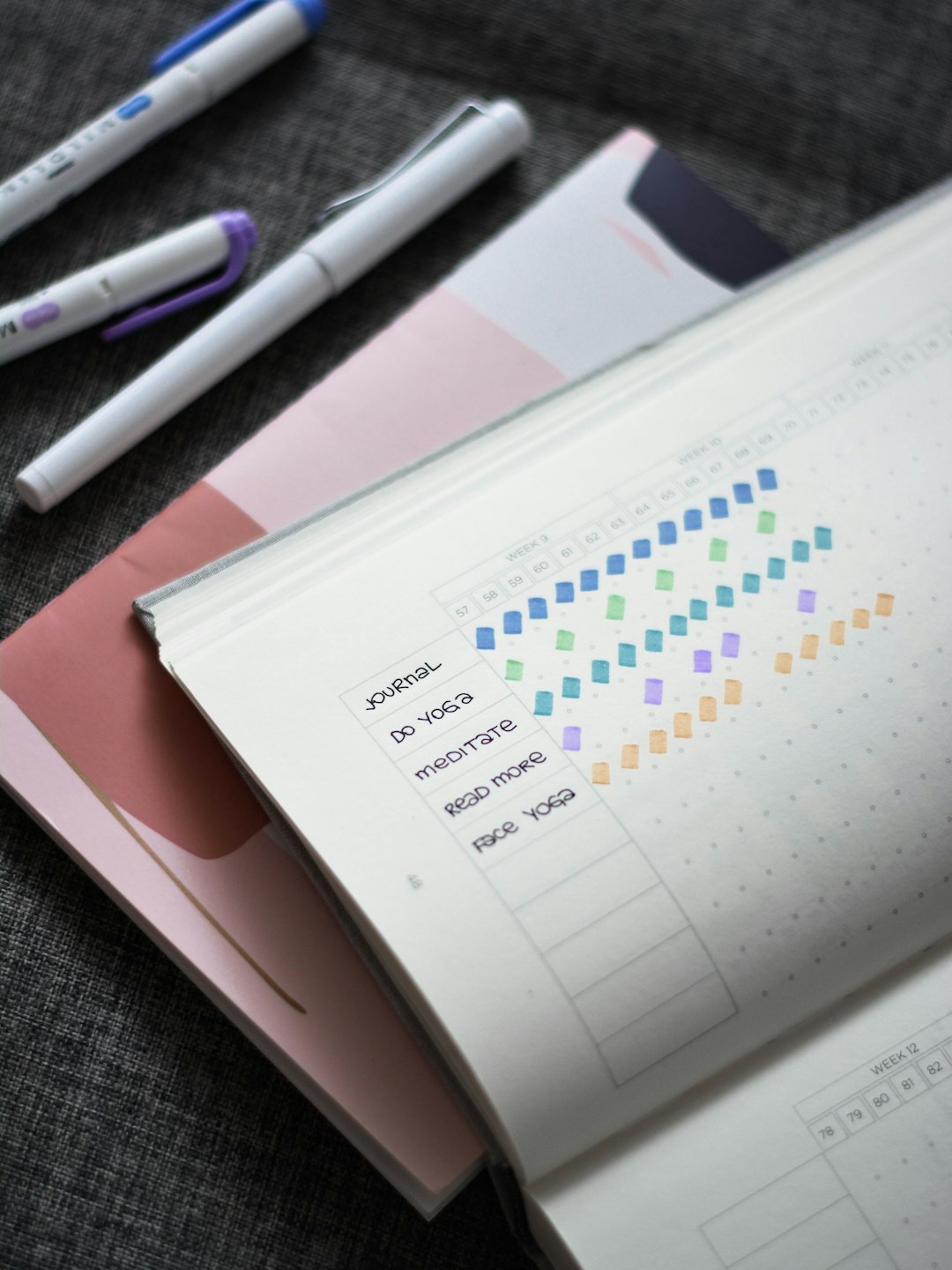
Tracking a habit, even with something as simple as an X on a calendar or a checkmark in an app, gives you visual proof of progress and taps into a basic desire not to break a streak. It also creates an honest feedback loop: if you keep skipping the same day of the week, that’s useful information about where your system is breaking down, not a sign you should quit.
Missing a day is normal and not a failure. What matters more is what happens next. The single most useful rule in habit building is ‘never miss twice in a row.’ One missed day is an outlier; two in a row starts to become a new pattern. If you miss, treat the very next opportunity as non-negotiable, even if you only do the small, two-minute version.
Research on habit formation (notably a widely cited study led by Phillippa Lally at University College London) found that habits took anywhere from about 18 to 254 days to become automatic, averaging around 66 days — far longer than the popular ’21 days’ myth suggests, and highly dependent on the habit and the person. The practical takeaway is to judge your habit by weeks and months of consistency, not by how automatic it feels after a week or two.
Tips and Common Mistakes
Don’t stack more than one new habit onto a single cue at first — trying to add three new behaviors after ‘wake up’ overloads the routine and makes it easy to abandon all of them. Add one, let it stabilize, then layer the next.
Avoid habits that depend entirely on motivation or mood, like ‘exercise when I feel like it.’ Tie the habit to a fixed trigger instead so it doesn’t require a decision each time.
Watch out for all-or-nothing thinking. Doing the two-minute version of a habit on a bad day is far more valuable long-term than skipping entirely and telling yourself you’ll ‘make up for it’ tomorrow — that mindset is how streaks quietly die.
Finally, review your habit stack every few weeks. Cues change (a new job, a move, a schedule shift), and a habit stacked to a routine that no longer exists will quietly disappear unless you re-anchor it to something current.
Explore more: More habit-building guides.
How to build a habit that sticks FAQs
How long does it really take to build a habit?
Research following people trying to build daily habits found it took an average of about 66 days for the behavior to feel automatic, with a wide range (roughly 18 to over 250 days) depending on the habit and the person. Simpler habits tend to stick faster than complex ones.
What is habit stacking?
Habit stacking means attaching a new habit to an existing one using the format ‘after [current habit], I will [new habit].’ It works because it gives the new behavior a specific, reliable trigger instead of relying on remembering or feeling motivated.
What should I do if I miss a day?
Don’t treat one missed day as a failure — just resume at the next opportunity. The habit that derails people isn’t one missed day, it’s letting a single miss turn into two or three in a row, which is when a new (unwanted) pattern starts to form.
Should I track my habits?
Tracking, even simply, helps in two ways: it gives you a visible record of consistency that reinforces the behavior, and it surfaces patterns (like a specific day you always skip) that you can address directly.
Build Better Habits With ZenDuel
Track your habits and mood, stay accountable, and build a calmer routine — get the ZenDuel app. Get ZenDuel.
Want a calmer inbox? Subscribe to the free newsletter.
Photo by Prophsee Journals on Unsplash.