Mantra meditation is a focused-attention practice in which you silently or quietly repeat a word, phrase, or short sound to anchor your mind and quiet mental chatter. It is one of the oldest meditation traditions, found in Hindu, Buddhist, Christian, and Sufi practices across thousands of years, and it remains one of the most accessible techniques for beginners. Unlike open-monitoring meditation, which can feel formless, mantra meditation gives you something concrete to return to whenever your mind wanders. The repetition itself produces a measurable shift in brain activity, lowering the noise of the default mode network and creating space for the deeper rest your nervous system rarely gets during waking hours.
Table of Contents
How Mantra Meditation Works on the Brain

When you repeat a mantra, you give your mind a low-stimulation task that is just engaging enough to occupy it without producing the rumination that drives anxiety and stress. Brain imaging studies show that consistent mantra meditation reduces activity in the default mode network, which is the brain region associated with self-referential thinking, mind wandering, and worry.
Research published by the National Library of Medicine on mantra-based interventions shows consistent reductions in stress, blood pressure, and self-reported anxiety after eight to twelve weeks of regular practice. The effects are comparable to other major meditation forms while often being easier for beginners to sustain.
Choosing a Mantra That Works for You
Your mantra does not need to be in Sanskrit or come from a particular tradition. It can be a word, a phrase, or a short sound that feels neutral to positive. Common choices include “peace,” “rest,” “I am enough,” “this too shall pass,” or traditional sounds like “om” or “so hum.” The Christian mystical tradition uses phrases from prayer like “be still.”
Pick something simple and stick with it. Switching mantras frequently weakens the practice. The mantra works through repetition over weeks and months, building an automatic association between the sound and a calmed nervous system. After enough repetition, simply thinking the mantra in a stressful moment can produce a measurable shift. This pairs well with the foundational approach in our piece on how to build a meditation practice from scratch.
The Practical Session Structure
Sit in a comfortable position with your spine relatively upright. Close your eyes or soften your gaze to a low spot on the floor. Begin silently repeating your mantra at a comfortable pace, roughly synchronized with your breath if that feels natural. When your mind wanders, return to the mantra without judgment.
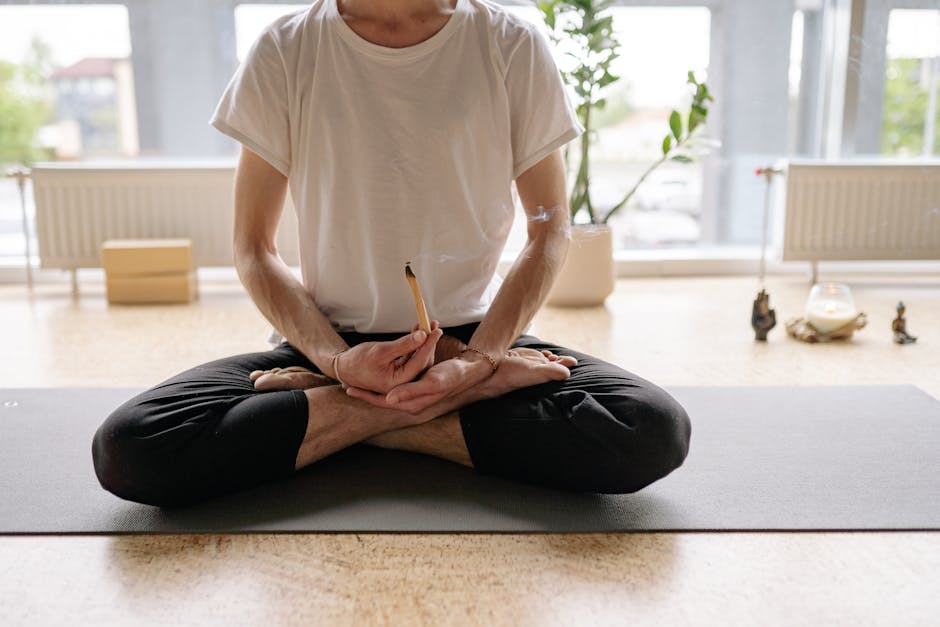
A typical session runs 15 to 20 minutes, though beginners can start with five to ten minutes. The mantra should feel relatively effortless, almost as if it is repeating itself. Forced or strained repetition signals that you are gripping too hard. Soften and let the practice carry you rather than driving it.
Working With a Wandering Mind
Mind wandering is not a failure of mantra meditation. It is the practice itself. Each time you notice you have drifted and return to the mantra, you strengthen the underlying skill of attention. The wandering is normal. The returning is the training.
According to Mindful.org’s overview of mantra meditation, beginners often return their attention 30 to 50 times in a single 20-minute session. Experienced practitioners may return only five to ten times. Both are valid. The number of returns is not the metric. The willingness to return without self-criticism is the metric that matters.
Building Mantra Meditation Into Daily Life
Aim for one 15-minute session per day. Morning works best for most people because the mind is fresher and the day has not yet flooded you with stimulation. Evening sessions are also valuable, especially as a wind-down before bed, but require slightly more discipline to sustain.
The mantra also functions outside formal sessions. You can return to it during transitions: walking between meetings, waiting in line, sitting in traffic. These micro-uses keep the mantra alive in your nervous system between sessions and make formal practice deeper. Combine this with the structure described in habit stacking so your sessions have reliable triggers and consistent timing. Mantra meditation is one of the simplest techniques to learn and one of the deepest to develop, and the same word repeated for years can become a doorway into surprising states of stillness.
Frequently Asked Questions
How long should a mantra meditation session be?
Beginners start with 5 to 10 minutes. Standard practice is 15 to 20 minutes once or twice daily.
Does the mantra need to have spiritual meaning?
No. Any short word or phrase that feels neutral to positive works. Pick something simple and stick with it.
Can I switch mantras?
It is best to commit to one mantra for several months. Switching frequently weakens the deepening effect of repetition.
Do I say the mantra out loud?
Usually silently, especially as the practice deepens. Some traditions use whispered or chanted mantras, but silent repetition is the most common modern form.
Is mantra meditation the same as Transcendental Meditation?
TM is a specific copyrighted form of mantra meditation taught with personalized mantras and a structured course. Generic mantra meditation uses the same underlying technique without the formal training.

1 thought on “7 Powerful Mantra Meditation Practices for Focused Calm”