The first weeks and months with a newborn scramble every routine you used to rely on. Meals happen whenever there’s a free hand, sleep comes in unpredictable chunks, and it’s easy to realize by 4pm that you haven’t had a glass of water since breakfast. A simple printable habit tracker gives you one place to glance at instead of trying to hold it all in a sleep-deprived brain.
Table of Contents
Below you’ll find a breakdown of what to track, how to actually use it during the fourth trimester, and mistakes to avoid so it doesn’t become one more thing to feel behind on — grab the free printable habit tracker in the download box near the top of this post.

Download the Free Postpartum Habit Tracker
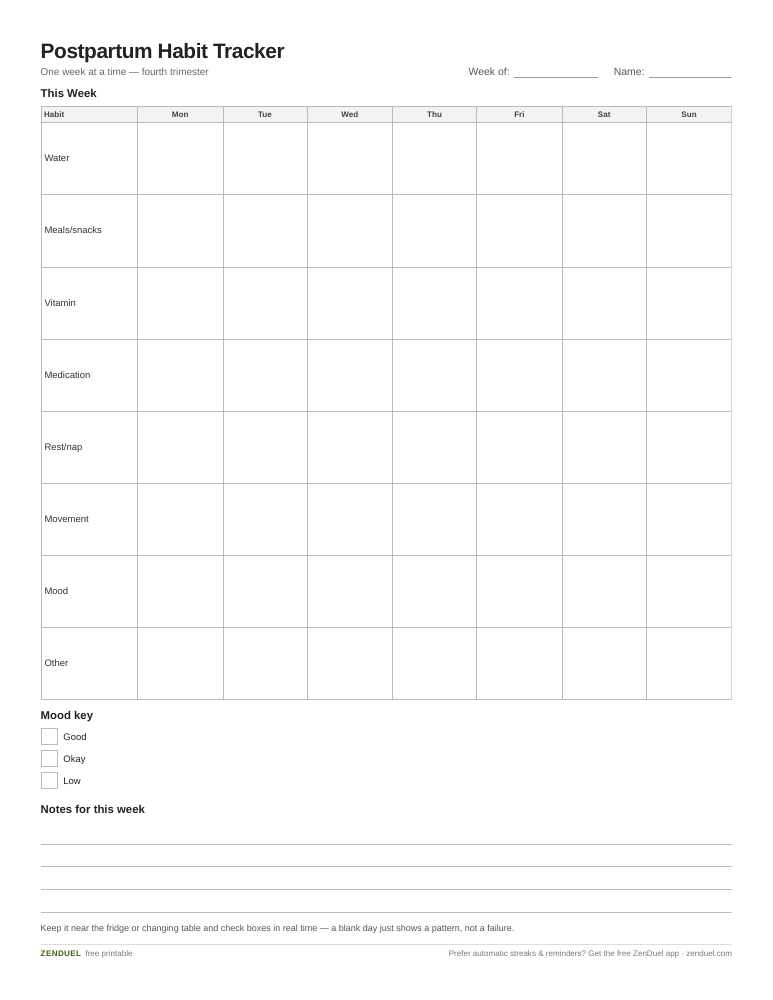
Our own printable — free, no sign-up, no email required. A 7-day, 8-row habit grid with a mood key and weekly notes section. US Letter (prints fine on A4).
Quick Answer
A postpartum habit tracker is a printable sheet with simple check-boxes for the handful of things that matter most in early recovery — water, meals, medication or vitamins, rest, movement, and mood — tracked one day at a time so you can spot patterns (like skipped meals or no water) without adding mental load.
What to Track on the Printable
The printable is laid out as a one-week grid: seven columns across the top (Sun–Sat) and a row down the left side for each habit, so you tap a box rather than write a sentence. Keep the row list short — six to eight habits is the sweet spot for something you’ll actually finish filling in on three hours of sleep.
Good rows to include: water intake (a few boxes per day you check off as you go, rather than one yes/no), meals or snacks eaten, prenatal or postpartum vitamin, any prescribed medication, a rest or nap block, gentle movement (a short walk or stretch, once you’re cleared), and a one-word mood check-in. Leave one blank row labeled ‘Other’ for anything specific to your recovery — pelvic floor exercises, pumping sessions, or a wound-care step your provider gave you.
Under the grid, the sheet has a small notes section for the week — a couple of lines to jot how you’re feeling overall, any symptoms to mention at your next checkup, or a reminder for an upcoming appointment. It’s sized to print on a standard 8.5×11 sheet, one week per page, so you can print a stack and keep it on the fridge or nightstand.
How to Use It During the Fourth Trimester
Health guidance for the postpartum period (sometimes called the ‘fourth trimester’) frames it as an ongoing stretch of recovery rather than a single visit — expect initial contact with your provider within the first few weeks after delivery and a fuller postpartum checkup by around 12 weeks. Your tracker is meant to support that window, not replace medical advice, so keep it simple: a check mark takes two seconds, a paragraph doesn’t get written.
Tape or magnet the sheet somewhere you already look — the fridge, changing table, or next to your water bottle — so filling it in doesn’t require a special moment of quiet you probably won’t get. Check boxes in real time when you can (right after a feed or nap), and don’t worry about catching up on missed hours; the point is the pattern across the day, not a perfect record.
Once you’re medically cleared, light movement can be worked in gradually — even a couple of short walks broken into 10–15 minute stretches counts. Use the mood row honestly: circling a low mood for several days in a row is useful information to bring up at your next visit rather than something to hide from the sheet.

Tips / Common Mistakes
Don’t design your own tracker with 15 habits — it’ll get abandoned by day three. Stick to the few things that actually affect how you feel: water, food, rest, meds, and mood cover most of it.
Don’t skip the notes section — a two-line note like ‘still sore, ask about it Friday’ is often more useful at your appointment than the checkboxes themselves.
Don’t treat a blank day as a failure. A tracker with gaps still shows you the pattern (for example, that Tuesdays are consistently rough because that’s your partner’s early shift) — that’s the useful part.
If you notice repeated warning signs — heavy bleeding, fever, severe headache, chest pain, thoughts of harming yourself, or a mood that isn’t lifting — contact your provider right away rather than waiting to bring it up at a scheduled visit.
Explore more: more free habit trackers and printables.
Postpartum habit tracker FAQs
Is this habit tracker printable free?
Yes — it’s a free, no-sign-up printable PDF you can download from the box above and print at home as many times as you need.
How long should I use a postpartum habit tracker?
Most new moms find it useful through the first three months, since that lines up with the recovery window most providers focus on. Some keep it going longer if it’s helping with sleep training or feeding routines.
What if I don’t have time to fill it in every day?
That’s normal — even filling in a few boxes a day is enough to spot patterns like skipped meals or too little water. Don’t try to backfill missed days; just pick it back up.
Skip the Spreadsheet — Track It in ZenDuel
Habit streaks, mood tracking, and accountability duels in one free app — no template maintenance required. Get ZenDuel.
Want a calmer inbox? Subscribe to the free newsletter.
Photo by Brian Wangenheim on Unsplash.