Most weight loss plans fail not because the diet or workout is wrong, but because the small daily habits behind them never stick. A habit tracker fixes that by turning vague goals like ‘eat better’ or ‘move more’ into a short checklist you can glance at every day.
Table of Contents
Use the free printable habit tracker above — a one-page PDF you can download and print with no sign-up — then read on for exactly what to track, how the layout works, and the mistakes that cause most trackers to end up abandoned in a drawer after two weeks.
Download the Free Weight Loss Habit Tracker
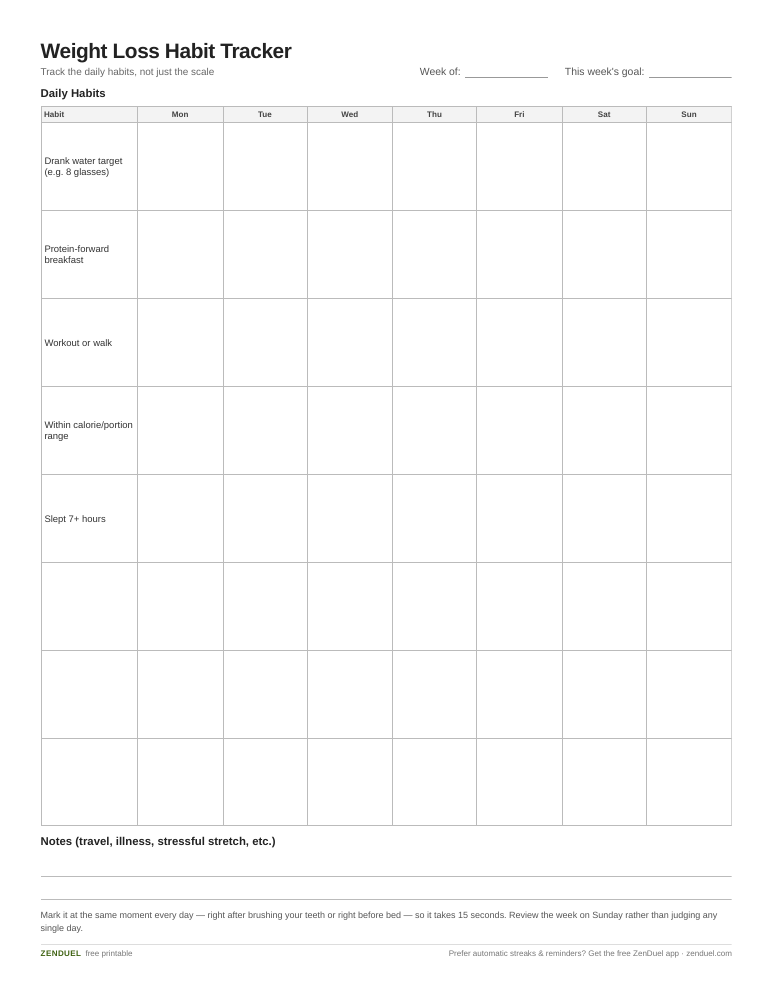
Our own printable — free, no sign-up, no email required. Eight habit rows across a Monday-to-Sunday grid, with a weekly goal field and a notes line at the bottom. US Letter (prints fine on A4).
Quick Answer
A printable habit tracker for weight loss is a simple grid — days of the week across the top, 5-8 habits down the side — where you check off things like water intake, a protein-focused meal, movement, and sleep each day. Print the free one-page PDF above, pin it somewhere visible, and mark it at the same time daily (morning or before bed) so it takes 15 seconds instead of becoming another task you skip.
What’s on the Printable Tracker
The free PDF is laid out as a single page so it’s quick to fill in and easy to pin up. At the top there’s a short header section with a blank for the week’s start date and a one-line ‘this week’s goal’ field. Below that is the main grid: 7 columns for the days of the week (Mon through Sun) across the top, and up to 8 habit rows down the left side, each with a checkbox-style cell for every day. A narrow notes row sits at the bottom for anything that threw off the week, like travel, illness, or a stressful stretch.
Keep the habit list short — 5 to 8 rows is the sweet spot. More than that and the sheet feels like a chore; fewer and it won’t capture enough of what actually drives weight loss. Good starting habits to write into the blank rows: drank water target amount (e.g., 8 glasses), ate a protein-forward breakfast, got in a workout or walk, logged meals or stayed within a calorie range, got at least 7 hours of sleep, and weighed in (weekly, not daily, is fine too).
Because the tracker is one page, it’s easy to print several copies at once — one per week — or print a single copy and reuse it with a dry-erase sleeve. Either way, keep it to one page: a tracker that takes two minutes to fill out gets skipped; one that takes 15 seconds gets kept.
How to Actually Use It (So It Sticks)
Pick one trigger time — right after you brush your teeth in the morning, or right before bed — and mark the tracker at that exact moment every day. Attaching it to an existing habit is what makes the new one automatic.
Put the printed sheet somewhere you’ll see it without looking for it: on the fridge, next to your coffee maker, or taped inside a cabinet door. A tracker buried in a drawer or a folder never gets filled in.
Track consistency, not perfection. The goal isn’t a perfect week of checkmarks — it’s seeing the pattern over 4-6 weeks. A string of mostly-checked boxes with a few gaps is completely normal and still represents real progress.
Review it weekly, not daily. Each Sunday (or whatever day works), glance back at the week: which habits were easy, which ones kept getting skipped, and whether that lines up with how your clothes fit or how you felt. Use that to decide which habits go on next week’s printed sheet rather than focusing on the scale alone.
Tips / Common Mistakes
Tracking too many habits at once is the most common reason people quit. Start with 3-4 habits for the first two weeks, then add more rows once those feel automatic.
Don’t make daily weigh-ins the only metric on the sheet. Weight fluctuates for reasons that have nothing to do with fat loss (water, sodium, hormones), and a bad weigh-in day can tank motivation even when the actual habits went well. If you do weigh daily, give it its own row and judge the day’s ‘success’ on the habits, not the number.
Avoid vague entries like ‘eat healthy.’ Make each row something you can answer with a clear yes or no — ‘drank 8 glasses of water’ beats ‘stayed hydrated’ because there’s no ambiguity when you go to check the box.
Don’t toss the sheet and start over after a bad week. Print a fresh one for the new week if needed, but carry over the same habit list — the full picture, gaps included, is more useful than a streak that resets every time you slip.
Explore more: more free habit trackers and guides.
Free Printable Habit Tracker for Weight Loss Goals FAQs
Is the habit tracker really free to download?
Yes — the printable PDF is free to download and print, with no sign-up or email required.
What should a weight loss habit tracker include?
A short list of 5-8 daily habits — water intake, a protein-forward meal, movement or a workout, sleep, and staying within a calorie or portion target — checked off in a simple day-by-day grid. Weekly weigh-ins can be added as an optional extra row.
Should I track my weight every day on the tracker?
It’s optional. Daily weight fluctuates due to water retention and other factors, so some people prefer a weekly weigh-in row instead, using the daily rows for habits they have more direct control over.
Is a printable tracker better than a habit-tracking app?
Neither is objectively better — a printed sheet is visible without opening an app and has zero notifications or distractions, while an app can sync across devices and set reminders. Many people use a printable version precisely because it’s low-friction and doesn’t compete with phone notifications.
Skip the Spreadsheet — Track It in ZenDuel
Habit streaks, mood tracking, and accountability duels in one free app — no template maintenance required. Get ZenDuel.
Want a calmer inbox? Subscribe to the free newsletter.
Photo by Prophsee Journals on Unsplash.