If your houseplants keep dying, the problem usually isn’t a lack of love — it’s a lack of a system. Watering “when you remember” works for a month, then life gets busy and a pothos quietly turns to mush in the corner. A plant care habit tracker fixes that by turning “I should check on my plants” into a specific, repeatable routine you actually follow.
Table of Contents
This guide walks through how to set one up, what to track for each plant, and how to adjust it as seasons change. We’ve also laid out a ready-to-use tracker layout below (you can grab the free printable attached to this post) so you don’t have to design one from scratch.
Download the Free Plant Care Habit Tracker
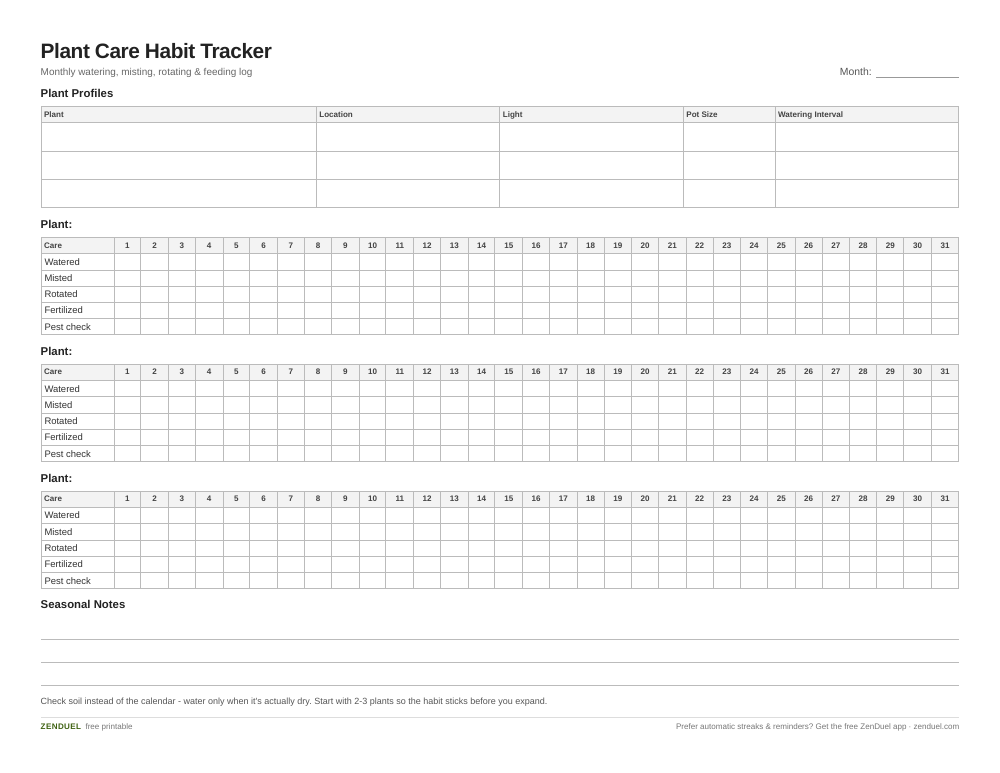
Our own printable — free, no sign-up, no email required. Three per-plant grids (31 days x 5 care habits), a plant-profile table, and a seasonal-notes section. US Letter (prints fine on A4).
Quick Answer
A plant care habit tracker works best as two parts: a one-time “plant profile” card for each plant (light, pot size, how often it typically needs water) and a recurring check-in grid where you log actual watering, misting, rotating, and feeding dates. Checking soil moisture a couple of times a week — rather than watering on a fixed calendar schedule — and logging what you find is what actually prevents over- and under-watering.
Set Up Your Tracker in 4 Steps
Start with a plant profile for each plant you own. On the printable log, this is the top strip: plant name, location in the house, light level (low, medium, bright indirect, direct), pot size, and a rough watering interval as a starting point — most houseplants fall somewhere between watering when the top inch of soil is dry and watering every week or two, but this varies a lot by species and season, so treat it as a guess you’ll refine.
Next, set a recurring check-in instead of a rigid watering schedule. The biggest mistake with plant care is watering on autopilot every Sunday regardless of what the soil is actually doing. Instead, schedule 2-3 soil checks a week (a reminder on your phone, or just tying it to an existing habit like Monday/Wednesday/Friday coffee). At each check, poke a finger an inch into the soil or use a cheap moisture meter, and only water if it’s actually dry.
Then log every action, not just watering. The tracker grid should have a row per plant and a column per day, with space to mark more than one type of care: watered (W), misted (M), rotated toward the light (R), fertilized (F), and pest-checked (P). A single checkmark column only tells you a plant got attention — it doesn’t tell you if it got the right attention.
Finally, review weekly and adjust. Once a week, scan the grid: which plants are drying out faster than expected, which ones are staying damp too long, which ones haven’t been rotated in a while. Use that pattern to adjust the watering-interval guess on each plant’s profile card rather than sticking to your original estimate.
What the Tracker Layout Should Include
The attached printable is built as a monthly log so you can see patterns over several weeks, not just a single week. Across the top, each plant gets its own column header with its profile info (name, light, pot size, target watering interval). Down the side, each row is a date (1-31), with checkbox-style cells for watering, misting, rotating, and fertilizing for each plant.
A separate small section on the page is for “seasonal notes” — a few lines to jot down when you change your routine, since most houseplants need less frequent watering in fall and winter when growth slows and more in spring and summer when they’re actively growing. There’s also a spot for pest/disease checks, since catching early signs of spider mites or root rot during a routine check is far easier to deal with than once a plant is already struggling.
If you’d rather work digitally, the same layout translates directly into a spreadsheet: one tab per month, plants as columns, dates as rows, and a simple letter code (W/M/R/F/P) in each cell. A spreadsheet version also makes it easy to color-code cells so overdue plants visually stand out.

Tips and Common Mistakes
Don’t track more habits than you’ll realistically keep up with. If you have fifteen plants, tracking daily misting for every single one will burn you out fast — start with the 2-3 plants that are most finicky or most important to you, then expand once the habit feels automatic.
Avoid watering on a fixed calendar date as your only signal — soil dryness depends on light, humidity, pot material, and season, so the date alone can mislead you into overwatering in winter or underwatering in summer.
Keep the tracker somewhere you’ll actually see it, like near your watering can or on the fridge, rather than buried in a drawer. A tracker you forget to check is no better than no tracker at all.
Celebrate small streaks. Treating a consistent two-week stretch of on-time checks as a win (not just “plants didn’t die”) makes the habit easier to sustain long term, the same way any other habit-tracking method works best when progress is visible and acknowledged.
Explore more: more habit-building guides and trackers.
Plant care habit tracker FAQs
How often should I actually check my plants, not just water them?
Aim for 2-3 soil checks a week rather than a once-a-week watering ritual. Checking more often means you water based on what the soil needs that day instead of guessing on a fixed schedule.
Should I use a paper tracker or an app?
Either works — the best tracker is the one you’ll actually keep up with. A printed log on the fridge works well if you’re a visual, tactile person; a spreadsheet or app is better if you already live on your phone and want reminders built in.
Do I need a different tracker for every plant?
No — one tracker with a column or row per plant is enough. The key is giving each plant its own profile (light, pot size, watering interval) so you’re not treating a succulent and a fern the same way.
Does the tracker need to change with the seasons?
Yes. Most houseplants slow down and need less frequent watering in fall and winter, then pick back up in spring and summer. Use the seasonal notes section to log when you shift your watering interval so you’re not stuck on a summer schedule in January.
Skip the Spreadsheet — Track It in ZenDuel
Habit streaks, mood tracking, and accountability duels in one free app — no template maintenance required. Get ZenDuel.
Want a calmer inbox? Subscribe to the free newsletter.
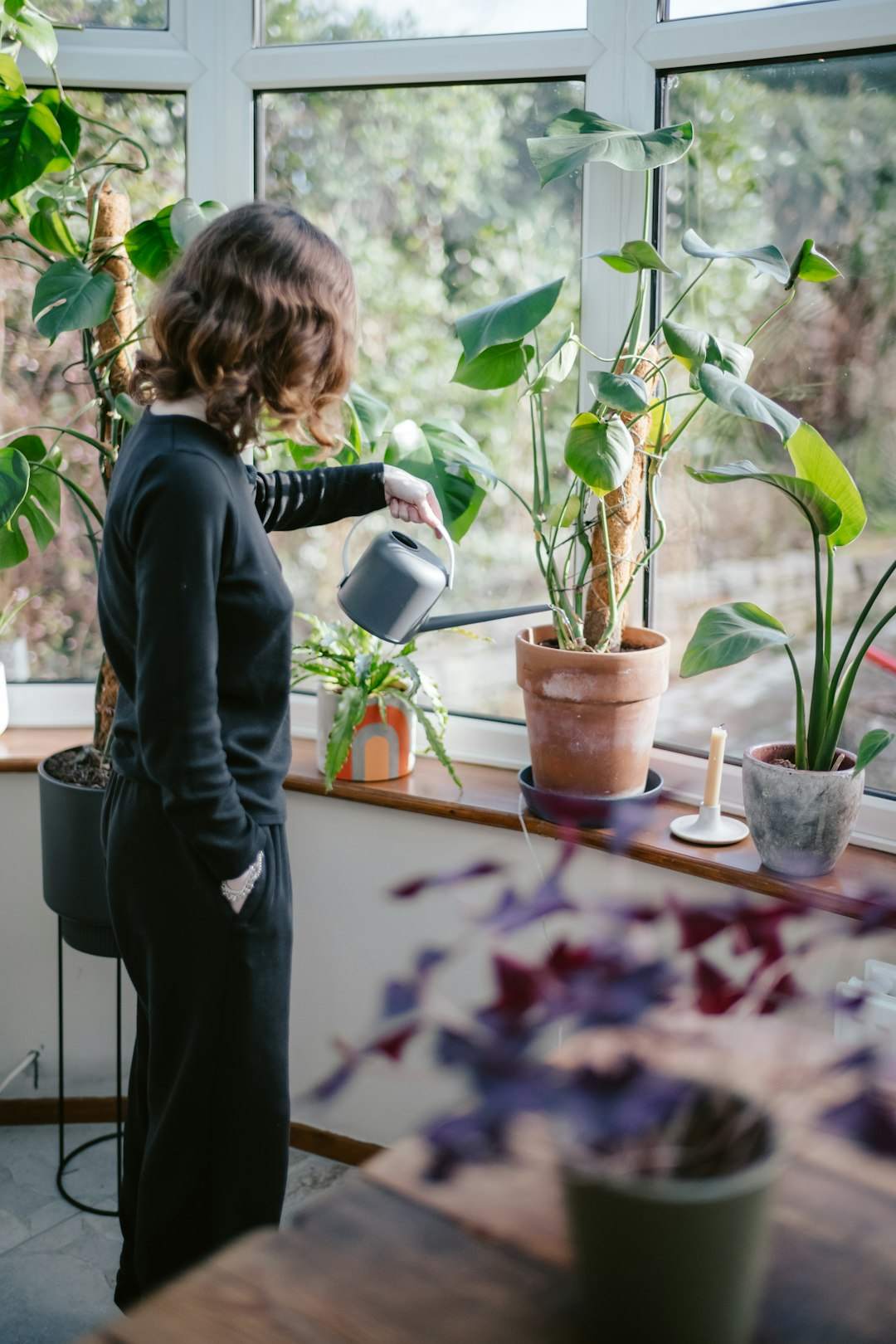
Photo by Annie Spratt on Unsplash.