If you’ve ever sent a client home with a vague instruction like “try to keep up with that habit we discussed,” you already know how quickly it gets forgotten by the next session. A simple printable habit tracker turns that intention into a concrete homework assignment — something the client can pin to the fridge or tuck into a planner, and something you can actually review together week to week.
Table of Contents
This guide covers how to introduce a habit tracker handout to clients, what the layout should include so it’s easy to fill out daily, and the most common ways these trackers get derailed (and how to prevent that). You can download and print a ready-to-use version right here on this page.
Download the Free Habit Tracker Handout for Therapy Clients
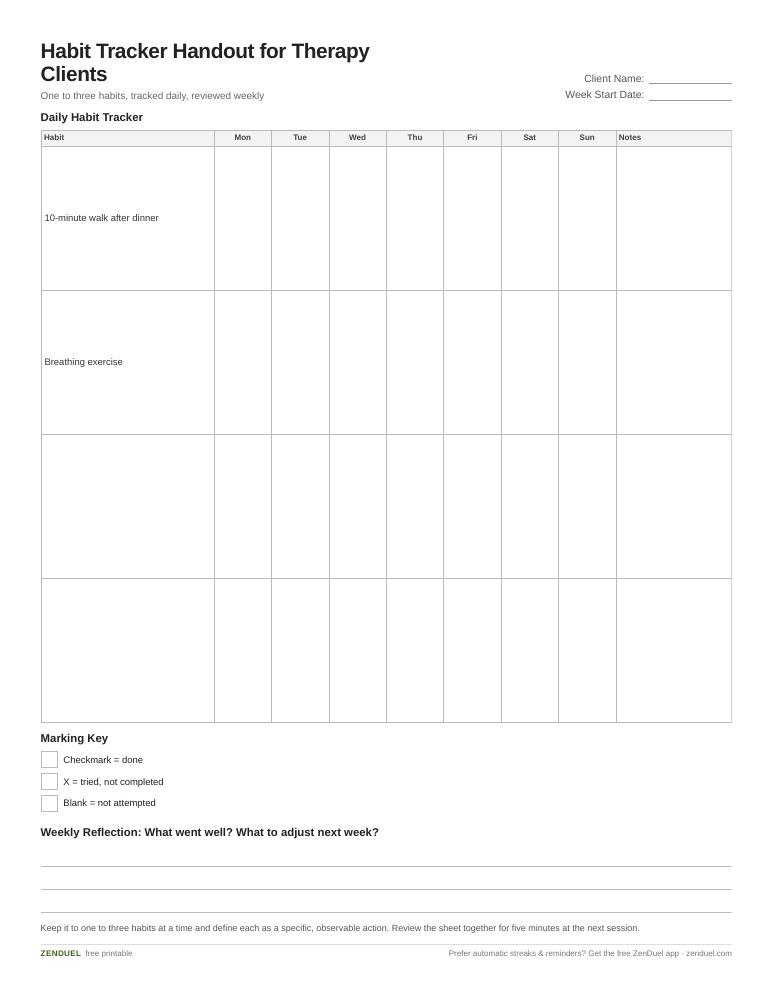
Our own printable — free, no sign-up, no email required. Four habit rows, seven days per week, a notes column, and a weekly reflection section. US Letter (prints fine on A4).
Quick Answer
A habit tracker handout for therapy clients is a one-page printable with a short list of target habits down the side and the days of the week across the top, so the client marks off each habit daily and brings the sheet to the next session for review. Keep it to one to three habits at a time, define each habit as a specific observable action, and build five minutes into session to look at the sheet together.
How to Use the Tracker With Clients
Start by narrowing the focus. Trackers fail when they try to monitor five or six habits at once — the sheet gets overwhelming and clients abandon it within a few days. Pick one to three habits that connect directly to the client’s current goals, whether that’s a behavioral activation target (a short walk, a phone call to a friend) or a coping skill they’re practicing between sessions (a breathing exercise, a gratitude note).
Next, define each habit as a specific, observable action rather than a vague intention. “Exercise more” is hard to mark off honestly; “10-minute walk after dinner” is not. Agree on the wording together in session so the client leaves with language they actually chose, which tends to improve follow-through.
Explain how to mark the sheet — a simple checkmark, an X, or a 1-to-3 rating if you want to capture effort or mood alongside completion — and where it should live (on the fridge, by the bed, in a bag) so filling it out becomes a visual cue rather than an afterthought.
Finally, build the review into the next session. Ask what the sheet shows, not just whether the client “did well.” Missed days are data about barriers and triggers, not evidence of failure, and that reframe is often more clinically useful than the tracker itself.
What to Include on the Printable Layout
A handout works best as a single page the client can print at home or that you print in-office. The layout we provide for download follows a format that’s easy to fill out by hand: a header area at the top for the client’s name, the start date, and the one to three habits being tracked that week; a grid below with each habit listed as a row and the seven days of the week (Monday through Sunday) as columns, with a checkbox-style cell for each day; and a notes or mood column on the right-hand side so the client can jot a quick word about what helped or got in the way on a given day.
Below the grid, leave a short line or two for a weekly reflection — what went well, what to adjust next week — so the sheet doubles as a conversation-starter rather than just a scorecard. Sized for a standard letter page, it’s easy to print in batches and keep on hand for intake folders or as a take-home after any session where habit-building comes up.
Tips and Common Mistakes
The biggest mistake is tracking too many habits at once — one to three is the practical ceiling for most clients, especially early in treatment. Vague habit definitions are the second most common issue; if two people could disagree about whether the habit happened, it’s not specific enough yet.
Skipping the in-session review is another frequent miss. The tracker only earns its place as a clinical tool if it’s actually looked at together; otherwise it’s just paperwork. And don’t let a broken streak become a reason to quit the sheet entirely — reframe a missed day as information (what got in the way?) rather than a setback, and keep the same sheet running rather than starting a fresh one.
Lastly, pair the habit with an existing cue when possible (after brushing teeth, right after sitting down at a desk) — habits anchored to an existing routine are easier for clients to remember to log, and easier to actually do.
Explore more: more habit-building tools and trackers.
Habit Tracker Handout for Therapists FAQs
How many habits should a client track at once on the handout?
One to three is the practical range for most clients. Trying to track more at once tends to overwhelm the sheet and the client, leading to it being abandoned within the first week.
How often should the client fill out the tracker?
Daily, at the same time or cue each day if possible (after a meal, before bed). Daily marking keeps the habit fresh in memory, rather than trying to recall the whole week at once before the next session.
Is this the same as a symptom or mood self-monitoring form?
No — a habit tracker is focused on whether a specific action happened (a walk, a breathing exercise, a phone call), while symptom-monitoring forms used in CBT typically log mood, urges, or symptom severity over time. The two can be used alongside each other, but a habit tracker is simpler and aimed at behavior, not symptom measurement.
Skip the Spreadsheet — Track It in ZenDuel
Habit streaks, mood tracking, and accountability duels in one free app — no template maintenance required. Get ZenDuel.
Want a calmer inbox? Subscribe to the free newsletter.
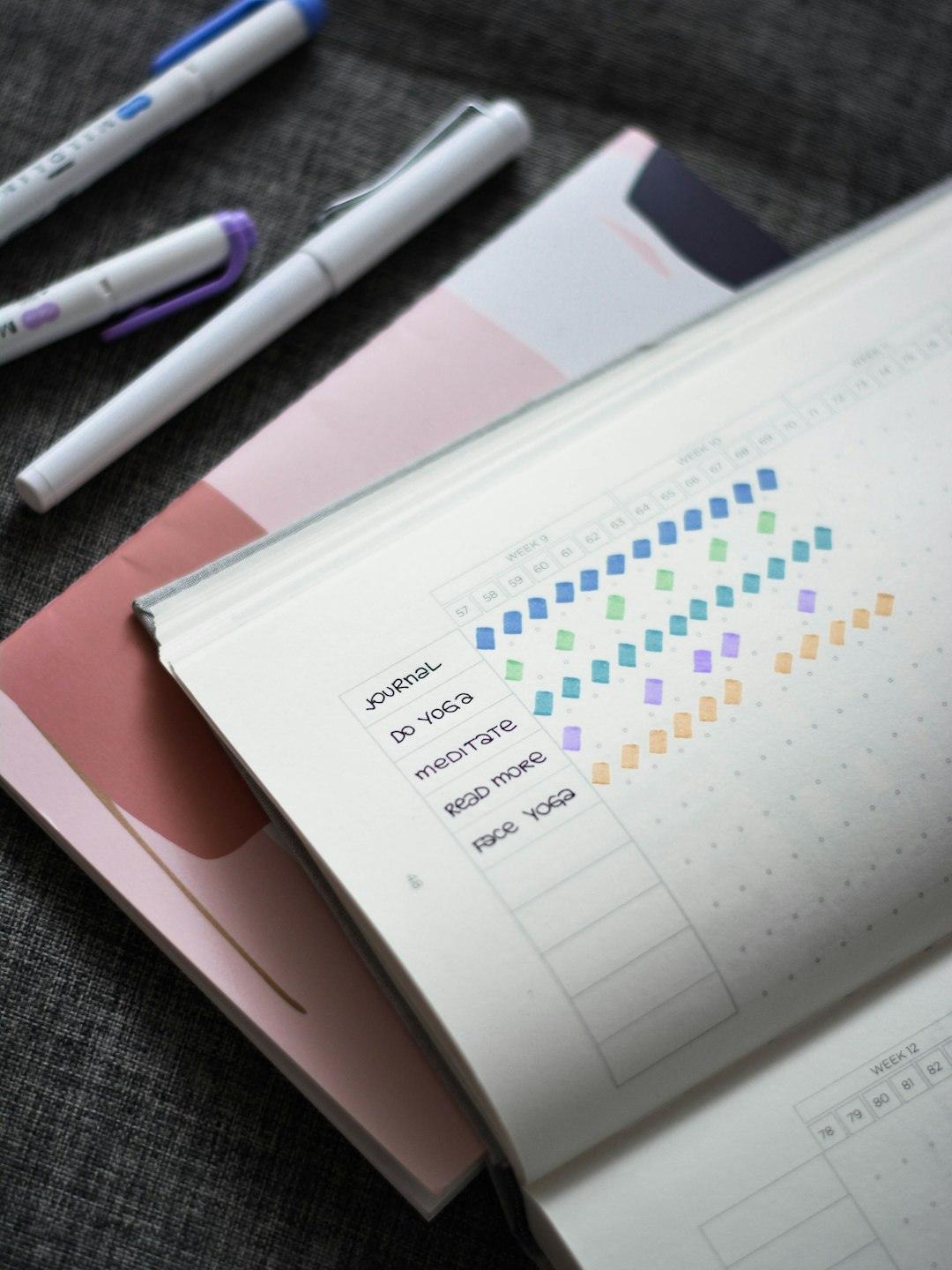
Photo by Prophsee Journals on Unsplash.