Daily mood trackers are great in theory, but most people abandon them within a couple of weeks because filling in a grid every single day starts to feel like homework. If that’s happened to you, the problem usually isn’t you — it’s the format.
Table of Contents
A weekly mood check-in keeps the parts of mood tracking that actually help (noticing patterns, catching trends before they become a slump) while cutting the daily upkeep. Below is a simple template layout you can use on paper, in a spreadsheet, or with the free printable attached to this post, plus the exact questions to ask yourself each week.
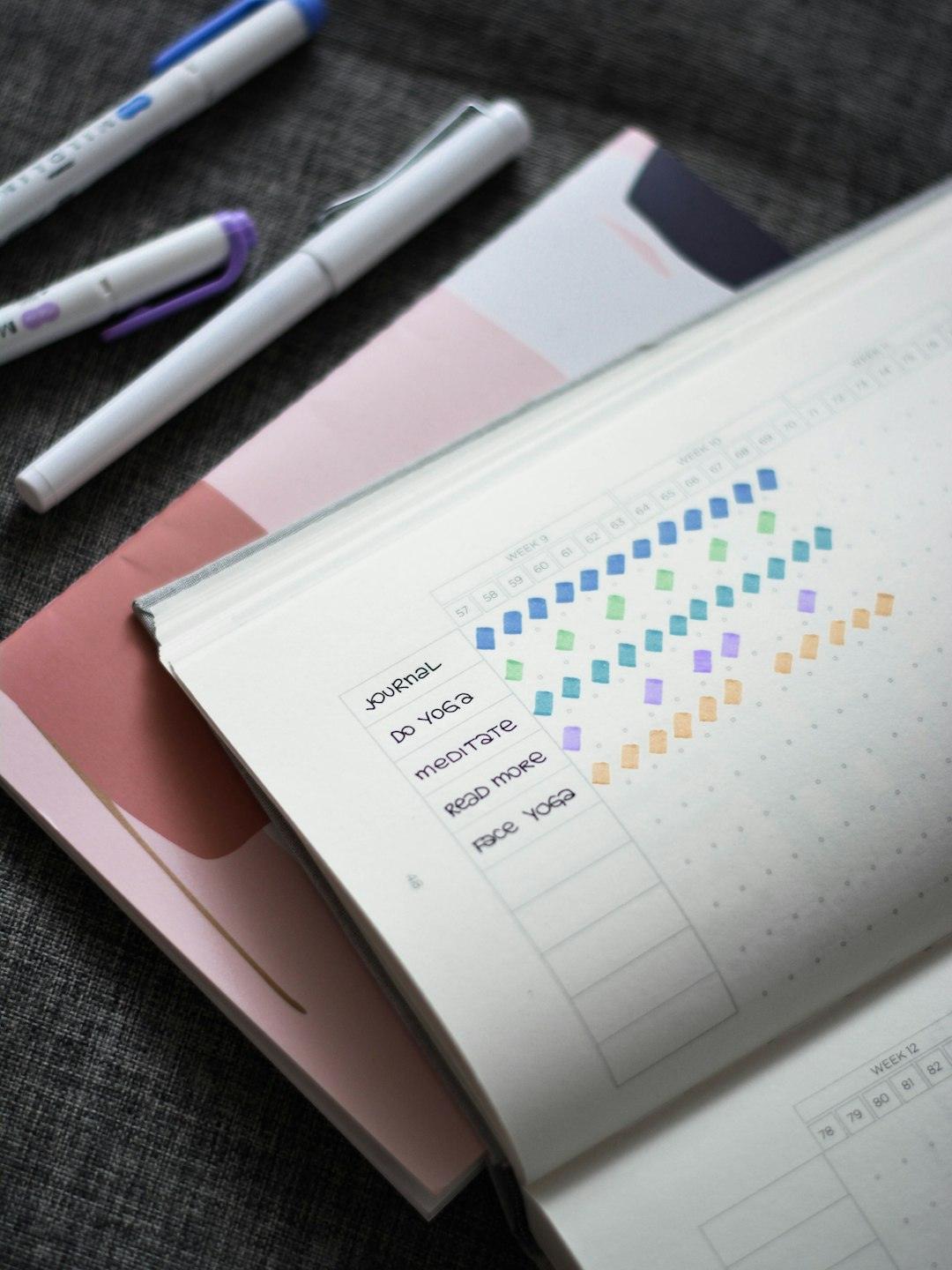
Download the Free Weekly Mood Check-In Log
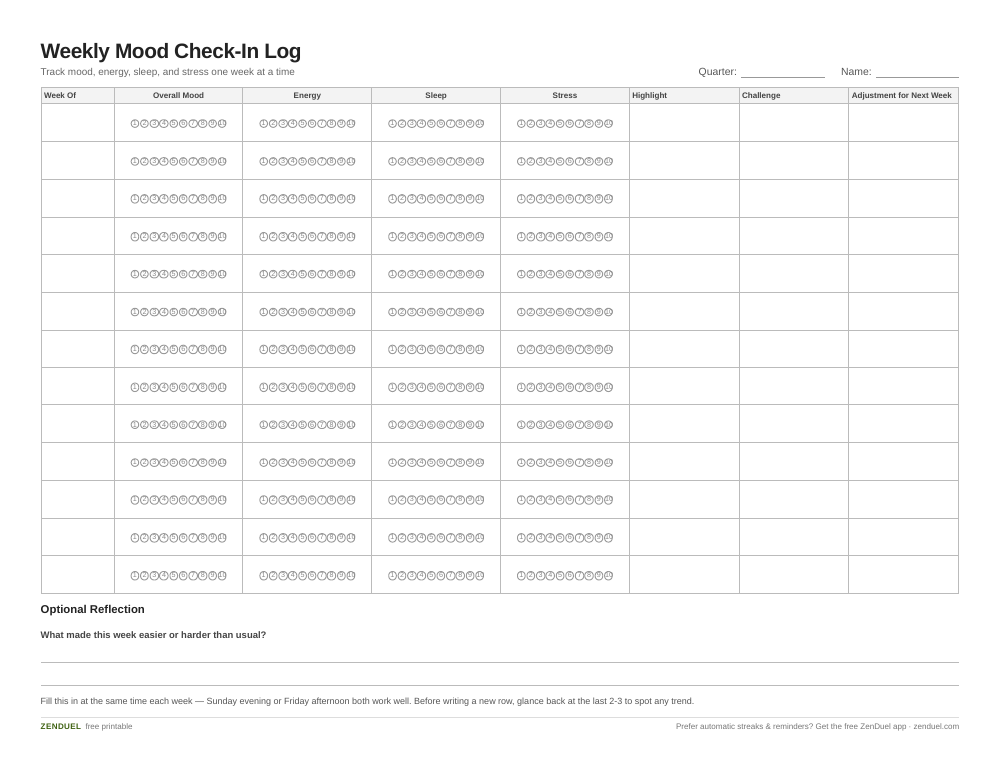
Our own printable — free, no sign-up, no email required. A 13-week running log with mood, energy, sleep, and stress ratings plus highlight, challenge, and adjustment columns, and a reflection space below. US Letter (prints fine on A4).
Quick Answer
A weekly mood check-in is a short, once-a-week entry where you rate your overall mood plus 2-4 related factors (like energy, sleep, and stress), jot one highlight and one challenge from the week, and note one small adjustment for the week ahead. It takes about 5 minutes and is easier to stick with long-term than daily logging.
How to Do Your Weekly Check-In (Step by Step)
Pick one consistent time — Sunday evening, Friday afternoon, or whatever bookends your week naturally. Consistency matters more than which day you choose, because it’s what turns this into a habit instead of a one-off.
Rate your overall mood for the week on a 1-10 scale, then rate 2-4 contributing factors separately: energy, sleep quality, and stress level are the three most useful ones for most people, since mood is really a downstream effect of those. Keeping scores separate (rather than one vague ‘how was my week’ number) makes it much easier to spot what’s actually driving a low week.
Write one highlight and one low point from the week in a sentence each — no need for a full journal entry unless you want one. Then write one small adjustment to try next week: more sleep on weeknights, one less commitment, a walk at lunch. This is the step that turns tracking into actual change, rather than just a record.
Before you close it out, glance back at your last 2-3 entries. Patterns show up fast at the weekly level — a slow slide in energy, a stress score that keeps climbing on the same days, a mood dip that lines up with a recurring event.
What the Template Looks Like
The layout that works best is a running log, not a fresh sheet every week: one row per week, so you can see several weeks at a glance without flipping pages. Columns are: Week Of (date), Overall Mood (1-10), Energy (1-10), Sleep (1-10), Stress (1-10), Highlight, Challenge, and Adjustment for Next Week. A page sized for about 12-13 rows covers a full quarter, which is enough to see real trends without the sheet feeling cluttered.
Below the log, leave a small open section for an optional reflection prompt — something like ‘what made this week easier or harder than usual?’ — for weeks when a number alone doesn’t capture it. The free template attached to this post is already laid out this way, so you can start filling it in without building anything yourself; just print it or open it in Sheets/Excel and go.

Tips / Common Mistakes
Don’t add more than 4-6 fields. The whole point is that this stays fast — once it takes more than five minutes, people stop doing it. Skip a week without trying to ‘catch up’ retroactively; a guessed entry for a week you don’t remember clearly just adds noise to your data. Treat low scores as information, not a failing grade — a 3/10 week is data to act on, not a judgment. And actually review past weeks occasionally; the log is only useful if you look back at it, not just fill it in and forget it. Finally, if a particular week feels rough enough that you want more detail, it’s fine to drop into a daily log for a short stretch and then go back to weekly once things settle.
Explore more: more mental health tools and templates.
Weekly mood check-in template FAQs
Is weekly mood tracking as effective as daily tracking?
Daily tracking captures more fine-grained detail, but it only helps if you actually keep doing it. A weekly check-in trades some granularity for consistency, which for most people means better long-term pattern-spotting because the habit actually sticks.
What’s the best day of the week to do a mood check-in?
Whichever day naturally bookends your week — Sunday evening or Friday afternoon are the most common choices. The specific day matters less than picking one and keeping it consistent so the check-in becomes a routine.
Can I mix daily and weekly tracking?
Yes. A common approach is weekly check-ins most of the time, switching to brief daily notes during a stressful stretch or when working through something specific with a therapist, then returning to weekly once things stabilize.
What should I track besides mood?
Energy, sleep quality, and stress level are the three most useful add-ons since they strongly influence mood and help explain why a week felt the way it did. Avoid adding more than that, or the check-in stops being quick.
Skip the Spreadsheet — Track It in ZenDuel
Habit streaks, mood tracking, and accountability duels in one free app — no template maintenance required. Get ZenDuel.
Want a calmer inbox? Subscribe to the free newsletter.
Photo by Prophsee Journals on Unsplash.