Keeping a puppy’s potty schedule straight, remembering when the cat’s nails were last trimmed, or staying consistent with a new training command is hard to do from memory alone. A printable habit tracker turns pet care into a simple daily checklist instead of a mental juggling act.
Table of Contents
This guide walks through how to use a free printable pet care and training tracker (you can grab the download near the top of this page), what habits are actually worth tracking, and how to avoid the most common reasons these trackers get abandoned after a week.

Download the Free Pet Care & Training Habit Tracker
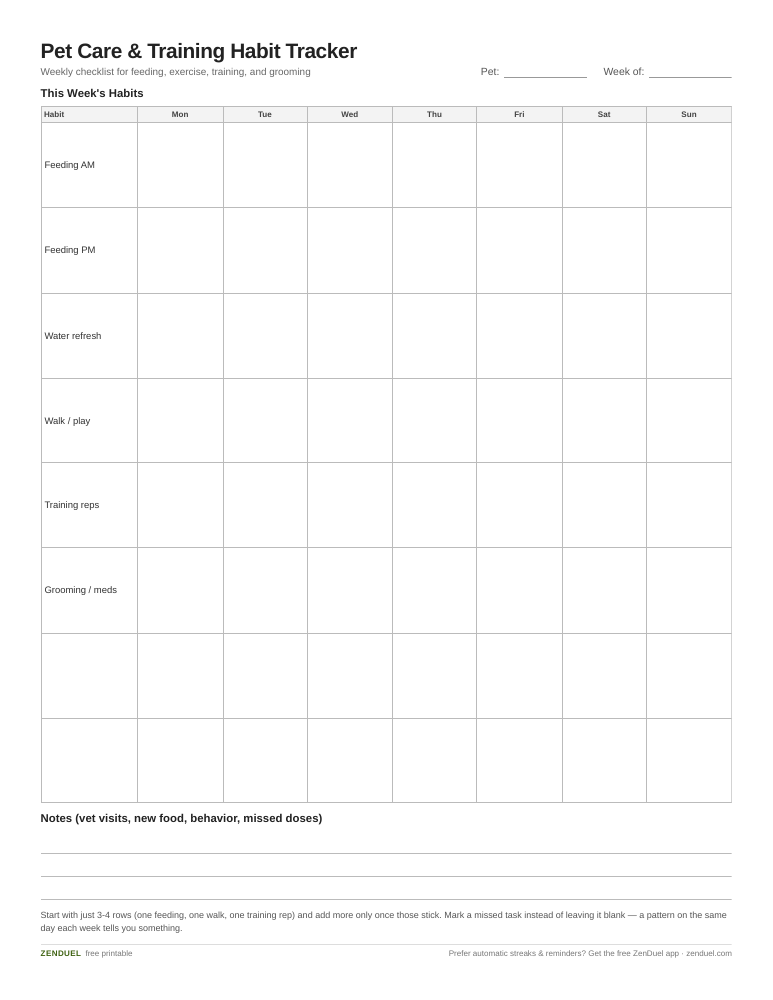
Our own printable — free, no sign-up, no email required. A 7-day habit grid for feeding, water, exercise, training, and grooming, plus a weekly notes strip. US Letter (prints fine on A4).
Quick Answer
A pet care habit tracker is a simple daily or weekly chart where you check off core care tasks — feeding, water, exercise, training reps, grooming, and medication — so nothing gets missed and you can spot patterns (like a dog that skips meals on high-exercise days) over time.
How to Use the Printable Tracker
The free printable attached to this post is laid out as a one-page weekly grid: rows down the left side for each habit (feeding AM/PM, water refresh, walk or play session, training session, and a grooming/meds row), and seven columns across the top for Monday through Sunday. Each box gets a simple checkmark, a number (like minutes walked or training reps completed), or an initial if more than one household member shares pet duties.
At the bottom of the page there’s a small notes strip for each week — this is where you log anything unusual: a vet visit, a new food, a behavior issue, or a missed dose. Print one sheet per pet per week, or print a stack and keep a clipboard near the leash hook or food bin so it’s filled in the moment the task happens, not from memory at the end of the day.
If you’re training a new command or working through a behavior issue, add a dedicated training row and track short, frequent sessions (a few minutes, several times a day) rather than one long session — consistency matters more than duration for most pets.
What to Track: Core Habits for Pet Care and Training
Feeding and water: log each meal and whether water was refreshed, especially useful for multi-pet households or shared care duties, and for catching early signs of appetite changes.
Exercise and enrichment: a walk, play session, or puzzle toy rotation — even a quick minute count helps you notice when activity has dropped off.
Training reps: short, repeated practice of one command or behavior, checked off per session rather than per day, builds consistency faster than occasional long sessions.
Grooming and hygiene: brushing, nail trims, ear checks, and teeth brushing. Veterinary dental guidelines note that brushing needs to happen daily to actually slow plaque buildup, so a daily check-box for teeth is more useful than a weekly one. A yearly dental checkup alongside the regular annual vet exam is a common baseline — senior pets often benefit from exams every six months instead.
Medication and health notes: any medication, supplement, or symptom gets its own line so you have a clear record to bring to the vet instead of trying to recall it from memory.

Tips / Common Mistakes
Don’t try to track everything at once. Start with three or four habits (feeding, one walk, one training rep, one grooming task) and add rows only once those stick — overloaded trackers get abandoned fastest.
Keep the tracker somewhere you’ll actually see it: on the fridge, by the leash, or next to the food container, not in a drawer. A tracker you have to go find won’t get used.
Log the miss, not just the win. If a walk or training session gets skipped, mark it rather than leaving the box blank — a pattern of missed boxes on the same day of the week is useful information (maybe Tuesdays are too packed for a full walk) and worth adjusting around.
Keep the week’s sheet even after it’s full. Comparing a few weeks side by side is often how you notice slow changes — a dog gradually eating less, or a training behavior that’s finally sticking.
Explore more: more free printable habit trackers.
Pet Care and Training Habit Tracker FAQs
How often should I actually fill in the tracker?
In the moment, right after each task — feeding, walk, or training rep — rather than trying to remember everything at the end of the day. A sheet kept near the food bowl or leash makes this easiest.
Can one tracker work for multiple pets?
It’s usually clearer to print one sheet per pet, since feeding amounts, training goals, and grooming needs differ. If pets share a near-identical routine, you can add an initial or symbol per pet in each box instead.
What’s the biggest reason pet habit trackers get abandoned?
Trying to track too many habits at once. Starting with just a few essentials (food, one walk, one training rep) and building up is far more sustainable than a 15-row chart from day one.
Skip the Spreadsheet — Track It in ZenDuel
Habit streaks, mood tracking, and accountability duels in one free app — no template maintenance required. Get ZenDuel.
Want a calmer inbox? Subscribe to the free newsletter.
Photo by Swello on Unsplash.