Anxiety and poor sleep feed each other in a loop: a wired, racing mind makes it hard to fall asleep, and a short or restless night leaves your nervous system more reactive the next day. Breaking that cycle rarely requires a dramatic overhaul — it usually comes down to consistent, boring-but-effective habits around your schedule, environment, and pre-bed routine.
Table of Contents
This guide walks through the sleep hygiene changes with the most evidence behind them for anxious sleepers, plus the cognitive habits (borrowed from CBT-I, the leading clinical treatment for chronic insomnia) that address the racing-thoughts part of the problem, not just the environment.
Quick Answer
Keep a fixed wake time every day (even after a bad night), get morning light and daytime movement, cut caffeine after midday and alcohol close to bedtime, dim lights and screens an hour before bed, and give yourself a consistent wind-down routine. If your mind is racing, get out of bed after about 20 minutes rather than lying there trying to force sleep — this single behavior change is one of the most effective anxiety-and-sleep fixes there is.
Build a Schedule Your Nervous System Can Trust
Anxious brains calm down around predictability. Going to bed and waking up at the same time every day — including weekends — helps regulate your internal clock so sleep pressure builds when you want it to, instead of at random hours. Resist the urge to sleep in after a rough night; a late wake-up just pushes your clock later and makes the next night harder.
Get exercise during the day, ideally with some morning or daytime light exposure, since both help anchor your circadian rhythm and burn off physical restlessness that anxiety produces. Avoid vigorous workouts in the few hours right before bed, since they can raise heart rate and alertness at the wrong time.
Watch what you put in your body and when. Caffeine has a long half-life, so an afternoon coffee can still be affecting you at bedtime — most people do better cutting it off by early-to-mid afternoon. Alcohol can make you feel drowsy initially but fragments sleep later in the night, which is especially disruptive if you’re already prone to waking up anxious at 3 a.m. Try to finish eating a few hours before bed, and if you get shaky or wired from low blood sugar, a small protein-rich snack (like nuts, yogurt, or turkey) before bed can help.
Calm the Racing Mind, Not Just the Room
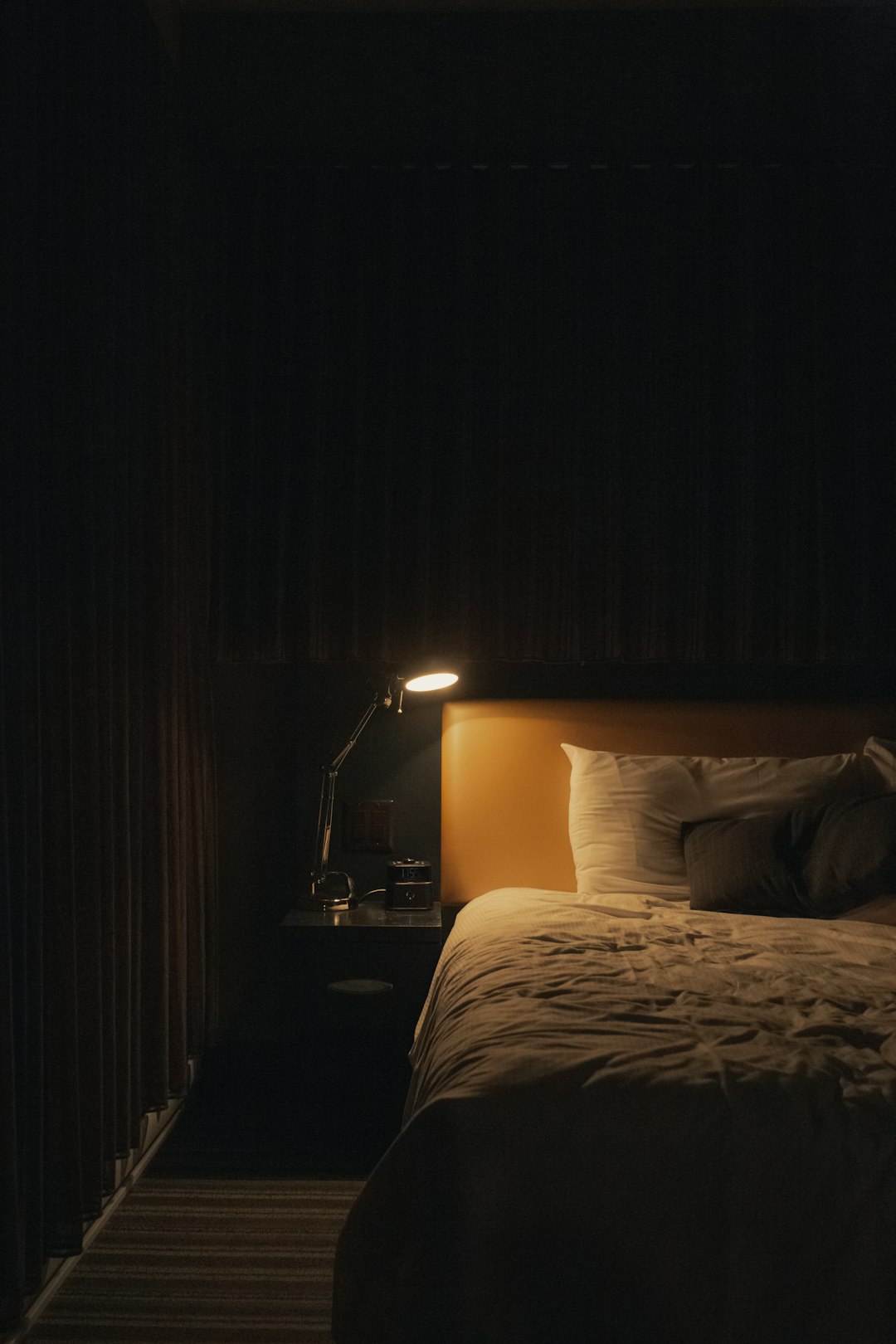
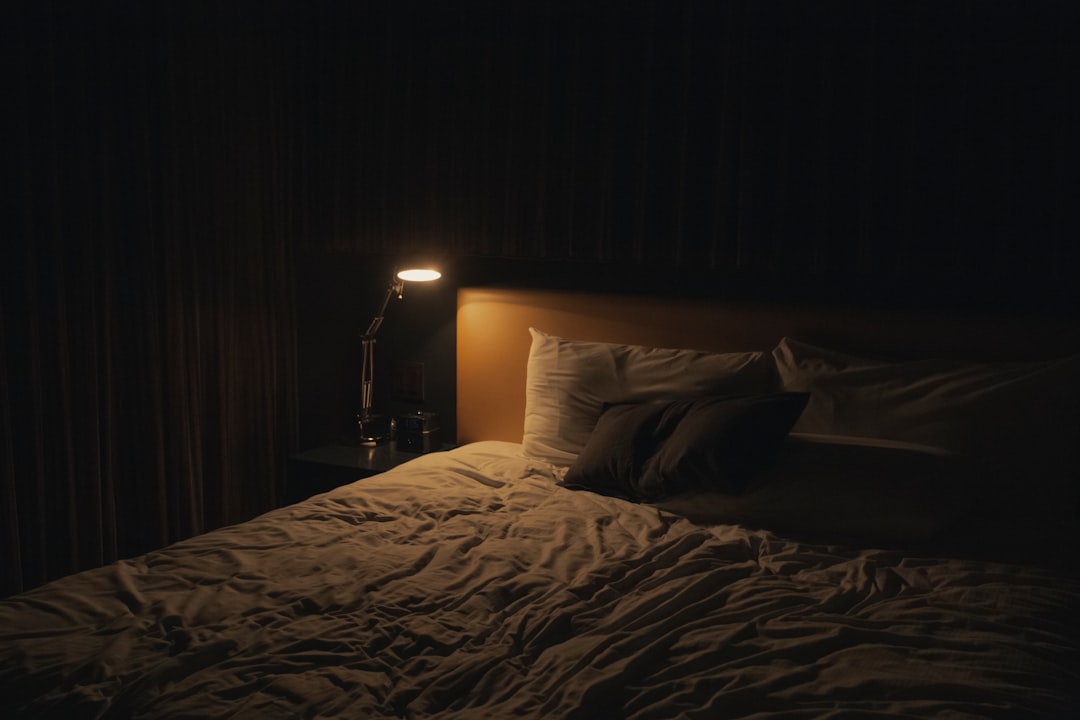
A dark, cool, quiet bedroom used only for sleep (not work, scrolling, or late-night worrying) helps your brain associate the space with rest rather than alertness. Dim household lights and put screens away roughly 30-60 minutes before bed — blue light and stimulating content both delay the natural rise in melatonin your body needs to feel sleepy.
The habit that matters most for anxious sleepers, though, is what to do when your mind won’t switch off. This comes straight from cognitive behavioral therapy for insomnia (CBT-I), which clinical guidelines and sleep specialists recommend as the first-line treatment for chronic insomnia, often ahead of medication. Two of its core techniques translate easily into a nightly routine: if you’re lying awake for around 20 minutes unable to sleep, get up and do something calm and low-stimulation in dim light (reading, stretching, slow breathing) until you feel drowsy, then return to bed — this breaks the association between your bed and frustrated wakefulness. And rather than trying to blank your mind, keep a notepad by the bed to jot down worries or a to-do list, so your brain doesn’t have to hold onto them.
A short wind-down routine — the same handful of calming steps every night, like dimming lights, a warm shower, light stretching, or a few minutes of slow breathing or progressive muscle relaxation — signals to your body that sleep is coming, which is especially useful when anxiety makes bedtime feel like a switch that won’t flip.
Tips / Common Mistakes
Don’t ‘try harder’ to fall asleep — effort and anxiety about not sleeping are usually what keep you awake; the goal is to let sleep happen, not force it. Avoid checking the clock repeatedly during the night, since watching time pass tends to spike anxiety and make it harder to drift back off; turn the clock face away if needed.
Don’t use your bed for anything other than sleep (and intimacy) — working, eating, or doom-scrolling in bed weakens the mental link between bed and sleep. Be cautious with naps: if anxiety is already disrupting your nighttime sleep, long or late-afternoon naps can make it harder to fall asleep that night. And don’t expect one good night to fix things — sleep hygiene habits work cumulatively over one to two weeks, not instantly, so give a new routine a fair trial before judging it.
If sleep problems are frequent, long-lasting, or tied to significant anxiety symptoms, it’s worth talking to a doctor or therapist — CBT-I is typically delivered over a handful of sessions with a trained clinician and is considered more effective long-term than sleep medication alone.
Explore more: more mental health guides.
Sleep hygiene for anxiety FAQs
Why does anxiety make it so hard to fall asleep?
Anxiety keeps your nervous system in an alert, threat-scanning state, which works against the physical and mental relaxation your body needs to fall asleep. Racing thoughts and physical tension (a fast heartbeat, muscle tightness) are both part of the same stress response, so calming one often helps the other.
Is it bad to lie in bed awake if I can’t sleep?
Yes — lying in bed frustrated and awake trains your brain to associate your bed with wakefulness and anxiety instead of sleep. If you’ve been awake for roughly 20 minutes, it’s better to get up, do something calm in low light, and return to bed once you feel drowsy.
How long does it take for sleep hygiene changes to work?
Most people need one to two weeks of consistent habits before noticing a real difference, since you’re retraining your body’s internal clock and its associations with bed and bedtime, not applying a one-night fix.
What is CBT-I and is it different from general sleep hygiene?
Cognitive behavioral therapy for insomnia (CBT-I) is a structured, clinician-led treatment that combines sleep hygiene with specific techniques for anxious or catastrophic thoughts about sleep. It’s considered the preferred first-line treatment for chronic insomnia and can also ease anxiety symptoms, whereas general sleep hygiene tips are habits anyone can try on their own first.
Build Better Habits With ZenDuel
Track your habits and mood, stay accountable, and build a calmer routine — get the ZenDuel app. Get ZenDuel.
Photo by Jp Valery on Unsplash.
