Workplace stress has a way of building in silence — a tense jaw here, a racing mind before a meeting there — until focusing on anything feels impossible. The good news is that you don’t need a meditation cushion, a quiet room, or even a lunch break to reset. The most effective mindfulness exercises take just minutes, and you can do them sitting exactly where you are right now.
Table of Contents
This guide covers seven practical desk-based mindfulness techniques, from a 20-second breathing reset to a fuller five-minute body scan. Each one is discreet enough to use between emails or before a video call, and none require closing an app or explaining yourself to a coworker.
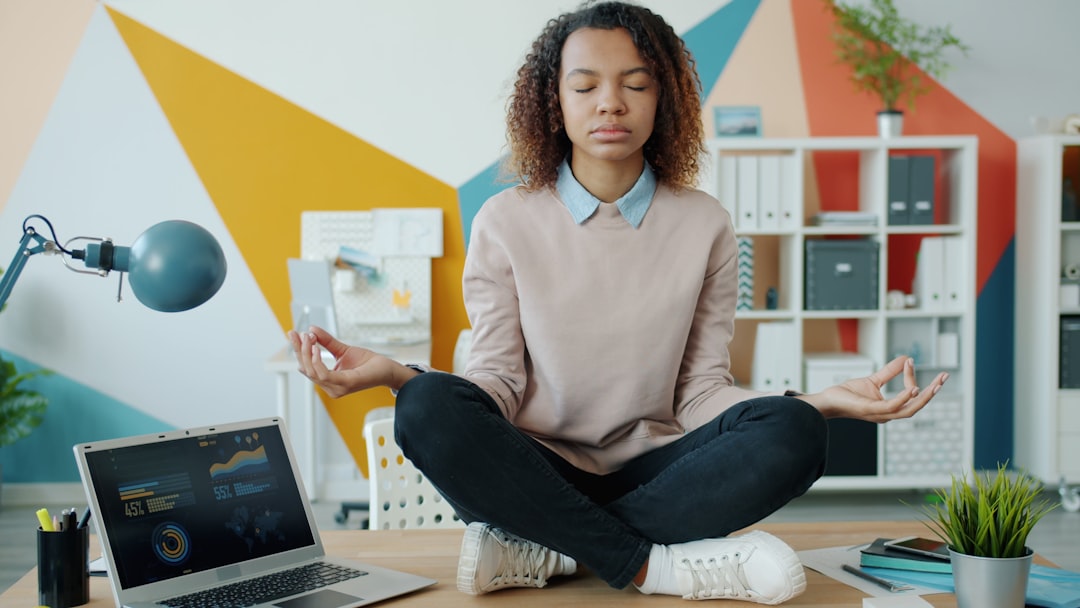
Quick Answer
The fastest desk mindfulness exercise is the Three-Breath Reset: sit upright, close your eyes if you’re comfortable, and take three slow deliberate breaths — notice air filling your lungs on the inhale and feel tension leave on the exhale. It takes about 20 seconds and can be done any time during the workday to interrupt a stress response and immediately refocus your attention.
Seven Desk Mindfulness Exercises, Ranked by Time
1. Three-Breath Reset (~20 seconds). Sit upright, close your eyes if comfortable, and take three slow, deliberate breaths. On each inhale, notice the sensation of air entering your lungs. On each exhale, consciously release any tension you notice in your body. This is the go-to technique for moments when concentration slips or anxiety spikes before a difficult meeting — it’s short enough that there’s no excuse not to do it.
2. Gratitude Snapshot (~20–30 seconds). Identify three specific things from your professional day you’re genuinely grateful for — a helpful colleague, a task you finished, a problem that got resolved. This brief practice interrupts negative thought spirals and shifts your baseline mood without requiring any change in your environment or routine.
3. Box Breathing (~2 minutes). Box breathing is a structured technique used widely in high-stress professions: inhale for a count of four, hold for four, exhale for four, hold for four. Repeat the cycle three to five times. It works by engaging the parasympathetic nervous system, which counteracts the physical stress response. You can do this with your hands on your keyboard — nobody around you will notice.
4. Five-Point Body Scan (~75 seconds). Rather than scanning your full body — which can take 20 or more minutes — this desk version targets the five areas where office workers hold the most tension: jaw, shoulders, hands, abdomen, and feet. Spend about 15 seconds on each area. Simply directing attention to a spot often causes held tension to release without any additional effort.
5. 5-4-3-2-1 Sensory Grounding (~2–3 minutes). This is one of the most effective techniques for pulling a distracted or anxious mind back to the present moment. Notice five things you can see, four things you can physically touch (your chair, your desk, your keyboard), three things you can hear, two things you can smell, and one thing you can taste. Moving through all five senses interrupts rumination and anchors your attention firmly in the here and now.
6. STOP Technique (~60 seconds). STOP is an acronym: Stop what you’re doing, Take a breath, Observe your current thoughts and feelings without judging them, then Proceed with awareness. This is especially useful when you catch yourself reacting emotionally — before firing back a reply to a frustrating email, for instance. It creates just enough space to respond thoughtfully rather than react impulsively.
7. Task Transition Ritual (~30 seconds). Between tasks, close your eyes, take one deep breath, and mentally ‘close’ what you just finished before setting a single clear intention for what comes next. This prevents the common experience of carrying stress and mental clutter from one task into the next — a pattern that compounds over a full workday and makes everything feel harder than it needs to be.
How to Actually Build These Into Your Workday
The biggest obstacle to desk mindfulness isn’t technique — it’s remembering to do it. A few approaches that work well: set a recurring hourly reminder on your phone or computer as a mindfulness bell; pair an exercise with an existing habit like making coffee or opening your inbox; or use natural transition points — arriving at your desk, finishing lunch, or the moment before a meeting — as automatic triggers that require no willpower.
Starting with just one technique is enough. The Three-Breath Reset is the easiest entry point because it’s so short there’s almost no barrier to doing it. Once it becomes habitual, layering in a longer practice like Box Breathing or the 5-4-3-2-1 Grounding is much easier. Consistency matters more than duration — a 20-second reset done multiple times throughout the day compounds meaningfully over a week of practice.

Common Mistakes (and How to Avoid Them)
Waiting until you’re overwhelmed. Mindfulness exercises work best as preventive tools, not emergency fixes. Building them into calmer moments trains your nervous system to access that settled state more quickly when real stress hits. If you only reach for these techniques when you’re already spiraling, they’ll feel awkward and less effective because you haven’t practiced accessing them under low-stakes conditions.
Judging the practice while doing it. The most common beginner mistake is evaluating whether the exercise is ‘working’ while you’re in the middle of it. Noticing your mind has wandered is not failure — it is literally the practice. The act of catching a drifted mind and gently returning it to the breath or body is the skill being trained. Do it without self-commentary.
Skipping it because you don’t have five minutes. Most of these techniques take under two minutes. If longer exercises feel like too much on a given day, default to the Three-Breath Reset or the Gratitude Snapshot. A brief practice done consistently will always outperform a more elaborate one that never actually happens.
Explore more: Explore more mindfulness guides and practices.
Desk mindfulness exercises FAQs
Can I do mindfulness exercises at my desk without coworkers noticing?
Yes. The Three-Breath Reset, Box Breathing, STOP Technique, and Task Transition Ritual are entirely invisible — they look like someone pausing to think. The 5-4-3-2-1 Grounding involves glancing around the room, but even that reads as a normal distraction break. None of these require closing your eyes or any visible posture change.
How long before I notice results from desk mindfulness exercises?
Many people feel an immediate shift in tension or focus after a single breathing session, especially with Box Breathing. More lasting changes — faster recovery from stressful moments, less reactive responses to frustrating situations — tend to emerge after one to two weeks of consistent daily practice, even if each session is very short.
Do I need to close my eyes for these exercises to work?
No. Closing your eyes reduces visual distraction but is optional for every technique in this guide. For breathing exercises, you can simply soften your gaze toward your desk. Practicing with eyes open is actually worth developing — it makes the skill more transferable to real-world stressful situations where closing your eyes isn’t practical.
Build Better Habits With ZenDuel
Track your habits and mood, stay accountable, and build a calmer routine — get the ZenDuel app. Get ZenDuel.
Photo by Vitaly Gariev on Unsplash.