If you lie awake at night with a racing mind, meditation might be the missing piece in your sleep routine — and you don’t even have to leave your bed to do it. Unlike traditional seated meditation, bed meditation is specifically designed to guide your nervous system from alertness into rest, making falling asleep the goal rather than something to resist.
Table of Contents
This guide walks you through exactly how to meditate in bed, covering setup, five practical techniques ranked by difficulty, and the most common mistakes that keep people staring at the ceiling. Whether you’re a complete beginner or someone who has tried meditation before and given up, you’ll find an approach here that works tonight.
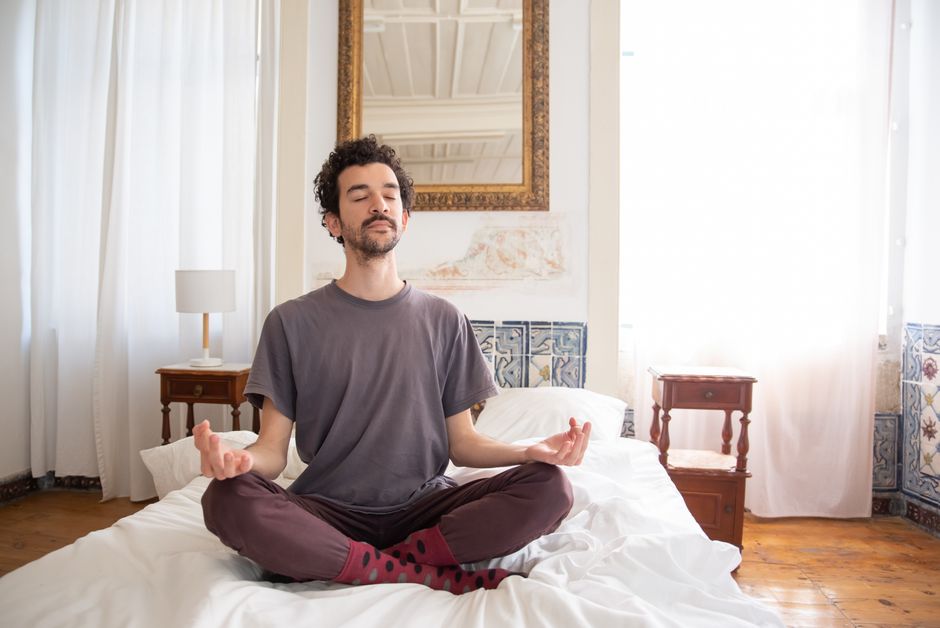
Quick Answer
To meditate in bed for better sleep: lie on your back in a comfortable position, close your eyes, and spend five to ten minutes focusing on slow, deliberate breathing — inhaling for four counts and exhaling for six to eight. When your mind wanders, gently return attention to the breath without judgment. Falling asleep during the practice is not a failure; for bedtime meditation, it’s the goal.
How to Set Up Before You Start
Environment matters more than most people realize. Dim or turn off all lights, put your phone on Do Not Disturb, and aim to keep the room comfortably cool — a cooler room supports the natural drop in body temperature that signals sleep. Wear loose, comfortable sleepwear so no fabric distracts you.
Lie flat on your back with your arms resting at your sides or with hands lightly on your abdomen. If lying flat is uncomfortable — due to back pain or acid reflux — prop yourself up slightly with a pillow or try lying on your side. Set an intention before you begin: something simple like ‘I am preparing my body for rest’ removes the performance pressure that makes beginners tense up.
Turn off screens at least 20 to 30 minutes before you start. If you plan to use a guided audio track, dim your device screen fully or place it face-down, and set a sleep timer so the audio fades out automatically.
Five Techniques to Try, Ranked from Simplest to Most Structured
Breath-focused meditation is the easiest starting point. Simply breathe in through your nose for a count of four, then breathe out slowly for a count of six or eight. The longer exhale activates your parasympathetic nervous system — the ‘rest and digest’ state — which physically slows your heart rate and drops your cortisol. When thoughts arise, notice them without engaging and return to counting your breath. Five minutes of this is enough for most beginners to feel a shift.
The 4-7-8 breathing technique adds a breath-hold for deeper effect. Exhale completely through your mouth first. Then inhale through your nose for four counts, hold the breath for seven counts, and exhale through your mouth for eight counts with a soft ‘whoosh’ sound. Repeat three to four cycles. The exact timing matters less than keeping the 4:7:8 ratio — the hold is what makes this technique particularly powerful for quieting an anxious mind.
Body scan meditation works by systematically releasing physical tension you may not even know you’re holding. Start at the top of your head or the soles of your feet and slowly move your awareness through each body part — scalp, forehead, jaw, shoulders, chest, hands, belly, hips, thighs, calves, feet. For each area, notice any tightness or warmth without trying to force a change. Simply observing a tense shoulder is often enough to release it. This technique typically takes ten to twenty minutes and is especially helpful if stress shows up in your body.
Visualization gives a busy, image-oriented mind something constructive to do. Close your eyes and picture a calm, familiar place — a quiet beach, a forest path, a childhood bedroom. Build the scene slowly using all your senses: what colors and light do you see, what sounds are present, what does the air feel like on your skin? Immersing in a peaceful imagined environment competes directly with the anxious thoughts that keep many people awake.
Guided sleep meditation is the best option if your mind is too active to anchor on breath or sensations alone. Apps like Calm and Headspace offer dedicated sleep sessions led by a narrator who keeps your attention occupied so you don’t have to do the mental work yourself. Choose a session of ten to twenty minutes and let the voice guide you. Many people find a familiar narrator or a consistent session they return to every night works better than switching content regularly.
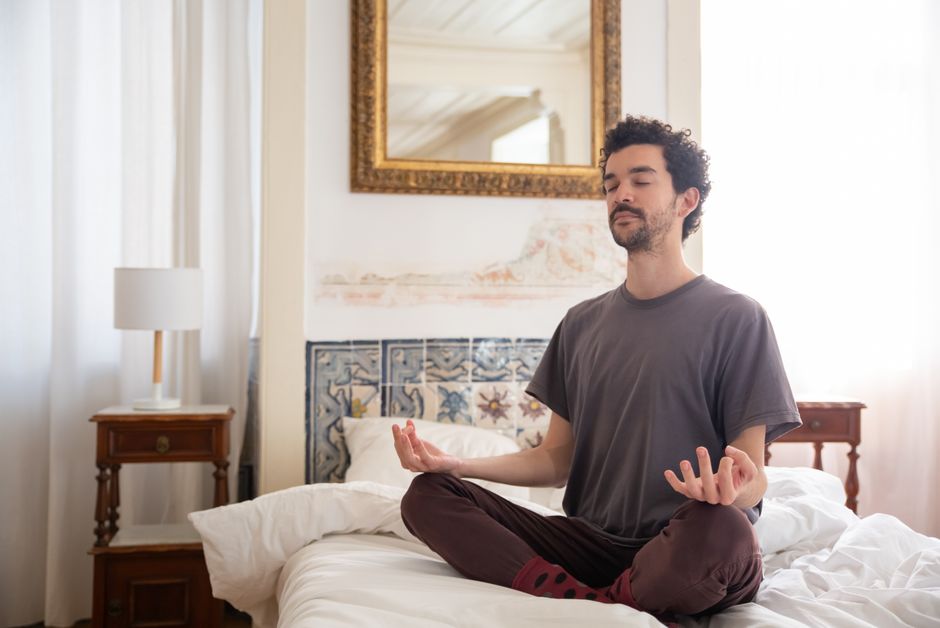
Tips and Common Mistakes to Avoid
The most common mistake is fighting the urge to fall asleep. Unlike daytime meditation — which aims for alert awareness — bed meditation has one job: helping you transition into sleep. If you drift off halfway through a body scan, that is success, not a lapse in discipline. Let go of the idea that you need to ‘complete’ the meditation.
Expecting instant results after one or two nights is another trap. Sleep benefits from meditation tend to build over one to four weeks of consistent practice. Five minutes done every night will serve you far better than a 30-minute session done once a week. Start small and treat it like brushing your teeth — a short, non-negotiable part of your wind-down routine.
Avoid switching techniques every night when you’re starting out. Familiarity with a single technique makes it more effective over time because your nervous system begins to associate that specific routine with sleep. Once you’ve found something that works, stick with it for at least a week before exploring other methods.
Don’t try to clear your mind completely — that’s not how meditation works. The goal is not a blank mind but a non-reactive one. Thoughts will arise; the practice is in noticing them and returning your focus to breath, body, or imagery without frustration. Over time, this response to wandering attention becomes more automatic and the mind quiets on its own.
Explore more: Explore more meditation guides.
Meditating in bed for sleep FAQs
Is meditating lying down ‘real’ meditation?
Yes. Lying down is a completely valid meditation posture, especially when the goal is sleep. Traditional seated meditation prioritizes alertness and insight, but bed meditation deliberately redirects the nervous system toward rest. The technique adapts to its purpose — for sleep, lying down is the optimal position.
What if I fall asleep before I finish the meditation?
That means it worked. For bedtime meditation, falling asleep is the intended outcome. Even if you drift off partway through a body scan or breathing exercise, your body and nervous system will have already started the relaxation response. There is no need to ‘complete’ the session.
How long should I meditate in bed before sleep?
Beginners do well with five to ten minutes. Most people find ten to twenty minutes is a comfortable sweet spot that covers a full body scan or several rounds of breathing technique. Consistency matters more than duration — a short nightly practice beats occasional long sessions.
Build Better Habits With ZenDuel
Track your habits and mood, stay accountable, and build a calmer routine — get the ZenDuel app. Get ZenDuel.
Photo by Andrea Piacquadio on Pexels.
