Looking for the complete, updated guide? Read Box Breathing for Anxiety: The 4-4-4-4 Technique.
Table of Contents
Box breathing is one of the simplest, most immediately effective relaxation tools you can learn. In as little as a few minutes, this four-step breathing pattern can shift your nervous system from a heightened stress state into a calmer, more focused one — no app, cushion, or prior meditation experience required.
Used by Navy SEALs to stay composed under extreme pressure and rooted in ancient pranayama breathwork from India, box breathing has earned its reputation across both high-performance and wellness circles. This guide walks you through the exact technique, when to use it, and how to avoid the most common beginner pitfalls.
Quick Answer
Box breathing means inhaling for 4 counts, holding for 4 counts, exhaling for 4 counts, and holding again for 4 counts — then repeating. One full cycle takes about 16 seconds, and just 3–4 rounds can noticeably lower stress and bring mental clarity.
How to Do Box Breathing: Step-by-Step
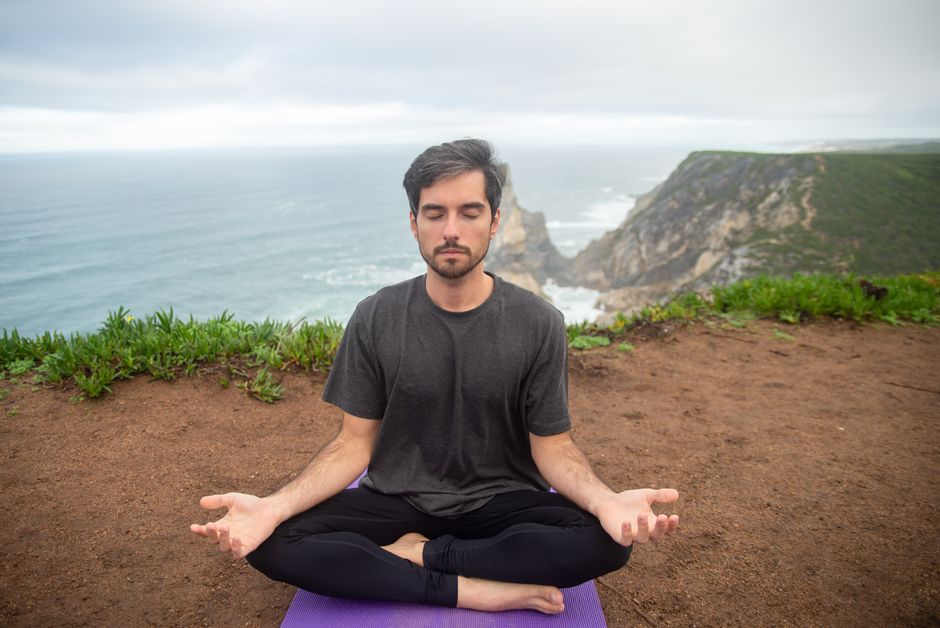
Find a quiet spot where you can sit upright comfortably. You can close your eyes or keep a soft downward gaze — whichever feels more natural. Before you begin, exhale fully to empty your lungs and give yourself a clean starting point.
Step 1 — Inhale: Breathe in slowly through your nose for a count of four. Feel your lungs and belly expand. Step 2 — Hold: Keep the breath in for four counts without straining. Step 3 — Exhale: Release the air slowly and completely through your mouth (or nose) for four counts. Step 4 — Hold: Pause with empty lungs for another four counts before your next inhale.
That is one full cycle. Repeat for 3 to 4 rounds to start, or continue for 5 to 15 minutes if you have the time. The count of four is a guideline, not a rule — if three or five feels more comfortable, use that, as long as each segment stays equal. Over time, many people naturally extend their count as the practice becomes easier.
Why It Works and When to Use It
Box breathing works by deliberately activating the parasympathetic nervous system — the branch responsible for rest and recovery — and dialing down the sympathetic ‘fight or flight’ response. Slow, rhythmic breathing signals safety to the brain and can help lower a racing heart rate and reduce cortisol, the body’s primary stress hormone.
The focused counting also serves as a simple form of mindfulness: it anchors attention to the present moment, interrupting anxious thought loops. This dual action — physiological and cognitive — is why the effects feel almost immediate.
The best times to practice are before a high-pressure meeting or event, during an afternoon slump when focus fades, in bed if stress is preventing sleep, or first thing in the morning to set a calm tone for the day. Critically, it also works in the middle of a stressful moment, making it one of the few meditation tools that is genuinely portable and usable on the fly.
Tips and Common Mistakes
The biggest mistake beginners make is overthinking the technique itself, which can ironically produce more anxiety than calm. If you find yourself fixating on whether you’re doing it ‘right,’ simply slow down and breathe naturally for a few breaths before trying again. The method is meant to be effortless, not a performance.
Don’t hold your breath with force or tense your chest — the holds should feel like a gentle pause, not a struggle. If you feel lightheaded or dizzy at any point, stop and return to normal breathing. This usually means you are breathing too deeply too fast, or the count is too long for where you are right now.
Practice during calm moments, not just crisis ones. Building the habit when you are relaxed makes it much easier to access when you are not. One or two brief sessions a day — even just a few minutes each — is enough to begin noticing a difference. Sitting upright rather than lying down helps keep you alert and makes the breath mechanics slightly easier.
A useful trick for visual learners: mentally trace the four sides of a square as you move through each phase. Many people find this adds a light anchoring quality that deepens the meditative effect without adding any complexity.
Explore more: Explore more meditation guides.
Box Breathing Meditation FAQs
How long should I do box breathing to feel calmer?
Even 3 to 4 complete cycles — roughly one minute — can produce a noticeable calming effect. For deeper relaxation or better sleep, 5 to 15 minutes is a common target. Start small and build up as the technique becomes second nature.
Is box breathing the same as 4-7-8 breathing?
No. Box breathing uses equal counts for all four phases (typically 4-4-4-4). The 4-7-8 technique has a longer exhale and a different hold pattern. Both are breathwork tools for calming the nervous system, but the mechanics and sensations differ — box breathing tends to feel more balanced and is slightly easier for beginners.
Can anyone do box breathing, or are there contraindications?
Box breathing is safe for most people. Those with respiratory conditions such as asthma or COPD, or anyone who experiences panic attacks triggered by breath-focused practices, should check with a healthcare provider first or try a shorter count with no holds until they gauge their response.
Build Better Habits With ZenDuel
Track your habits and mood, stay accountable, and build a calmer routine — get the ZenDuel app. Get ZenDuel.
Photo by Artem Podrez on Pexels.
