A mood tracker is one of the simplest bullet journal spreads to start with and one of the most useful to keep long-term. Instead of relying on memory, you log how you feel each day in a small grid or shape, and by the end of the month a pattern — good or bad — is staring back at you in color.
Table of Contents
Below are mood tracker layouts that work whether you’re a beginner with a plain notebook or someone who loves doodling intricate designs, plus a free printable you can use right away if you’d rather skip the grid-drawing.
Download the Free Monthly Mood Tracker
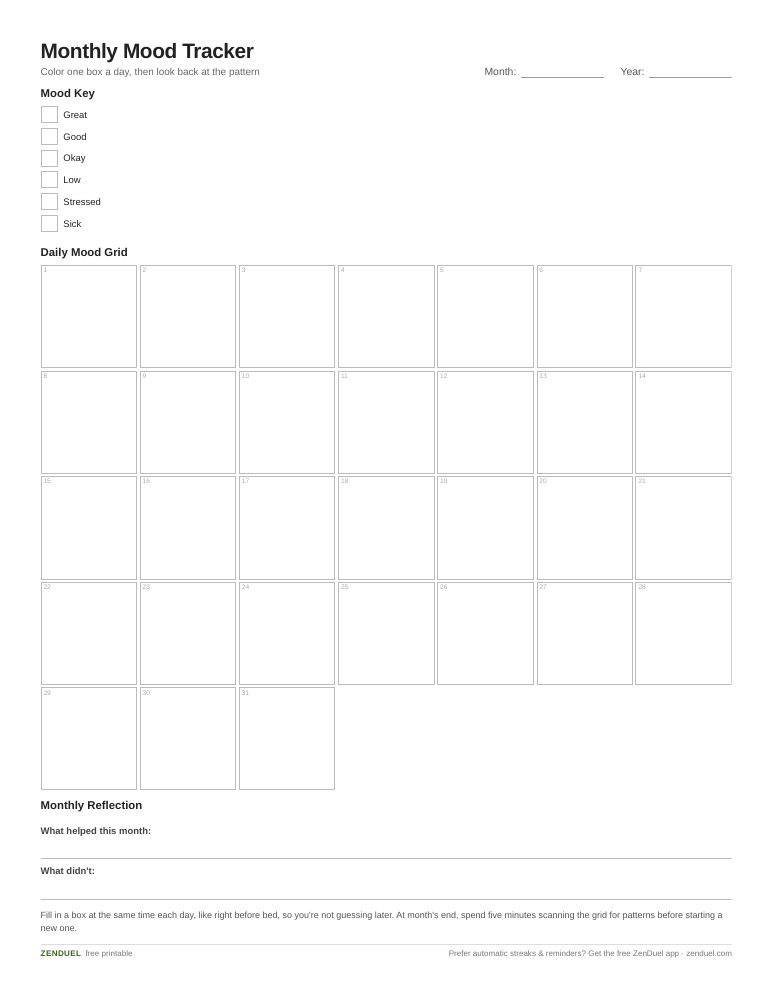
Our own printable — free, no sign-up, no email required. A 6-mood key, a 31-box daily grid labeled by day number, and two end-of-month reflection prompts. US Letter (prints fine on A4).
Quick Answer
The easiest mood tracker spread is a simple grid: one row or column per day of the month, filled in with a color that corresponds to a mood on a key (e.g., yellow for happy, blue for calm, gray for low, red for stressed). More advanced versions trade the grid for a shape — a mandala, flower, umbrella with raindrops, or heart-shaped envelopes — where each section or petal represents one day.
Mood Tracker Layouts to Try
Grid or ‘pixel’ tracker: Draw (or print) a grid with 28-31 small squares, one per day, often arranged 4-7 columns wide. Color each square based on your mood that day using a key of 4-6 moods. This is the fastest to maintain and the easiest to compare month over month, which is why it’s often called a ‘year in pixels’ when scaled up to a full year.
Mood mandala or flower: Draw a circle divided into one wedge per day, or a flower with one petal per day. Color a section in at the end of each day. This takes more up-front drawing time but turns into a satisfying piece of art by month’s end — a nice option if you want your tracker to double as decoration.
Shape-based trackers: Pick a shape that fits the month’s theme — an umbrella with one raindrop per day for a rainy month, a jar you fill with colored marbles, a heart-shaped envelope for each day, or a tree where each leaf is a day. The shape doesn’t change the tracking logic, it just changes what you’re coloring in.
Habit-mood combo row: Add a mood column next to your regular habit tracker so you can see at a glance whether certain habits (exercise, sleep, water intake) line up with better or worse mood days. This is useful if you’re trying to find cause-and-effect patterns, not just log feelings in isolation.
Weekly check-in instead of daily: If a full month grid feels like too much upkeep, track mood just once a week with a short written note next to the color. You lose daily granularity but it’s far easier to stick with long-term.
How to Set Up the Printable
The free printable attached to this post gives you a ready-made grid spread so you don’t have to draw one by hand: a header area for the month and year, a color-coded mood key along the top with 5-6 mood labels (for example: great, good, okay, low, stressed, sick) each paired with a color swatch, and a 31-box grid below labeled with the day numbers so you can color or shade one box per day.
There’s also space at the bottom for a short monthly reflection line — what helped, what didn’t — so the tracker isn’t just a wall of color with no takeaway. Print it, grab colored pens or pencils, and fill in one box a day; no drawing or measuring required.
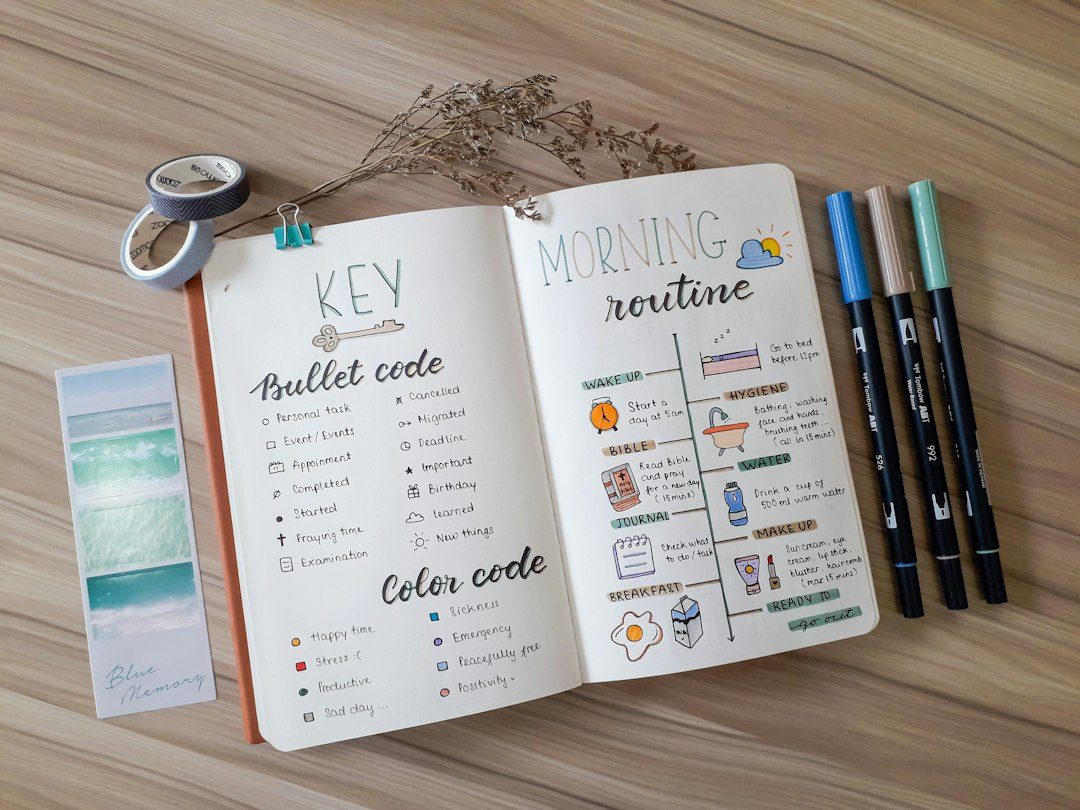
If you’d rather build your own from scratch in a notebook, keep the same structure: a key first, consistent box or section sizes, and day numbers labeled clearly so you don’t lose track of which square belongs to which day.
Tips & Common Mistakes
Keep the mood key short. Five or six mood categories is plenty — more than that and you’ll forget which color means what, or spend too long deciding between near-identical moods.
Fill it in at the same time each day, like right before bed, so you’re not trying to remember how Tuesday felt on Friday.
Don’t abandon it after a bad week. The real value of a mood tracker shows up over months, when you can spot that your mood dips every time you skip exercise or sleep poorly, for instance.
If a design takes too long to maintain, simplify it. A tracker you stop using is worth nothing — a plain colored grid you actually fill in every day beats an elaborate mandala you give up on by day 10.
Review it at month’s end instead of just filling it and moving on. Spend five minutes looking at which days or weeks stand out and jotting down why, if you can tell.
Explore more: more habit-tracking spreads and printables.
Mood tracker bullet journal spreads FAQs
What colors should I use for a mood tracker?
Any system works as long as it’s consistent — common choices are yellow/warm colors for good moods, blue or gray for low or calm moods, and red or orange for stress or anger. Pick 5-6 colors max and write the key down somewhere you’ll see it every time you fill the tracker in.
How long should I keep a mood tracker before expecting useful insights?
Give it at least one full month, and ideally two or three. Mood patterns tied to weather, work cycles, or habits are much easier to spot once you have more than a few weeks of data to compare.
Do I need to draw my own mood tracker spread?
No — you can use the free printable included with this post if you’d rather skip drawing a grid by hand. It’s ready to print, fill in with colored pens, and reuse as a template each month.
What’s the difference between a mood tracker and a habit tracker?
A habit tracker logs whether you did something (exercised, drank water, read). A mood tracker logs how you felt. Many bullet journalers place them side by side so they can see whether specific habits line up with better or worse mood days.
Skip the Spreadsheet — Track It in ZenDuel
Habit streaks, mood tracking, and accountability duels in one free app — no template maintenance required. Get ZenDuel.
Want a calmer inbox? Subscribe to the free newsletter.
Photo by Julia Kicova on Unsplash.