When anxiety flares up, the day can feel shapeless — your sleep, movement, and thoughts all blur together and it’s hard to tell what’s actually helping. Habit tracking gives you a small, concrete anchor: instead of trying to ‘feel less anxious,’ you track the specific, repeatable actions that are known to support a calmer nervous system, and you watch the pattern build over time.
Table of Contents
This guide walks through why habit tracking helps with anxiety, which habits are worth tracking first, how to set up a system that won’t turn into another source of guilt, and mistakes to avoid so tracking stays supportive instead of stressful.
Quick Answer
Pick 2-4 small, anxiety-relevant habits (like sleep, movement, or a brief check-in with your thoughts), log them daily in a simple tracker, and review the pattern weekly rather than judging yourself day to day. The goal is visibility and consistency, not a perfect streak.
Why Habit Tracking Helps With Anxiety
Anxiety often comes with a sense of unpredictability — you can’t always control the racing thoughts, but you can control whether you went for a walk, got to bed on time, or did a few minutes of breathing practice. Tracking those actions gives you a sense of agency even on days when your mood doesn’t cooperate.
Tracking also turns vague self-assessment into data. Instead of ‘I’ve been anxious all week,’ you might notice ‘I’ve slept under six hours four nights this week’ or ‘I skipped exercise every day I felt worst.’ That kind of pattern is far more useful for identifying triggers and adjusting your routine than trying to reconstruct the week from memory.
Cognitive behavioral therapy (CBT), one of the most established approaches to treating anxiety, relies on similar self-monitoring — tracking thoughts, situations, and behaviors to spot patterns and test whether anxious predictions actually come true. A basic habit tracker is a lighter-weight version of that same principle: notice, record, review, adjust.
How to Set Up an Anxiety-Friendly Habit Tracker
Start with habits that have a direct, well-established link to anxiety and mood regulation rather than an ambitious list of a dozen goals. Good starting points include: a consistent sleep and wake time, some form of daily movement (even a 10-minute walk counts), a short mindfulness or breathing practice, limiting caffeine or alcohol late in the day, and one small social or connection habit, like texting a friend or checking in with someone you trust.
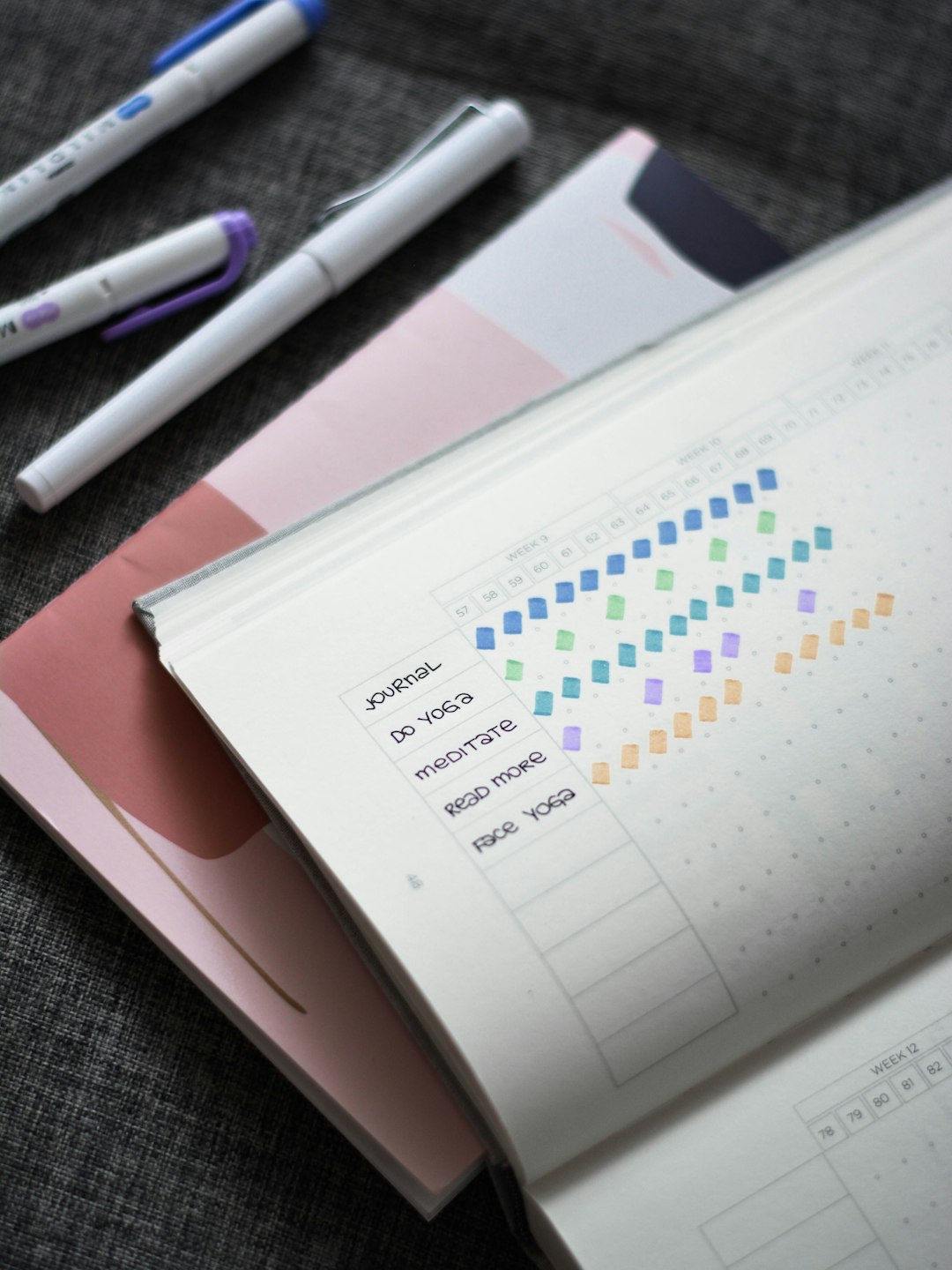
Keep the tracker itself dead simple. A checkbox grid on paper, a habit-tracking app, or even a notes app table all work — the format matters far less than whether you’ll actually use it. If you want a lower-friction option, use a simple 1-3 rating instead of pass/fail (for example, ‘3 = full 20-minute walk, 1 = just stepped outside for a minute’), so an off day still counts as data instead of a broken streak.
Use ‘habit stacking’ to make the new habits easier to remember: attach each new habit to something you already do automatically. Productivity writer James Clear, who popularized the technique, frames it as ‘After [current habit], I will [new habit]’ — for example, ‘After I pour my morning coffee, I will write down how I slept’ or ‘After I brush my teeth at night, I will do two minutes of breathing.’ Anchoring the habit to an existing routine removes the need to rely on willpower or memory alone.
Review the tracker weekly, not daily. Set a recurring 5-minute check-in — Sunday evening works well for many people — where you look at the pattern across the week rather than any single day. Ask what tends to line up with your better and worse days, and adjust one variable at a time rather than overhauling everything at once.

Tips and Common Mistakes
Avoid punishing streak mechanics. Many mainstream habit apps are built around unbroken streaks, which can backfire for anxiety specifically — a missed day can feel like failure and trigger the same shame spiral the habits were meant to reduce. Choose a tracker (or a manual system) that shows progress as a percentage or pattern over time rather than an all-or-nothing streak counter, and treat a missed day as neutral information, not a setback to fix by doing more tomorrow.
Track the action, not the feeling. It’s tempting to track ‘anxiety level’ directly, but mood ratings are noisy and can become their own source of anxious monitoring. Track the behaviors you control (did you move your body, did you sleep close to your target time), and let mood be something you observe separately, if at all.
Don’t start with too many habits at once. Two or three tracked habits that you actually keep up with beat eight that collapse within a week. Add a new habit only once the current ones feel close to automatic.
If anxiety is significant, persistent, or interfering with daily life, habit tracking is a support tool, not a replacement for professional care — pair it with therapy or a conversation with a doctor, especially if symptoms include panic attacks, are worsening, or affect work, relationships, or safety.
Explore more: more habit-building guides.
Habit tracking for anxiety FAQs
What habits should I track first for anxiety relief?
Start with sleep consistency, daily movement, and a short mindfulness or breathing practice. These have the most established links to mood and nervous-system regulation and are simple enough to track without adding stress.
Should I track my anxiety level every day?
It’s optional. Many people find it more useful to track the behaviors that influence anxiety (sleep, movement, screen time before bed) rather than rating their anxiety itself, since constant mood-monitoring can become its own source of worry.
What if I miss a day of tracking?
Treat it as neutral information, not failure. The value of habit tracking for anxiety comes from spotting patterns over weeks, not maintaining a perfect unbroken streak — pick the tracker back up the next day without trying to ‘catch up’ retroactively.
Can habit tracking replace therapy for anxiety?
No. Habit tracking is a useful self-monitoring tool that complements approaches like CBT, but it isn’t a substitute for professional treatment, especially for moderate to severe anxiety. If anxiety is significantly affecting your life, talk to a doctor or therapist.
Build Better Habits With ZenDuel
Track your habits and mood, stay accountable, and build a calmer routine — get the ZenDuel app. Get ZenDuel.
Want a calmer inbox? Subscribe to the free newsletter.
Photo by Prophsee Journals on Unsplash.