A one-page yearly habit tracker puts all 365 days of the year on a single sheet, so you can see your entire streak at a glance instead of flipping through monthly pages. It’s the printable version of the classic “don’t break the chain” method popularized by a story about Jerry Seinfeld advising a young comedian to write jokes every day and mark a big X on a wall calendar for each one.
Table of Contents
This guide covers the two main layouts a free printable yearly habit tracker can use, how to set one up so it actually survives past January, and the mistakes that cause most trackers to get abandoned by week two.
Download the Free Yearly Habit Tracker PDF
Our own printable — free, no sign-up, no email required. One habit, 12 months × 31 days on a single page, with a monthly tally column. Portrait US Letter (prints fine on A4).
Quick Answer
A printable yearly habit tracker is a single sheet with 365 small boxes (or a 12-month grid) that you mark off each day you complete a habit, giving you a visual streak for the whole year on one page. Print it, pick 1-5 habits you can realistically track, post it somewhere you’ll see daily, and fill in a mark each day — a check, dot, or X — rather than trying to catch up in batches.
The Two Main Layouts
Single-habit, 365-box grid: this is the true “don’t break the chain” format — one habit, 365 tiny squares arranged in rows, so a full year of consistency (or gaps) is visible in one glance. It works best when you’re focused on one habit you want to nail, like a daily walk, a language app session, or a journal entry.
Twelve-month grid: this layout stacks a mini calendar for each month, with day numbers across the top and a row per habit down the side, so you can track 3-8 habits at once across the full year on one page. It’s the more common format for people who want to track several habits together rather than obsess over a single streak.
If you only care about one specific streak, the single-habit grid is more motivating because the chain itself becomes the reward. If you’re trying to build a broader routine — sleep, exercise, reading, water intake — the monthly-grid layout gives you the fuller picture without needing a separate page per habit.
How to Set Up and Use Your Tracker
Pick 3-5 habits at most, or just one if you’re using the single-habit chain format. Trackers with too many rows get abandoned faster because every extra habit is another chance to fall behind and feel like you’re failing the whole sheet.
Print it and put it somewhere you’ll physically see every day — next to your coffee maker, on the fridge, or taped above your desk. A tracker buried in a drawer or a folder doesn’t get filled in; the whole point of the paper version over an app is that it’s visible without opening anything.
Mark it at the same time each day, ideally right after you finish the habit, not at the end of the week. Batching entries from memory is where most trackers go wrong, since people forget which days they actually did the habit and either skip marking or guess.
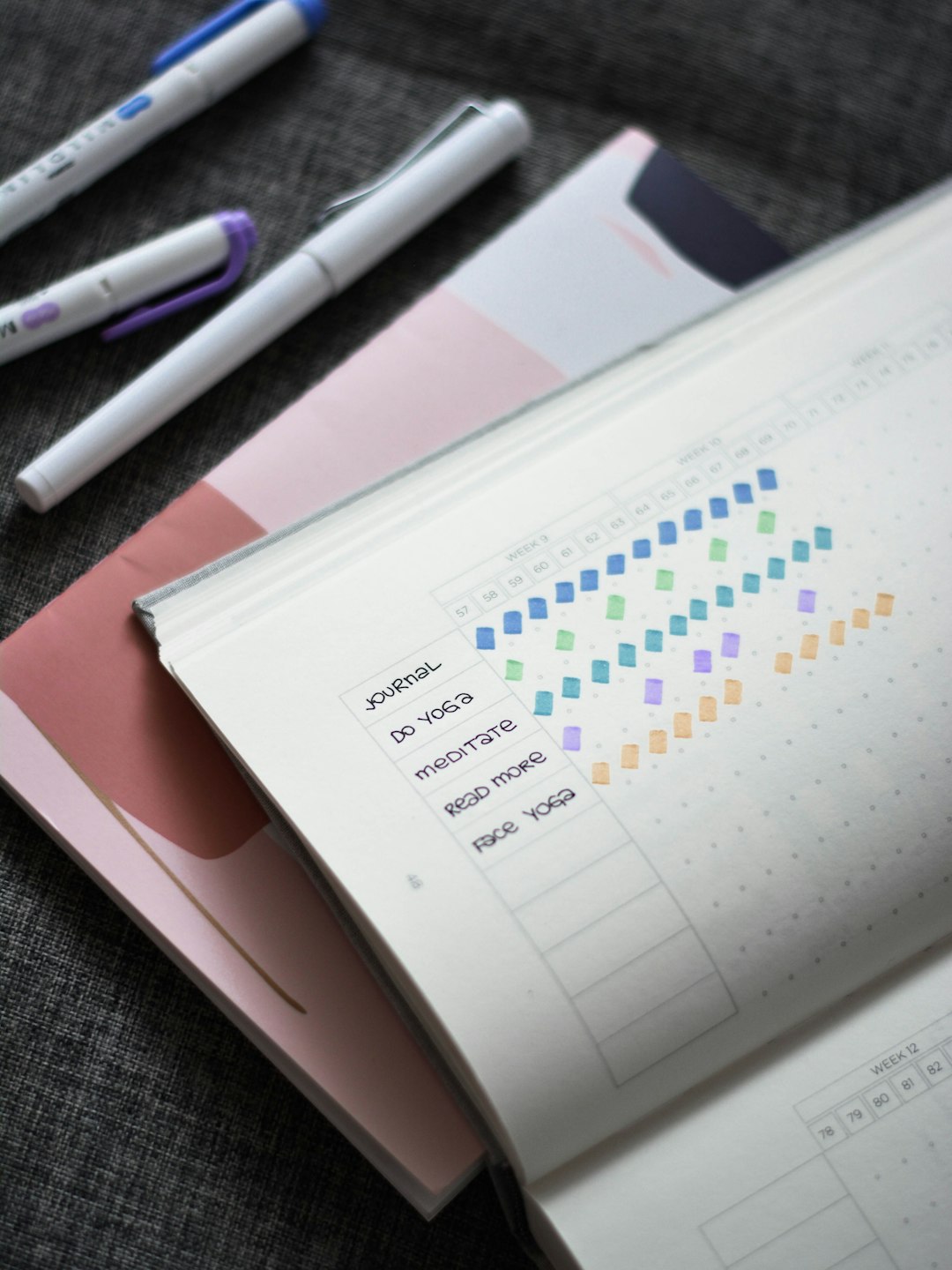
Keep the mark dead simple — a checkmark, a dot, or a filled-in box. Color-coding by habit or a longer key looks nice on a template preview but adds friction every single day, and friction is what kills daily habits.
If you miss a day, mark it as missed (or just leave it blank) and move on the next day. The chain method’s motivation comes from not wanting to break a long streak, but one blank square shouldn’t be a reason to quit the tracker entirely — getting back to marking the very next day matters more than a perfect year.

Tips / Common Mistakes
Choosing habits that are hard to define as done or not done is a common problem — “eat healthy” is vague, while “no sugary drinks” or “one serving of vegetables at dinner” is a clear yes/no you can mark instantly.
Starting mid-year and trying to backfill months of boxes turns the tracker into a chore instead of a quick daily habit; just start from today’s date and mark forward.
Printing it too small to write in comfortably is an easy mistake with the 365-box layout — print at full page size (not shrunk to fit multiple copies per sheet) so each box is big enough for a clean mark.
Treating one missed day as a reason to throw out the whole sheet and start a fresh tracker is the fastest way to never finish a year. A tracker with a few gaps that you kept using is more useful than a spotless one you abandoned in February.
Explore more: more habit-building guides and app comparisons.
Free Printable Yearly Habit Tracker FAQs
What size should I print a yearly habit tracker at?
Print it at full-page size on standard letter or A4 paper rather than shrinking it to fit two per sheet — the 365-box layout especially needs enough room per box for a visible daily mark.
How many habits should I track on one page?
Stick to 3-5 habits on a monthly-grid tracker, or just one habit if you’re using the single-habit 365-box chain format. More habits per page increases the odds you fall behind and abandon the whole sheet.
What if I miss a day on my habit tracker?
Leave the box blank or mark it as missed, then keep going the next day. The goal is a mostly-consistent year, not an unbroken chain — one gap shouldn’t be a reason to restart or quit.
Skip the Spreadsheet — Track It in ZenDuel
Habit streaks, mood tracking, and accountability duels in one free app — no template maintenance required. Get ZenDuel.
Want a calmer inbox? Subscribe to the free newsletter.
Photo by Prophsee Journals on Unsplash.
