Most habit trackers are built around streaks, guilt, and a wall of tiny boxes you’re supposed to fill in every single day. For a lot of autistic adults, that design backfires fast — one missed day feels like the whole thing is ruined, and the tracker gets abandoned. This guide walks through a printable habit tracker laid out differently: fewer habits per page, bigger cells, and no streak-breaking pressure.
Table of Contents
You’ll get a concrete layout you can print and use today (the free PDF attached to this post already matches the design described below), plus the reasoning behind each choice so you can tweak it to fit how your brain actually works.
Download the Free Weekly Habit Tracker (No-Streak Version)
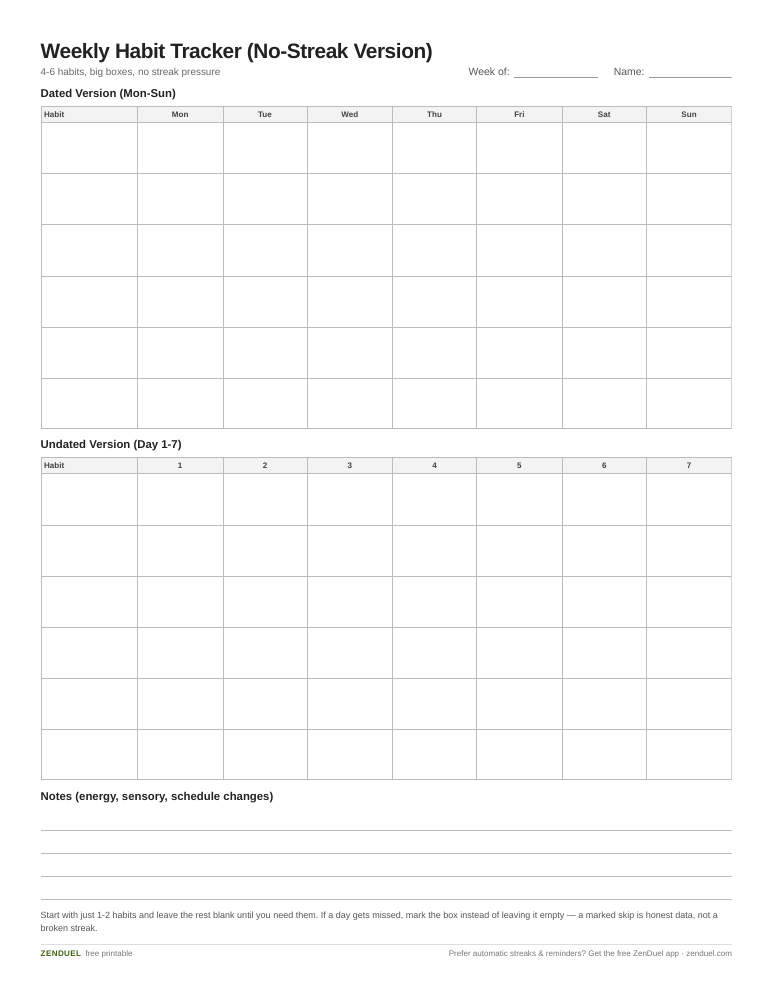
Our own printable — free, no sign-up, no email required. Two six-habit weekly grids — one dated Mon-Sun, one undated 1-7 — plus a notes strip for energy or sensory context. US Letter (prints fine on A4).
Quick Answer
A habit tracker that works well for autistic adults ditches the all-or-nothing streak grid and instead uses a weekly layout with 4-6 habits max, large check cells instead of tiny boxes, and an undated ‘flexible’ version so a skipped day doesn’t break the whole page. Print the tracker below, pick a small number of habits, and mark them with a simple tick or color-in rather than a number you have to calculate.
What the printable tracker looks like
The attached PDF is a single-page weekly grid, portrait orientation, designed to print cleanly on standard letter paper. Down the left side there’s a column for up to six habits, with a blank line next to each one so you write in your own wording instead of picking from a preset list. Across the top are seven day columns, labeled Mon through Sun, each wide enough for a single large checkmark, dot, or X — no tiny grid squares that need careful handwriting.
Each day column is a plain box rather than a connected chain, which matters more than it sounds: a connected streak visual makes one missed day look like a broken line running through the whole week, while separate boxes just show that one day didn’t happen. At the bottom of the page there’s a short notes strip for things like ‘low energy today’ or ‘schedule changed’ — a place to record context without turning the tracker into a journal.
A second version on the same PDF skips the day-of-week headers entirely and just numbers the columns 1 through 7, so you can start the tracker on whatever day you actually pick it up instead of waiting for Monday. This undated layout is worth using if calendar-based tracking feels arbitrary or adds pressure.
Why this layout works better for autistic adults
Executive function support, not willpower: a printed tracker sitting somewhere visible does the remembering for you, so the habit doesn’t depend on recalling it unprompted. That’s the same reason apps like Tiimo, Habitica, or Streaks get recommended for neurodivergent routine-building — they externalize the habit instead of relying on memory.
Fewer habits, bigger wins: tracking four to six habits on one page is deliberate. A page crammed with habits adds visual noise and makes the whole thing feel like one more overwhelming list rather than a tool. Start with the one or two habits that matter most and leave the other rows blank until they’re needed.
No all-or-nothing scoring: skip the percentage math or ‘perfect week’ bonus boxes some trackers use. A simple filled-in box or empty box is enough information — you don’t need a score attached to it to know whether the habit happened.
Room for sensory and energy notes: the notes strip isn’t decorative. Noting that a day was overstimulating, low-energy, or disrupted gives useful context later for why a habit got skipped, without forcing you to write a full journal entry.

Tips / Common Mistakes
Don’t start with more than two or three habits. Adding a full list on day one is the most common reason trackers get abandoned within a week.
Habit-stack instead of relying on willpower: attach the new habit to something you already do without thinking, like marking the tracker right after brushing your teeth or making coffee.
Use a visual timer (like a basic kitchen timer or an app such as Time Timer) alongside the tracker for habits that involve a duration, since autistic adults often process a visible countdown more easily than a clock number.
If a day gets missed, mark it and move on rather than leaving it blank — a blank box is ambiguous later, while a marked ‘skip’ box is honest data.
If the dated weekly grid still feels like pressure, switch to the undated version on the same PDF. There’s no rule that habit tracking has to follow the calendar.
Explore more: more habit-building guides and trackers.
Printable habit tracker for autistic adults FAQs
Is there an actual downloadable file, or just advice?
There’s a real free PDF attached near the top of this post — the weekly grid and the undated version described above, ready to print, no sign-up required.
How many habits should I track at once?
Start with one or two. The printable has room for up to six rows, but filling all of them on day one is the fastest way to abandon the habit entirely.
What if I miss a day — does that ruin the tracker?
No. Each day is a separate box rather than a connected streak, so a missed day is just one empty box, not a broken chain. Mark it and keep going.
Are there app alternatives if I’d rather track digitally?
Yes — apps like Tiimo, Habi, Routinery, and Habitica are built with visual, neurodivergent-friendly routine tracking in mind, and can work alongside or instead of the printable.
Skip the Spreadsheet — Track It in ZenDuel
Habit streaks, mood tracking, and accountability duels in one free app — no template maintenance required. Get ZenDuel.
Want a calmer inbox? Subscribe to the free newsletter.
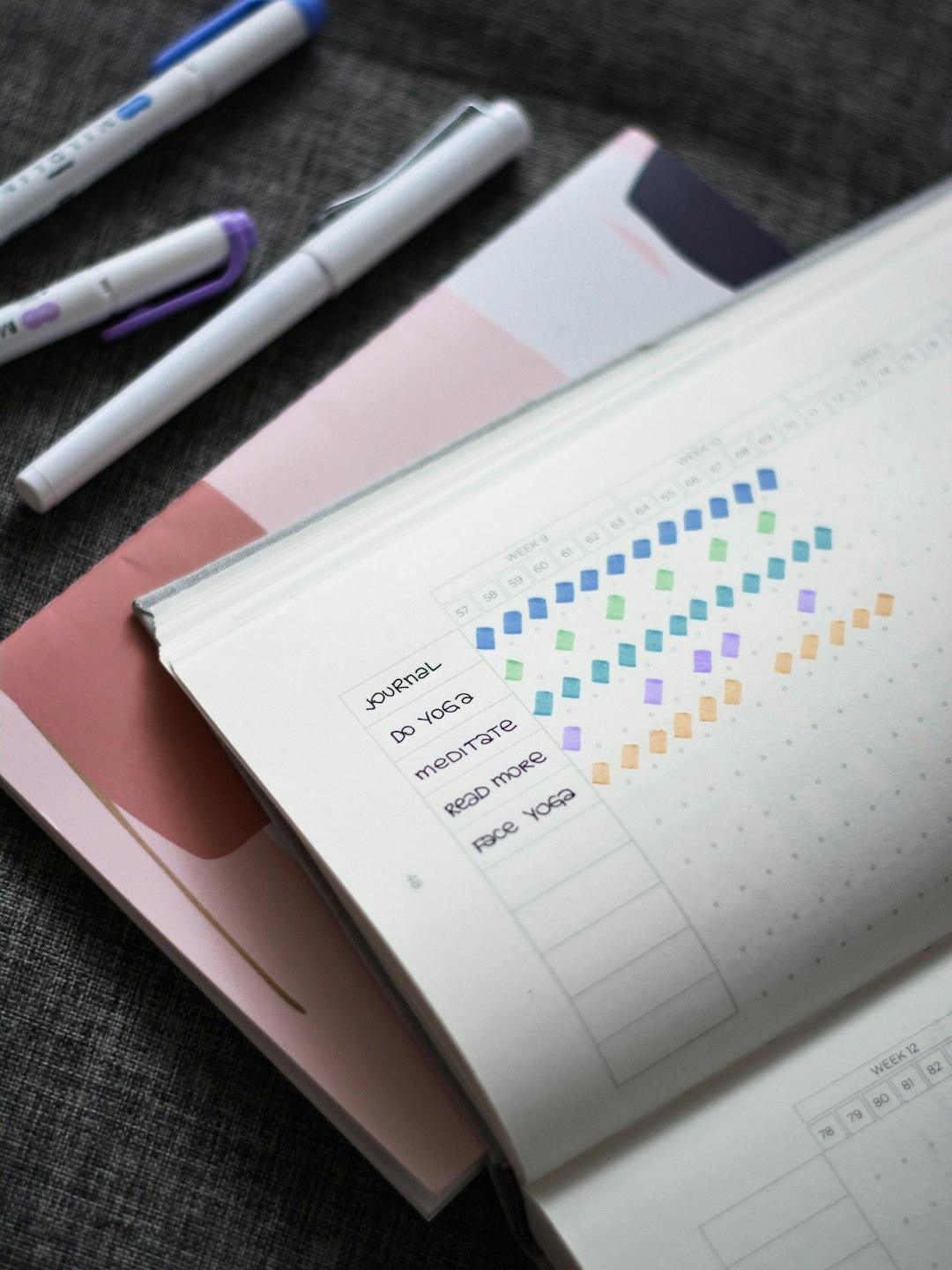
Photo by Prophsee Journals on Unsplash.