If your mind speeds up the moment your head hits the pillow, you’re not imagining it — anxiety and sleep feed each other in a loop that’s hard to break with willpower alone. Racing thoughts delay sleep onset, poor sleep raises next-day anxiety, and the cycle repeats.
Table of Contents
The good news is that a consistent, deliberate evening routine can interrupt that loop. Below is a practical, step-by-step routine that combines standard sleep hygiene with techniques borrowed from cognitive behavioral therapy for insomnia (CBT-I), the first-line treatment clinicians use for chronic sleep trouble.
Quick Answer
The best evening routine for anxiety-related sleep trouble combines a consistent wind-down window (30-90 minutes before bed), a scheduled ‘worry time’ or brain dump earlier in the evening to offload racing thoughts, screen and light dimming, and a short relaxation practice like slow breathing or progressive muscle relaxation right before bed.
Step-by-Step: Building the Routine
Start with a fixed wind-down window. Pick a time — anywhere from 30 minutes to 2 hours before your target bedtime — and treat it as non-negotiable, the same way you’d treat a meeting. Going to bed and waking up at roughly the same time every day, including weekends, is one of the most consistently recommended habits for improving sleep quality over time.
Do your ‘worry time’ well before this window starts, not during it. Set aside 10-15 minutes earlier in the evening to write down what’s on your mind and jot any next steps or solutions. The idea is to give anxious thoughts a scheduled outlet so that when they resurface at bedtime, you can remind yourself you’ve already dealt with them. Some people pair this with a short ‘brain dump’ — writing tomorrow’s top three priorities so your brain doesn’t feel it has to hold onto them overnight.
Dim the lights and put devices away as your wind-down window begins. Evening light exposure, especially from screens, can make it harder for your body to feel sleepy, so lowering household lighting and setting phones aside (or switching to night mode) helps signal to your body that sleep is approaching.
Do one calming, low-stimulation activity. Reading a physical book under soft light, taking a warm bath or shower, gentle stretching, or listening to calm music are all solid options. Avoid anything work-related, emotionally charged, or newsy during this window.
Finish with a short relaxation practice in bed. Slow, extended-exhale breathing (inhale for a count of 4, exhale for a count of 6-8) or progressive muscle relaxation — tensing and releasing muscle groups from feet to head — are both simple ways to shift your nervous system out of ‘alert’ mode right before you try to fall asleep.
Keep your bedroom cool, dark, and quiet, and reserve the bed for sleep (not scrolling or working) so your brain associates it strongly with rest.
Why This Works for Anxious Minds Specifically
Anxiety keeps the body in a state of heightened alertness, and lying in the dark with nothing to distract you is exactly when unresolved worries tend to surface. Separating ‘worry processing’ from ‘trying to fall asleep’ — by doing it earlier in the evening — reduces the chance that your brain treats bedtime as worry time by default.
This approach mirrors core pieces of CBT-I, which also includes stimulus control (only using the bed for sleep) and building a predictable pre-sleep sequence so your body starts recognizing the routine itself as a cue to relax. If anxiety-driven insomnia is persistent or severe, CBT-I delivered by a trained therapist (in person or through a structured app/program) is worth discussing with a doctor, since self-guided routines help but may not be enough on their own for chronic cases.

Tips and Common Mistakes
Don’t do your worry time or brain dump right before bed — the goal is distance between processing your thoughts and trying to sleep, so do it earlier in the evening. Avoid caffeine in the afternoon and evening, and skip alcohol close to bedtime; alcohol can help you fall asleep initially but tends to fragment sleep later in the night. Try to finish evening meals a few hours before bed rather than eating heavy food right before lying down.
A common mistake is treating the routine as optional on ‘good’ nights and only using it when anxiety is already high — consistency is what trains your body to associate the routine with sleep, so it works best done nightly, not just reactively. Also avoid checking the clock if you wake up during the night; if you can’t fall back asleep after roughly 20 minutes, get up, do something calm in dim light, and return to bed when you feel sleepy rather than lying there anxious about not sleeping.
Explore more: More wellness guides.
Evening routine for anxiety and sleep FAQs
How long before bed should I start my evening routine?
Most sleep guidance suggests starting your wind-down routine 30 minutes to 2 hours before your target bedtime, with worry time or a brain dump done even earlier in the evening, separate from the final wind-down window.
What’s the fastest technique to calm racing thoughts at bedtime?
A short breathing exercise (slow inhale, longer exhale) or progressive muscle relaxation can calm your nervous system in a few minutes. Pairing this with an earlier ‘worry time’ so the thoughts have already been addressed tends to work better than relying on breathing alone.
Should I see a professional if this routine doesn’t fix my sleep?
Yes — if anxiety-related insomnia persists despite a consistent routine, it’s worth talking to a doctor or therapist about CBT-I, the standard evidence-based treatment for chronic insomnia, since it can address patterns a self-guided routine alone may not resolve.
Build Better Habits With ZenDuel
Track your habits and mood, stay accountable, and build a calmer routine — get the ZenDuel app. Get ZenDuel.
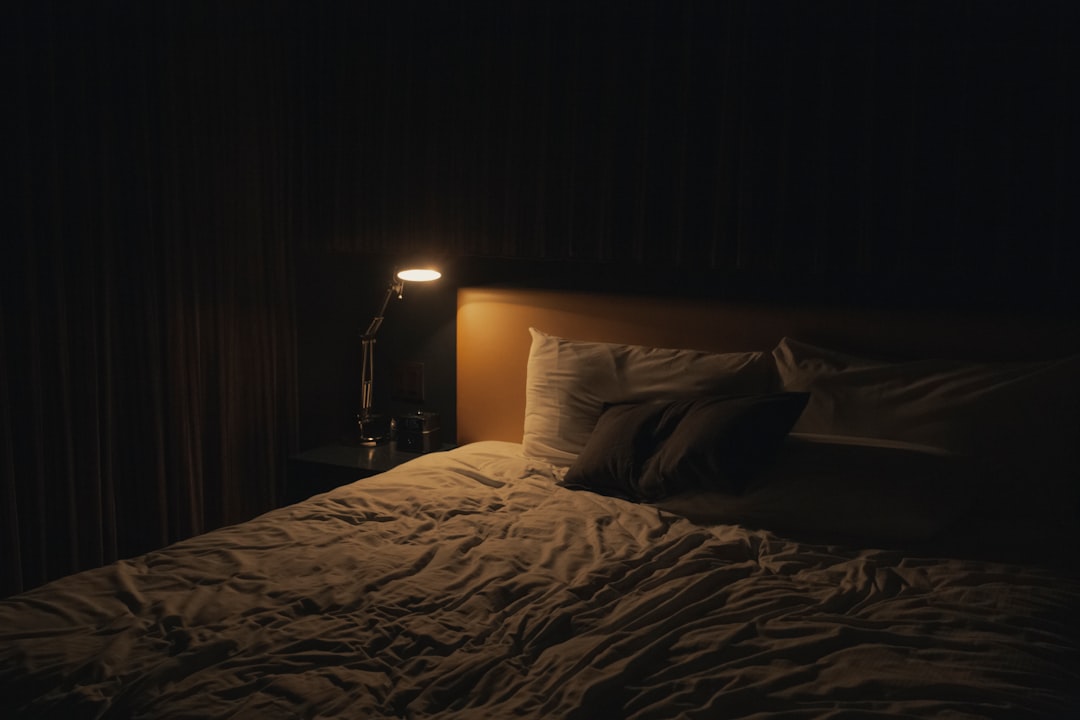
Photo by Jp Valery on Unsplash.