A water tracker is one of the easiest habit spreads to start and one of the easiest to abandon — usually because the layout is too fussy to fill in every day. The fix isn’t more decoration, it’s a grid you can tick off in under ten seconds.
Table of Contents
Below are several layout styles that work in any notebook, from a one-minute daily box to a full monthly grid, plus a concrete template you can copy if you’d rather not design one from scratch — just use the free printable attached to this post.
Download the Free Monthly Water Intake Tracker
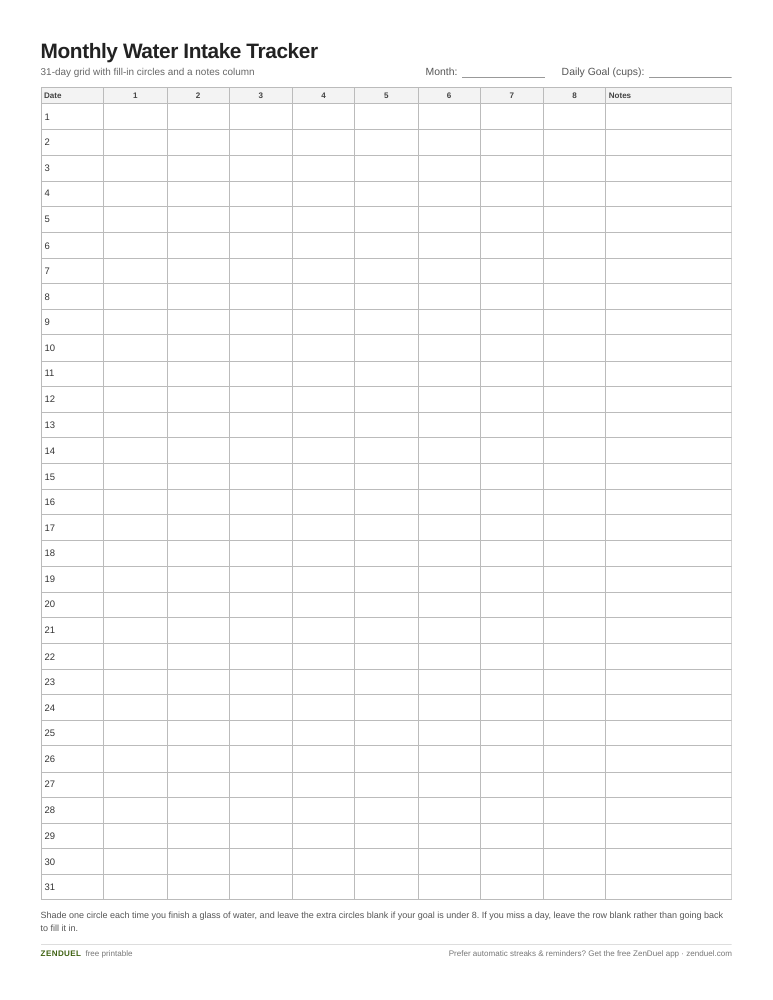
Our own printable — free, no sign-up, no email required. A month and goal header, 31 numbered day rows, eight fill-in circles per row, and a notes column. US Letter (prints fine on A4).
Quick Answer
The most reliable water tracker spread is a simple grid: one row per day, with a set of small boxes, circles, or droplet icons across the row — one per cup or glass of water. Fill one in each time you drink, and the row fills up over the day. Keep the icon count fixed (6-10 per day) so the habit is easy to measure.
Simple Spread Styles That Actually Get Used
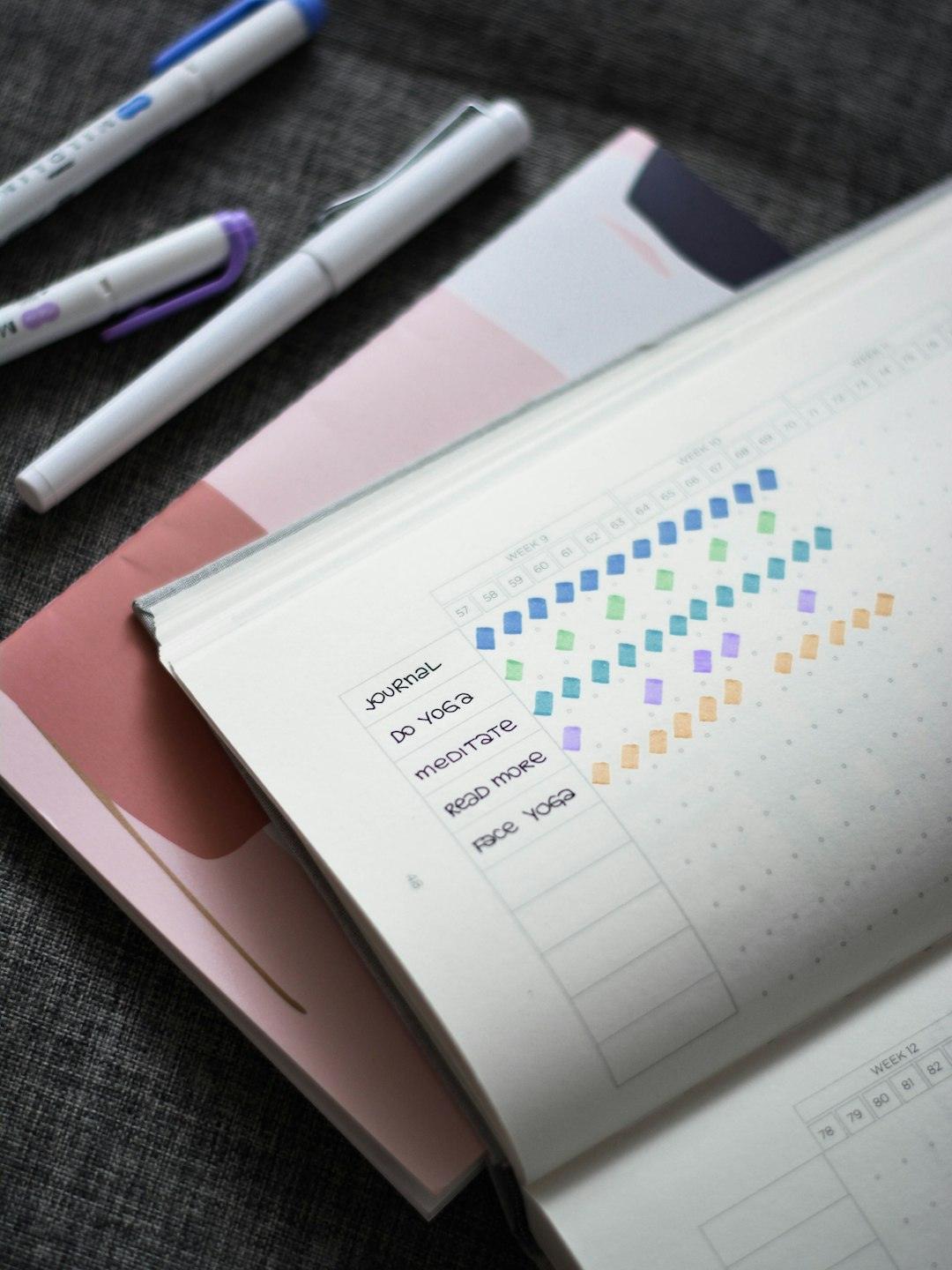
Checkbox or circle grid: draw a row of small boxes or circles for each day and shade one in per glass. This is the fastest style to maintain and works well squeezed into the corner of a daily or weekly spread.
Fill-in water bottle or glass: draw one tall bottle or glass outline per day and divide it into 6-8 horizontal sections. Color up from the bottom as you drink, so you can see your progress toward the top at a glance — it reads more like a progress bar than a checklist.
Raindrops under a cloud: for a weekly layout, sketch a small cloud for each day with 6-8 raindrops beneath it. Shade a raindrop each time you finish a glass. It’s a nice theme if your spread already has a weather or self-care motif.
Line or dot chart: instead of filling shapes, plot a dot for your total ounces or glasses each day along a simple grid, then connect the dots. This style suits people who like seeing a trend across the week or month rather than a daily fill-in.
Combo tracker: pair the water tracker with another habit (steps, sleep, or vitamins) on the same page, water on one side and the second habit on the other, so one glance covers two habits instead of flipping pages.
How to Lay Out a Monthly Water Tracker Grid
If you want something sturdier than a weekly doodle, build a monthly grid: a header row for the month name and your daily goal (in cups or ounces), then one row per date (1-31) down the left side. Across each row, place 6-10 small circles or boxes representing your glasses or cups for that day — leave the exact count flexible so it matches your personal goal rather than a fixed number.
Add a narrow column at the far right for a one-word note (energy, headache, workout day) so you can later spot whether low water days line up with how you felt. Keep the boxes big enough to shade with a pen stroke or two — tiny cramped circles are the #1 reason people stop filling a tracker in.
This is exactly the layout in the free printable attached above: a month/goal header, 31 numbered rows, a row of fill-in circles per day, and a short notes column, sized so it works as a standalone page or pasted into an existing notebook.
Tips and Common Mistakes
Don’t make the icons too small or too detailed — ornate hand-drawn bottles look nice for day one and get skipped by day five. Simple circles or boxes survive the whole month.
Set a realistic daily target first. Needs vary by body size, activity, and climate, so a flat ‘drink X glasses’ goal copied from somewhere else may not fit you — pick a number you can actually hit most days, then adjust later.
Track glasses or cups, not vague ‘did I drink water’ check marks — a single yes/no box hides whether you had two sips or two liters.
Place the tracker somewhere you’ll actually see it, like the same page as your daily to-do list, rather than buried in a separate wellness section you only open once a week.
If you miss a day, leave it blank and move on. A tracker with a few gaps still shows your overall pattern; redrawing or backfilling boxes just adds friction that makes you want to quit the habit altogether.
Explore more: more habit-tracking spread ideas.
Water Intake Tracker Bullet Journal Spread FAQs
How many glasses of water should each box in the tracker represent?
Most spreads use 6-10 boxes per day, each representing one cup or glass (roughly 8 oz / 240 ml). Pick a number of boxes that matches a daily goal you can realistically hit, rather than copying someone else’s exact count.
Should I track ounces/liters or just number of glasses?
Glasses or cups are simpler to tally and faster to fill in by hand. If you prefer exact volume, use the line-chart style and plot total ounces or liters instead of shading boxes.
What if I don’t want to draw the grid myself?
Use the free printable attached to this post — it already includes a month/goal header, numbered day rows, fill-in circles, and a notes column, so you can skip straight to tracking.
Skip the Spreadsheet — Track It in ZenDuel
Habit streaks, mood tracking, and accountability duels in one free app — no template maintenance required. Get ZenDuel.
Want a calmer inbox? Subscribe to the free newsletter.
Photo by Prophsee Journals on Unsplash.