Plants rarely die from one missed watering — they die from months of guesswork, where every plant gets treated the same and nobody remembers when the last feeding happened. A plant care habit tracker fixes that by giving each plant its own simple record, so you’re responding to what it actually needs instead of what you vaguely recall doing last week.
Table of Contents
This guide walks through how to use a printable plant care tracker effectively, what to log, and how to set it up so checking on your plants becomes a quick weekly habit instead of a chore. Grab the free printable below and follow along.
Download the Free Plant Care Habit Tracker
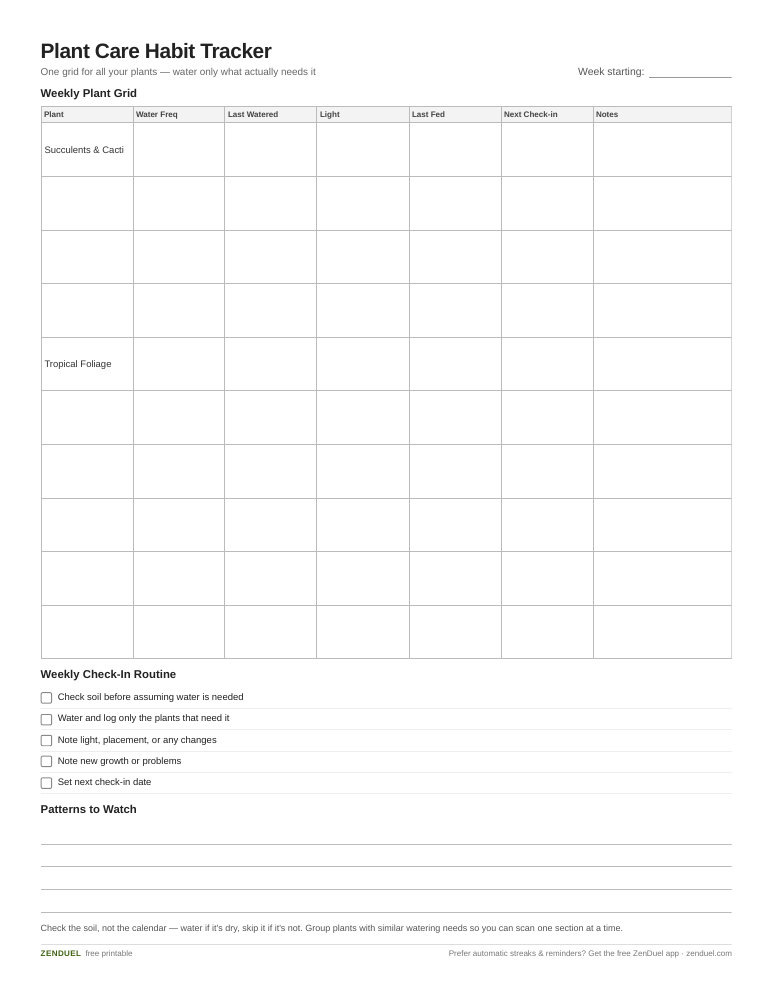
Our own printable — free, no sign-up, no email required. A shared weekly grid with watering, light, feeding, and notes columns, plus a check-in checklist and a patterns log. US Letter (prints fine on A4).
Quick Answer
Use one printable tracker page per plant (or a shared grid for several plants) with columns for watering date, light exposure, feeding, and notes on new growth or problems. Check in once a week, log what you did, and glance back before deciding whether a plant actually needs attention — this one habit prevents both overwatering and neglect.
What to Include on Your Tracker
The layout works best as a grid: one row per plant down the left side, and columns across the top for the date of last watering, light level (low, medium, bright/direct), last feeding date, and a short notes field for things like ‘new leaf,’ ‘yellowing,’ or ‘repotted.’ Each row should also have a small space for the plant’s name and its ideal watering frequency, since a succulent and a fern don’t belong on the same schedule.
If you only have a handful of plants, a single-plant version works better: one page per plant with a full month of date boxes, a line for light and placement, a feeding log, and a notes section for observations over time. This format is especially useful for finicky plants you’re still learning, like fiddle leaf figs or orchids, where tracking patterns over weeks reveals what’s actually working.
Either layout should leave room for a ‘next check-in’ date, so you’re not relying on memory to know when to look again.
How to Build the Habit Around It
Pick one consistent day — a Sunday morning or whatever fits your routine — and make ‘plant check’ part of it rather than something you do whenever you happen to notice a droopy leaf. Walk to each plant, check the soil before assuming it needs water, and only log and water the ones that actually need it that week.
Keep the tracker somewhere you’ll actually see it: taped inside a cabinet near your watering can, clipped to a board by the window, or on the fridge. A tracker that lives in a drawer gets forgotten fast.
Group plants by watering needs when you fill in the sheet (for example, succulents and cacti together, tropical foliage together) so you can scan one section at a time instead of mentally re-sorting every plant each week.
Note patterns, not just tasks. If a plant’s leaves start curling two days after watering every single time, that’s a note worth having before it becomes a dead plant.
Tips / Common Mistakes
The most common mistake is watering on a fixed calendar schedule regardless of conditions — soil dries faster in summer heat and slower in winter, so ‘every Sunday’ isn’t actually the rule; ‘check every Sunday, water if dry’ is.
Don’t skip the light and placement columns. A plant that stops thriving after you move it across the room is easy to diagnose if your tracker shows exactly when it moved.
Resist cramming too many plants onto one small grid — if the notes column is too tight to write in, you’ll stop writing in it, and the notes are usually the most useful part of the tracker.
Finally, don’t treat a missed week as a failed streak. Plants are forgiving over a few days; the point of the tracker is long-term pattern awareness, not perfect daily compliance.
Explore more: more free habit trackers.
Plant Care Habit Tracker FAQs
How often should I use a plant care tracker?
Once a week is enough for most houseplants. Check the tracker, inspect the soil and leaves, and only log and act on what each plant actually needs that day.
Should I track all my plants on one sheet or use separate pages?
One shared grid works well if you have several easy-care plants with similar needs. Give fussier or new plants their own page so you can track patterns over a full month.
What if I have way more plants than fit on one page?
Print multiple copies of the grid version and group plants by room or by watering frequency, so each sheet covers a logical cluster instead of your whole collection.
Do I need an app instead of a printable tracker?
Apps work if you prefer phone reminders, but a printed tracker posted near your plants is often faster to update in the moment and doesn’t require remembering to open an app.
Skip the Spreadsheet — Track It in ZenDuel
Habit streaks, mood tracking, and accountability duels in one free app — no template maintenance required. Get ZenDuel.
Want a calmer inbox? Subscribe to the free newsletter.
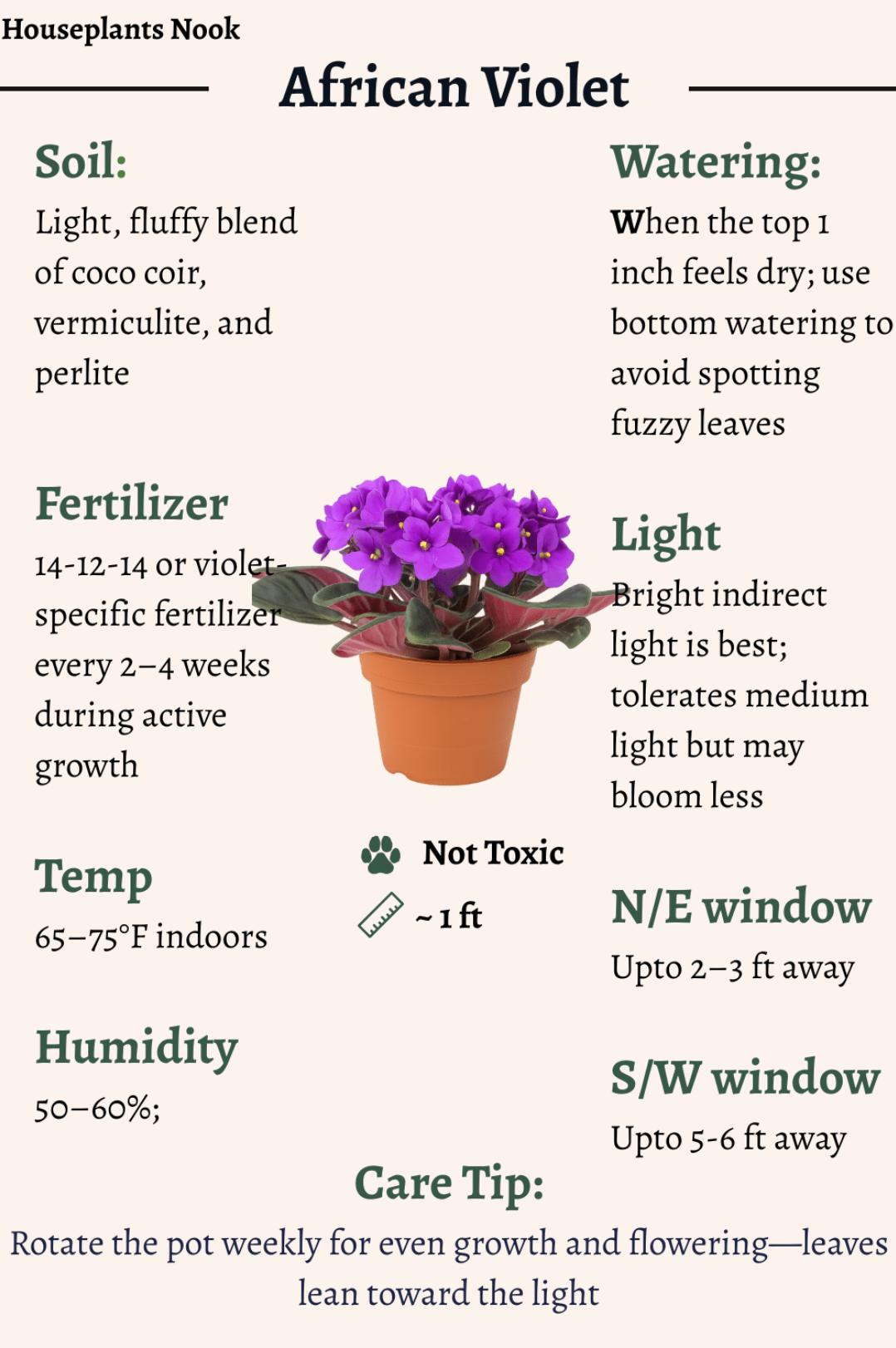
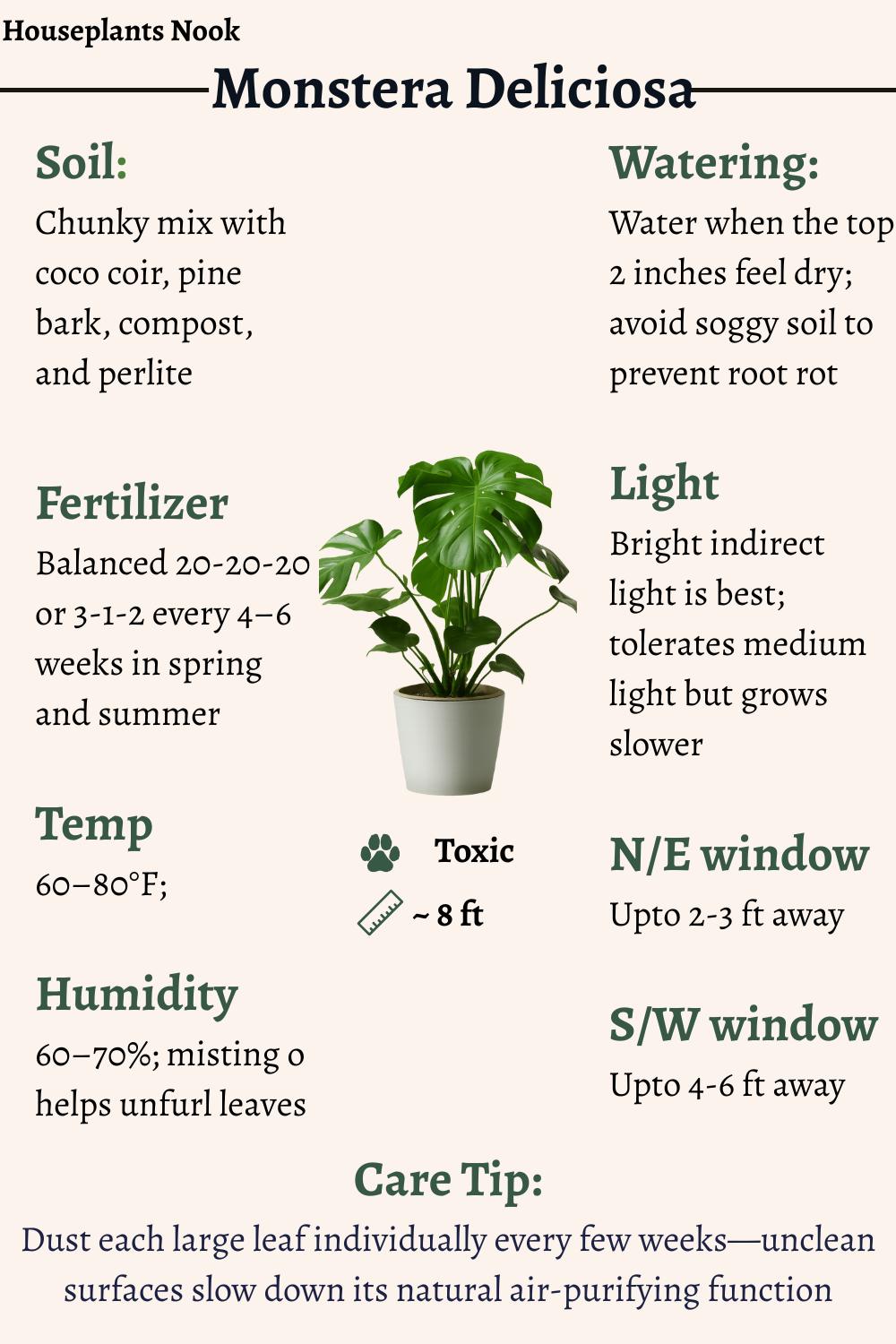
Photo: Houseplantsnook / CC BY 4.0, via Wikimedia Commons.