Committing to a dry month is easy on day one and hard by day twelve, when the novelty wears off and old routines start pulling you back toward a drink. A habit tracker fixes the biggest reason people quietly give up: there’s nothing to look at that proves the effort is working.
Table of Contents
This guide walks through how to use a printable dry month tracker, what to log each day, and how to read your own data so you can see sleep, mood, and energy improve in black and white. Grab the free printable attached to this post, print one page, and start tomorrow morning.
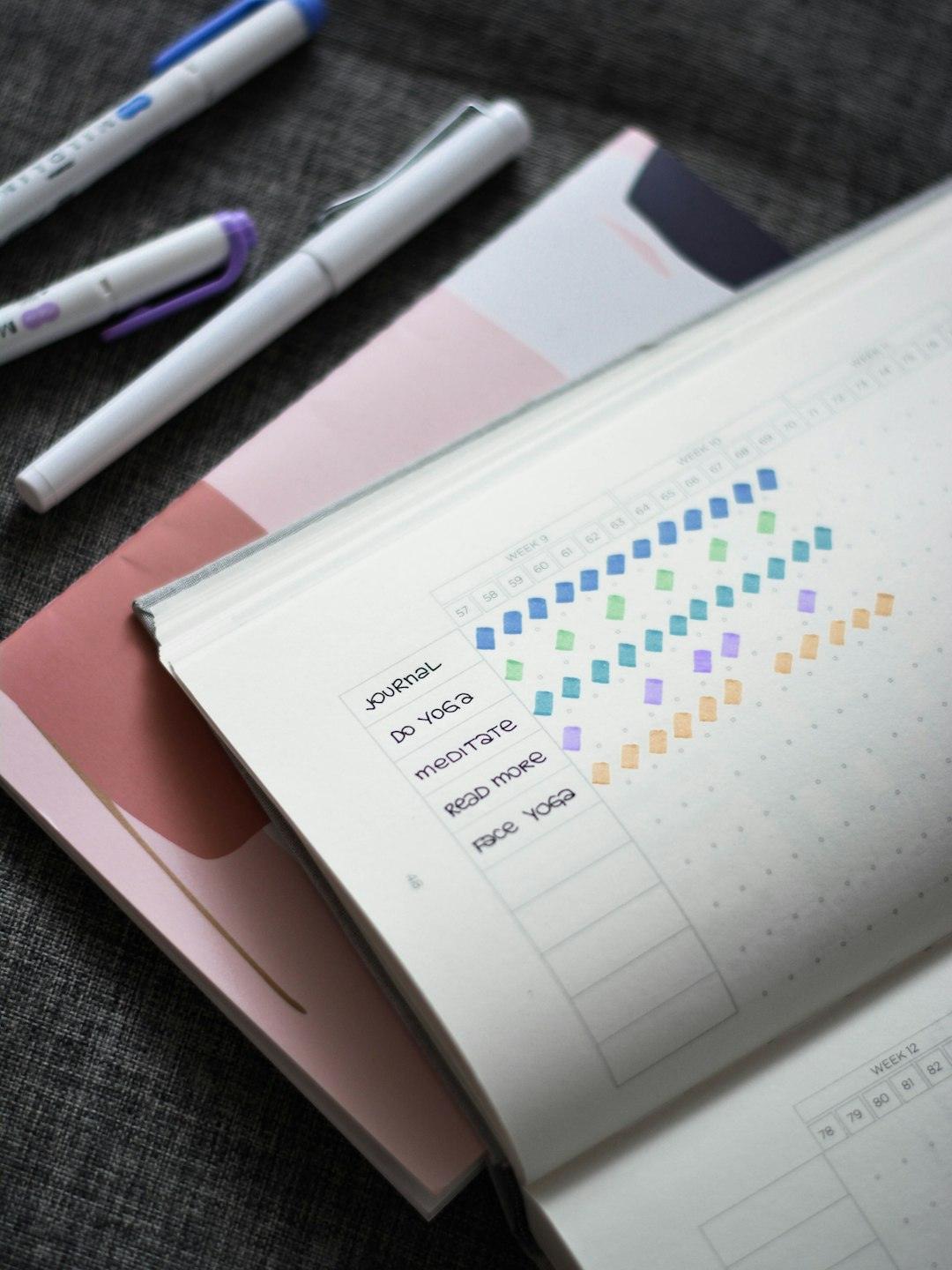
Download the Free Dry Month Habit Tracker
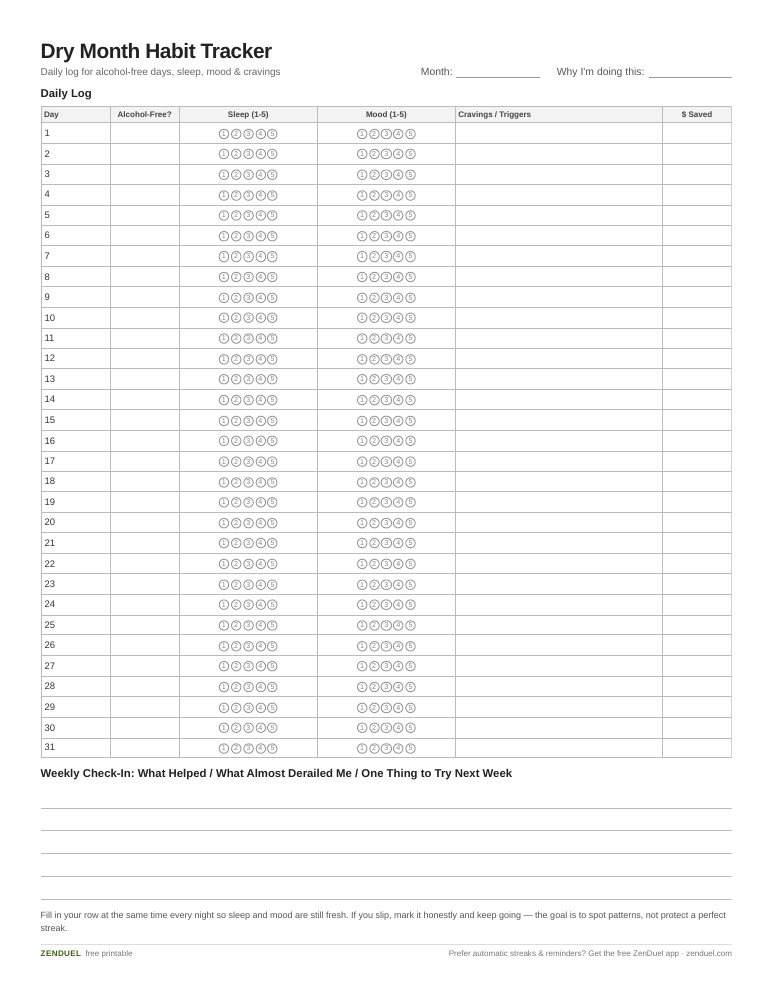
Our own printable — free, no sign-up, no email required. A 31-row daily log for alcohol-free days, sleep, mood, cravings and money saved, plus weekly check-in lines. US Letter (prints fine on A4).
Quick Answer
A dry month habit tracker is a one-page printable grid with a row for each day of the month and columns for the habits that actually predict whether you’ll stay alcohol-free: urge/craving level, sleep quality, mood, hydration, and a simple yes/no for ‘stayed alcohol-free today.’ Fill it in every evening, and review the week’s pattern every Sunday instead of judging yourself day by day.
What to Put on the Tracker
Keep the grid simple enough to fill out in under a minute. The printable attached to this post uses a single-page, portrait layout sized for standard 8.5×11 paper with a 31-row table (one row per day, plus a short header for the month and your ‘why’) so the whole month is visible at a glance instead of split across pages.
Each row has columns for: the date and day of week; a checkbox for ‘alcohol-free today’ (the core habit); a 1-5 scale for sleep quality; a 1-5 scale for mood/energy; a small box to note cravings or triggers (a word or two, like ‘stressful meeting’ or ‘dinner with friends’); and a tiny box to log any money saved that day, which adds up fast and is one of the more motivating columns by the end of the month.
At the bottom of the page, leave a few lines for a weekly check-in: what helped, what almost derailed you, and one thing to try differently next week. That weekly summary is what turns a daily checklist into an actual record of progress instead of just a grid of checkmarks.
How to Use It Day to Day
Fill out your row at the same time every day, ideally right before bed, so sleep and mood from that day are still fresh. Doing it at a consistent time matters more than doing it perfectly — a tracker you actually complete every night beats a more detailed one you abandon after a week.
Don’t skip a day just because it was a bad one. If you slipped, mark it honestly and move on; the point of the tracker is pattern recognition, not a perfect streak. A single off day surrounded by three weeks of progress is still a dry month worth being proud of.
Post the tracker somewhere you’ll see it, like the fridge or next to your coffee maker, rather than a drawer. Visibility is most of what makes a paper tracker work better than an app for this particular habit — there’s no screen to swipe past.
Tips and Common Mistakes
The most common mistake is tracking too many metrics at once. Stick to the five or six columns above for the first month; you can always add a column next time. A tracker that takes three minutes to fill out gets abandoned by week two.
Another mistake is treating the tracker as a scoreboard to judge yourself against rather than a tool to notice patterns — for example, realizing your cravings column lights up every Friday evening, which tells you exactly when to plan a non-alcoholic alternative or a change of scenery.
Finally, have a plan for social situations before you need it. Deciding in the moment whether to explain why you’re not drinking is much harder than having a short, ready answer and a go-to non-alcoholic drink order worked out in advance.
Keep the tracker going past the end of the month if it’s working. Many people extend the habit of tracking sleep, mood, and cravings for a few extra weeks simply because the data makes it obvious the changes are paying off.
Explore more: more free habit trackers and printables.
Dry Month Habit Tracker FAQs
What should a dry month tracker include besides a daily checkbox?
At minimum, add sleep quality, mood/energy, and a note for cravings or triggers. Those three columns are what let you connect staying alcohol-free to how you actually feel, which is far more motivating than a plain checkbox streak.
Should I track every day or just drinking days?
Track every single day, including the easy ones. A full month of data shows trends in sleep and mood you won’t notice if you only log the days you felt tempted.
What if I slip up partway through the month?
Log it honestly on the tracker and keep going the next day. One recorded slip doesn’t erase the pattern of improvement building up around it, and restarting the whole tracker over a single day is usually more discouraging than helpful.
Skip the Spreadsheet — Track It in ZenDuel
Habit streaks, mood tracking, and accountability duels in one free app — no template maintenance required. Get ZenDuel.
Want a calmer inbox? Subscribe to the free newsletter.
Photo by Prophsee Journals on Unsplash.