Anxiety rarely waits for a convenient moment. It shows up in the grocery line, mid-meeting, or at 2 a.m. when your mind won’t stop replaying the day. Grounding exercises are quick, physical techniques that pull your attention out of anxious thought loops and back into your body and surroundings. You don’t need an app, a quiet room, or special equipment.
Table of Contents
Below are ten grounding techniques drawn from therapy and stress research, numbered 1 through 10. Each entry explains what the technique does and when it fits best, so you can pick the right one for where you are and how intense the anxiety feels.
Quick Answer
Grounding exercises calm anxiety by shifting your attention away from anxious thoughts and onto your senses, breath, or body, which helps interrupt the fight-or-flight response. The fastest options are the 5-4-3-2-1 sensory technique, the physiological sigh, and cold water on your face or wrists. They take a couple of minutes at most and work almost anywhere.
10 Grounding Exercises You Can Do Anywhere
1. 5-4-3-2-1 sensory scan. Name five things you can see, four you can feel touching your skin, three you can hear, two you can smell, and one you can taste. Working through each sense in order forces your brain to process the present moment instead of the anxious story running in your head. It works standing in line, in a meeting, or lying in bed.
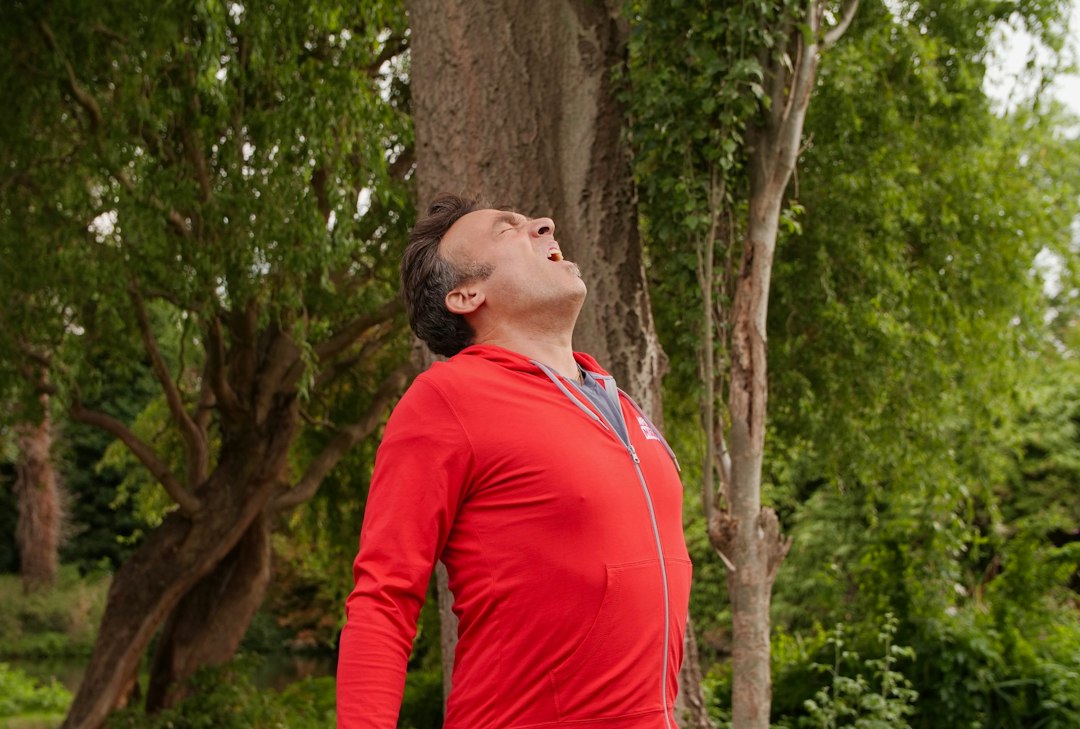
2. Physiological sigh. Take two quick inhales through your nose, one big and one short on top of it, then a long, slow exhale through your mouth. The double inhale helps reinflate the small air sacs in your lungs, and the extended exhale helps slow your heart rate. Two or three rounds is often enough to take the edge off.
3. Box breathing. Inhale for four counts, hold for four, exhale for four, hold for four, and repeat. The equal counts give your mind something structured to focus on, which helps when racing thoughts make open-ended breathing hard to sustain.
4. Cold water reset. Splash cold water on your face, hold an ice cube, or run your wrists under cold water for about 30 seconds. Cold on the face triggers the mammalian dive reflex, which slows your heart rate and can interrupt a spiraling panic response. It’s the temperature part of the TIPP skill taught in dialectical behavior therapy (DBT) for fast distress tolerance.
5. Feet-on-the-floor body scan. Press both feet flat into the ground and notice the point of contact: the texture, temperature, and pressure. Slowly move your attention up through your legs, torso, arms, and head. This works well when you’re seated somewhere you can’t move or speak, like a classroom or a plane.
6. Butterfly hug. Cross your arms over your chest with your hands resting just below your collarbones, and tap alternately left and right for 30 seconds to a minute. This bilateral tapping pattern, used in trauma-focused therapy, helps settle the nervous system and is discreet enough to do under a desk.
7. Category naming. Pick a category, such as dog breeds, cities, or foods that start with ‘B’, and silently list as many as you can. It occupies the same verbal working memory that anxious rumination uses, crowding out the spiral instead of fighting it head-on.
8. Mini progressive muscle relaxation. Clench your fists, shoulders, or jaw as tight as you can for five seconds, then release and notice the contrast. Doing this with two or three muscle groups gives your body a clear before-and-after signal that it’s safe to relax. It’s closely related to the paired muscle relaxation step in the DBT TIPP skill.
9. Slow orienting. Turn your head slowly from one side of the room to the other and let your eyes settle on whatever draws your attention, such as a doorway, a window, or an object on a shelf. Then name what you see and where you are. Deliberately orienting to your actual surroundings reminds your nervous system that you’re safe right now, which is especially useful if anxiety comes with a foggy or unreal feeling.
10. Grounding walk. Take a short walk and match your attention to your steps: the pressure of each foot hitting the ground, the swing of your arms, the rhythm of your pace. Movement helps burn off the physical restlessness that often comes with anxiety, and syncing it to your breath or footfall gives your mind a steady anchor.
How to Pick the Right Exercise for the Moment
Not every technique fits every situation. If you’re in public and need something invisible, box breathing, the physiological sigh, or a feet-on-the-floor scan work without anyone noticing. If you’re alone and the anxiety is intense, cold water or the butterfly hug can interrupt a panic spiral faster than a purely mental exercise. If your mind is racing so hard that breath-focused techniques feel impossible, start with a sensory or naming exercise instead. Give your attention somewhere concrete to land before asking it to slow down.
It also helps to build a small personal toolkit rather than relying on just one method. Anxiety shows up differently depending on the day, sometimes as a racing heart and sometimes as a foggy, checked-out feeling. Having two or three go-to options means you’re not stuck if the first one doesn’t land.

Tips and Common Mistakes
Practice when you’re calm, not only when you’re anxious. Grounding works best as a trained response. Running through the 5-4-3-2-1 method a few times on an ordinary afternoon makes it much easier to use when your heart is already pounding.
Don’t expect grounding to erase anxiety entirely. The goal is to bring your nervous system down from overwhelmed to workable, not necessarily to zero. Treat it as a reset, not a cure.
Avoid over-tightening your breath. People often turn box breathing into a strained, forceful pattern, which can backfire and increase tension. Keep the counts gentle and stop if you feel lightheaded.
If anxiety is frequent, intense, or interfering with daily life, grounding exercises are a useful in-the-moment tool but aren’t a substitute for talking to a therapist or doctor about longer-term support.
Explore more: more mindfulness exercises.
Grounding exercises for anxiety FAQs
What’s the fastest grounding technique for a panic attack?
Cold water on your face or wrists and the physiological sigh tend to work fastest, often within a minute or two, because they act directly on your body’s stress response rather than requiring focused thought.
Are grounding exercises actually backed by research?
Grounding techniques are core components of established approaches like DBT and sensorimotor psychotherapy, and breathing-focused methods such as cyclic sighing have been studied and linked to reduced anxiety and improved mood.
How long should a grounding exercise take?
Most take 30 seconds to two minutes. If you don’t feel calmer after a couple of minutes, it’s fine to switch to a different technique rather than forcing the same one to work.
Skip the Spreadsheet — Track It in ZenDuel
Habit streaks, mood tracking, and accountability duels in one free app — no template maintenance required. Get ZenDuel.
Want a calmer inbox? Subscribe to the free newsletter.
Photo by Jay Mullings on Unsplash.
