A sticker chart is one of the simplest tools you can hand a kid to help a new habit stick, whether it’s brushing teeth twice a day, reading before bed, or making the bed each morning. The idea is old, but it still works because it does something kids’ brains respond to well: it makes progress visible and rewards it right away.
Table of Contents
Below you’ll find where to grab a free printable habit tracker, how to set one up so it doesn’t fizzle out after a week, and the mistakes that quietly sink most sticker charts before the habit ever takes hold.

Quick Answer
Pick a simple grid chart with 3-5 habits and 7 days, print it free from a site like printablehabittracker.com or saturdaygift.com, let your child pick or place a sticker the moment they finish each habit, and review the chart together at the end of the week instead of tying it to a big prize.
How to Set Up a Sticker Chart That Actually Works
Start small. Choose no more than 3 to 5 habits, and make each one specific and doable in one sitting — ‘brush teeth (morning)’ and ‘brush teeth (night)’ work better than a vague ‘be good’ or ‘stay healthy.’ A chart with too many boxes overwhelms younger kids and makes the whole thing feel like a chore rather than a game.
Put the chart somewhere your child sees it constantly — the fridge, a bedroom door, or a bathroom mirror — and keep the stickers right next to it. The stickers only work as reinforcement if your kid can place one the second they finish the task; if the stickers are in a drawer across the house, the habit-sticker connection weakens.
Let your child add the sticker themselves. Handing over that small bit of control makes the habit feel like their accomplishment instead of a task you’re grading them on, and most kids stay more motivated when they get to do the ‘reward’ step themselves.
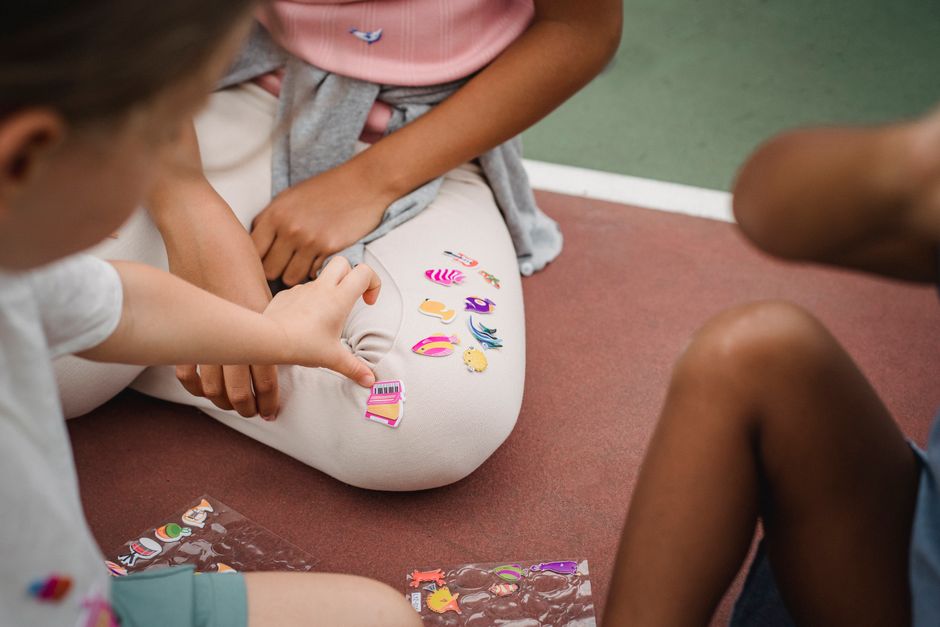
Match the sticker to the age. Toddlers and preschoolers respond well to big, bright, chunky stickers or stamps since fine motor control is still developing. School-age kids often like collecting themed or character stickers, and some prefer choosing their own reward stickers from a small variety pack.
Choosing and Printing the Right Chart
For most families, a plain weekly grid — habits down the side, days across the top — is easier to stick with than an elaborate monthly calendar, especially for kids under 8. Free printable options include a customizable habit-tracker maker at printablehabittracker.com (pick the habits, print, no signup), 55+ themed and mini trackers at saturdaygift.com, and a simple 7-day, 8-task sticker chart at tracabout.com. If you’d rather print in black and white and let your child color it in, natashalh.com offers classroom-friendly versions too.
Print a few weeks’ worth at once so you’re never scrambling for a new sheet on a Sunday night, and keep a couple of blank grids on hand in case your child wants to swap in a new habit mid-month.
Consider a reward that isn’t a purchase — an extra bedtime story, choosing dinner one night, or a trip to the park — instead of always tying a full chart to a toy. It keeps the focus on the habit itself rather than the prize at the end.
Tips and Common Mistakes
Praise the effort, not just the sticker. Say what the habit actually did (‘you got ready so fast this morning’) rather than just ‘good job,’ so the connection to the behavior stays clear.
Don’t remove a sticker as punishment for an unrelated bad day — it breaks trust in the chart and can make kids stop caring about it altogether. A sticker chart should track wins, not subtract for mistakes.
Watch for habit fatigue around week three or four. If enthusiasm drops, refresh the chart’s design, swap in a new sticker pack, or let your child choose one new habit to track instead of scrapping the whole system.
Plan to phase it out. Once a habit is running on autopilot — usually after a few consistent weeks — stretch out how often a sticker is needed (every other day, then weekly) before dropping the chart, so the habit keeps going without the external reward.
Skip habits your child can’t fully control, like ‘don’t cry’ or ‘never get upset.’ Stick to concrete, repeatable actions they can complete on their own.
Explore more: more habit-building guides and tools.
Printable Habit Tracker for Kids FAQs
How many habits should be on a kid’s sticker chart?
Start with 3 to 5 specific, clearly defined habits. More than that tends to overwhelm kids and makes the chart feel like a burden instead of a game.
What age is a sticker chart best for?
Sticker charts generally work well from about age 3 through the early elementary years. For toddlers, use big, simple stickers and just 1-2 habits; older kids can handle more habits and a weekly review.
Should the reward be a toy or something else?
It doesn’t have to be. Many parents find non-material rewards — extra playtime, picking a family activity, or a special privilege — keep kids just as motivated as toys, without turning the chart into a shopping list.
When should we stop using the chart?
Once the habit has been consistent for a few weeks, start spacing out the stickers (every other day, then weekly) instead of stopping cold turkey, so the habit keeps running without the visual reward.
Skip the Spreadsheet — Track It in ZenDuel
Habit streaks, mood tracking, and accountability duels in one free app — no template maintenance required. Get ZenDuel.
Want a calmer inbox? Subscribe to the free newsletter.
Photo by RDNE Stock project on Pexels.
