You already stand at the sink for five or ten minutes a day whether you want to or not. Instead of treating it as dead time to rush through while your mind spins through tomorrow’s to-do list, you can turn it into one of the easiest mindfulness practices there is — no app, cushion, or extra time required.
Table of Contents
This guide walks through exactly how to do it: the mindset shift, a simple step-by-step method you can use tonight, and the small mistakes that turn a mindful moment back into autopilot scrubbing.
Quick Answer
To turn dishwashing into a mindfulness practice, slow down and direct your full attention to the physical sensations of the task — the temperature of the water, the smell of the soap, the sound of the scrubbing, the weight of each dish — instead of letting your mind drift to other things. Do this for the whole time you’re at the sink, and treat washing the dishes as the point, not an obstacle between you and something else.
Why Dishwashing Works So Well for Mindfulness
Dishwashing has a few built-in advantages that make it an unusually good entry point into mindfulness. It’s repetitive, so your hands can go on autopilot while you redirect your attention elsewhere. It’s sensory-rich — hot water, soap, texture, sound — giving you plenty of anchors for attention. And it’s a task you already do daily, so there’s no new habit to build, just an existing one to do differently.
This isn’t just a nice idea, either. Researchers at Florida State University, led by doctoral candidate Adam Hanley and published in the journal Mindfulness, had one group of participants read a short passage encouraging them to notice the smell of the soap, the warmth of the water, and the feel of the dishes while washing, while a control group washed the same dishes with no such instruction. The mindful group reported a 27% decrease in nervousness and a 25% increase in mental inspiration afterward; the control group saw no change. The takeaway: it’s not the chore itself that calms you, it’s the quality of attention you bring to it.
This idea has deep roots outside the lab, too. Zen teacher Thich Nhat Hanh wrote in The Miracle of Mindfulness that there are two ways to wash the dishes — to get clean dishes, or to wash the dishes to wash the dishes. His point was that if you’re only thinking about the tea that comes after, you miss the only moment you’re actually in.
The 5-Minute Method, Step by Step
Start before you turn on the water. Take one slow breath and set an intention — something as simple as “for the next few minutes, this is all I’m doing.” This single step is what separates mindful dishwashing from just doing dishes while thinking about something else.
Notice the water first. As it runs over your hands, pay attention to the temperature, the pressure, how it changes as you adjust the tap. Resist the urge to immediately grab a dish — give the water a few seconds of your full attention on its own.
Bring in the other senses one at a time. Notice the smell of the soap. Notice the sound the water makes hitting the sink versus the dishes. Notice the weight and texture of each item as you pick it up — smooth ceramic, rough cast iron, the slickness of a soapy glass.
Slow your hands down slightly. You don’t need to move at half speed, but a small deliberate slowdown makes it much easier to stay present than washing at your usual rushed pace.
When your mind wanders — and it will — just notice it and come back to the sensations at hand, the same way you’d return to your breath in seated meditation. No judgment, just redirect.
Let the last dish mark the end. As you set down the final item and turn off the water, take one more slow breath before moving on to the next thing. This gives the practice a clear beginning and end, which makes it easier to repeat.

Tips and Common Mistakes
Don’t wait for a special moment. The whole point is that this works with dishes you’re already washing — after dinner, before work, whenever. You don’t need extra time carved out of your day.
Watch for the biggest trap: using the sink time to mentally rehearse a conversation, plan tomorrow, or replay something stressful. This is the single most common way people default back to autopilot. When you catch it, gently return attention to your hands and the water.
Skip the phone and podcast, at least for this one task. Background noise makes it much harder to notice the small sensory details that make the practice work.
Pair it with a natural transition point in your day — right after a meal or right before switching from work mode to home mode — so it becomes a reliable mental reset rather than something you have to remember to do.
If a sink full of dishes feels overwhelming some days, it’s fine to do this with just the first two or three dishes and let the rest go on autopilot. A short mindful stretch still counts.
Explore more: more mindfulness practices.
Mindful dishwashing FAQs
Do I need to wash dishes by hand for this to work, or does loading a dishwasher count?
The research and traditional teachings both focus on hand-washing because it engages more senses — water temperature, texture, sound. Loading a dishwasher can still be a moment of presence, but hand-washing gives you more to anchor your attention to.
How is this different from regular meditation?
It uses the same core skill — noticing when your mind wanders and gently bringing attention back to the present — but instead of focusing on your breath while sitting still, you focus on the physical sensations of a task you’re already doing. It’s sometimes called informal or everyday mindfulness.
What if my mind keeps wandering the whole time?
That’s normal, and it doesn’t mean you’re doing it wrong. The practice is the act of noticing your mind has wandered and returning attention to the sink, not staying perfectly focused the entire time.
Can I use this same approach for other chores?
Yes. The same method — full sensory attention to the task, gently returning when your mind drifts — applies to folding laundry, sweeping, or brushing your teeth. Dishwashing is just an easy, low-stakes place to start.
Build Better Habits With ZenDuel
Track your habits and mood, stay accountable, and build a calmer routine — get the ZenDuel app. Get ZenDuel.
Want a calmer inbox? Subscribe to the free newsletter.
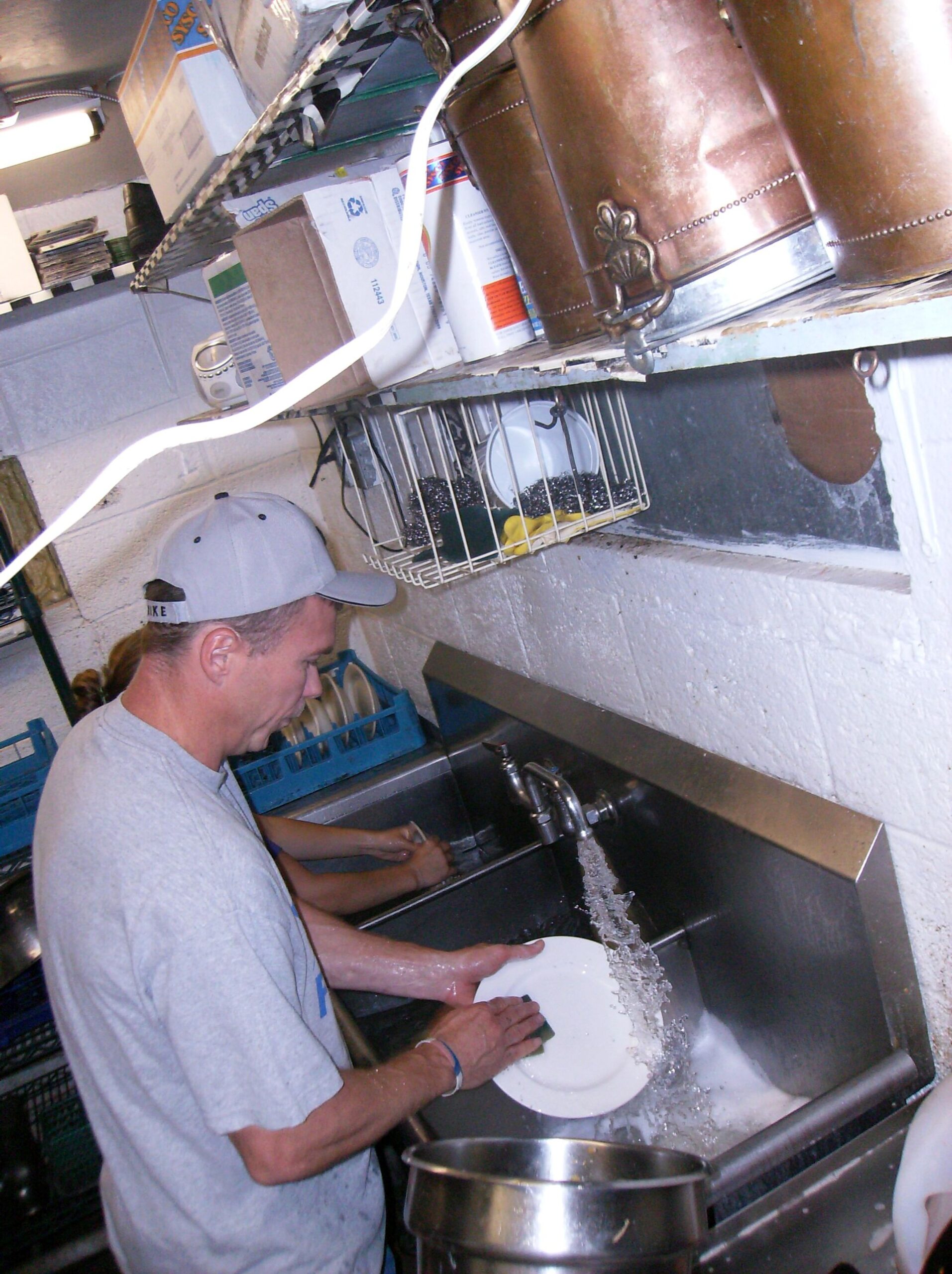
Photo: User:Quadell / CC BY-SA 3.0, via Wikimedia Commons.