You don’t need a silent retreat or a 45-minute app routine to calm a racing mind. A short, focused session — even just a few minutes — can measurably lower your stress response, and you can do it at your desk, in a parked car, or on a bathroom break.
Table of Contents
This guide walks through a simple 10-minute (or less) meditation routine for stress relief, plus a faster breathing technique for moments when you don’t even have five minutes to spare.
Quick Answer
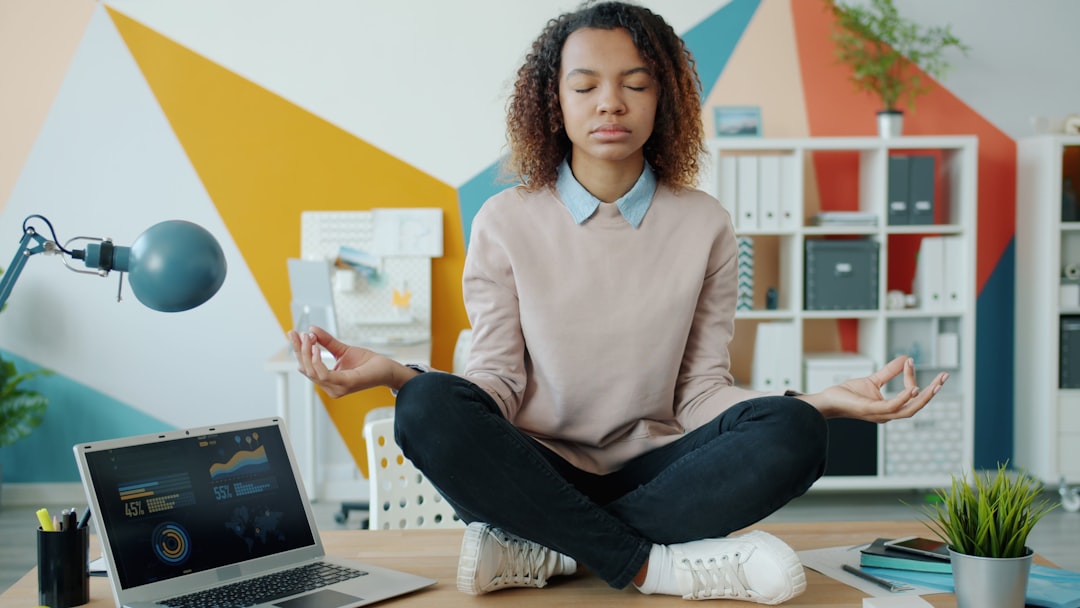
Sit comfortably, close your eyes, and breathe slowly through your nose for 5-10 minutes while focusing your attention on the breath itself — gently returning to it whenever your mind wanders. For faster relief, use a physiological sigh (two short inhales through the nose, one long exhale through the mouth), repeated for 1-3 rounds; research shows this can reduce physiological stress arousal in under a minute.
A Simple 10-Minute Meditation, Step by Step
Find a seat. You don’t need a cushion or special posture — a chair, your car seat, or the floor all work. Sit with your back reasonably upright but not rigid, hands resting in your lap, and either close your eyes or soften your gaze downward.
Take a few deeper breaths to settle in, then let your breathing return to a normal, natural rhythm. Don’t try to control it — just notice it. Feel the air moving in through your nose, the rise and fall of your chest or belly, and the pause between breaths.
When your mind wanders — and it will, often within seconds — that’s not a failure. Simply notice you’ve drifted (thinking about a meeting, a text you need to send, dinner) and gently guide your attention back to the breath. This noticing-and-returning is the actual exercise, not a distraction from it.
Set a timer for 5-10 minutes so you’re not tempted to check the clock. When it goes off, take one more slow breath, open your eyes, and give yourself a moment before jumping back into your day.
If sitting still feels hard, try a body scan instead: lying or sitting down, move your attention slowly from your feet up to your head, noticing tension or sensation in each area without trying to change it. This works well right before bed.
Even Faster: The Physiological Sigh
When you need relief in under a minute — before a hard conversation, after a stressful email, mid-meltdown with a toddler — use a physiological sigh. Inhale through your nose, then, at the top of that breath, take a second short inhale through your nose to top off your lungs, then exhale slowly and fully through your mouth. Repeat for one to three rounds.
This pattern briefly re-inflates collapsed air sacs in the lungs and helps offload carbon dioxide faster, which is part of why it can take the edge off physical stress symptoms quickly, even without any meditation training.
A 2023 Stanford Medicine study (Cell Reports Medicine, led by researchers including Andrew Huberman and David Spiegel) compared daily short breathwork exercises to mindfulness meditation over a month and found that a related technique — cyclic sighing, with a long exhale relative to the inhale — improved mood and lowered breathing rate more than mindfulness meditation did over the same period. In other words, breath-focused techniques with long exhales are a legitimately evidence-backed shortcut, not just a wellness trend.
Use the physiological sigh as a spot-treatment for acute stress spikes, and save the longer 5-10 minute sit for daily stress management and building the skill over time.
Tips and Common Mistakes
Don’t aim for a blank mind. The goal isn’t to stop thoughts — it’s to notice when you’ve been carried away by one and come back. Expecting silence is the fastest way to get frustrated and quit.
Keep sessions short and consistent rather than long and sporadic. A few minutes almost every day builds the skill faster than one 30-minute session a week.
Pick a consistent trigger — right after you sit down at your desk, before you check your phone in the morning, or right when you get in the car — so the habit attaches to something you already do.
If your nose is congested or breathing through it feels uncomfortable, mouth breathing during the longer sit is fine; the nose-only pattern matters more specifically for the physiological sigh technique.
Skip the guilt if you miss days. Meditation for stress relief works cumulatively — one missed session doesn’t erase the benefit of the ones you did.
Explore more: more meditation guides.
Quick meditation for stress relief FAQs
Can meditation really reduce stress that quickly?
Yes, at least in the moment. Slow, controlled breathing activates your parasympathetic nervous system, which can lower heart rate and the physical sensations of stress within seconds to a couple of minutes, even before any longer-term meditation benefits kick in.
What’s the difference between meditation and just deep breathing?
Deep breathing is a physical technique that calms your body quickly. Meditation adds a mental component — sustained, non-judgmental attention — that trains your ability to notice and let go of stressful thoughts over time. Many short stress-relief routines combine both.
Do I need an app to meditate for stress relief?
No. Apps can help with structure and guidance, especially early on, but the core technique described here — sit, breathe, notice, return — requires nothing but a quiet-ish spot and a timer.
How often should I do a 10-minute stress meditation?
Daily is ideal if you can manage it, even if some days you only get a few minutes in. Consistency matters more than session length for building lasting stress resilience.
Build Better Habits With ZenDuel
Track your habits and mood, stay accountable, and build a calmer routine — get the ZenDuel app. Get ZenDuel.
Want a calmer inbox? Subscribe to the free newsletter.
Photo by Vitaly Gariev on Unsplash.